


• Magnesium Sulphate Market Demand, Industry Trends, and Growth Opportunities Report by MMR

    Magnesium Sulphate Market to Reach USD 1,054.27 Million by 2032, Driven by Agricultural Demand and Pharmaceutical Applications

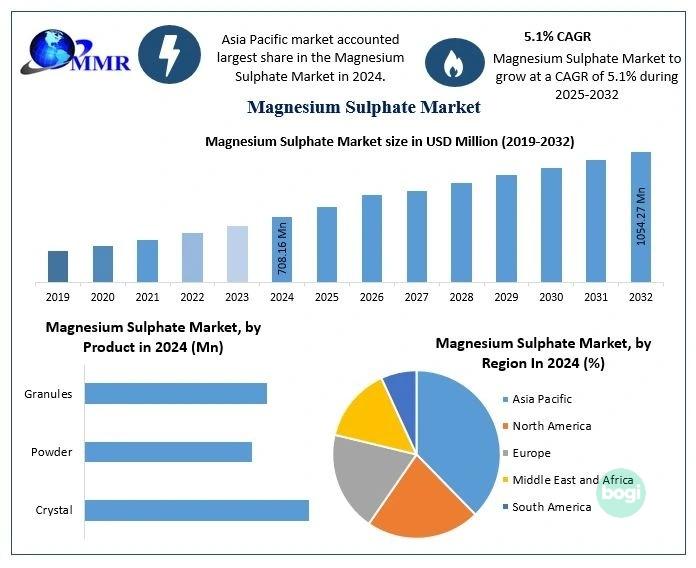
    The Magnesium Sulphate Market is witnessing steady growth, supported by rising agricultural productivity requirements, expanding pharmaceutical applications, and increasing demand from industrial manufacturing. According to Maximize Market Research, the market was valued at USD 708.16 million in 2024 and is projected to reach approximately USD 1,054.27 million by 2032, growing at a compound annual growth rate (CAGR) of 5.1% from 2025 to 2032. Increasing interest in efficient nutrient management, specialty chemicals, and high-quality pharmaceutical formulations is expected to create new opportunities for manufacturers and investors.

    Market Estimation, Growth Drivers and Opportunities

    Magnesium sulphate, commonly known as Epsom salt in certain applications, is an important inorganic compound used across agriculture, healthcare, food processing, personal care, water treatment, paints, textiles, and chemical manufacturing. Its versatility makes it a valuable ingredient for industries seeking reliable magnesium and sulphur sources.

    Agriculture remains a major growth driver because magnesium supports chlorophyll formation, photosynthesis, and plant development, while sulphur contributes to essential plant functions. Growing food requirements, soil nutrient deficiencies, and the adoption of balanced fertilization practices are increasing demand for magnesium sulphate-based fertilizers. Farmers are increasingly interested in improving crop yields and nutrient-use efficiency, creating opportunities for agricultural-grade products.

    Pharmaceutical demand also supports market expansion. Magnesium sulphate is used in clinical settings, including the management of pre-eclampsia and eclampsia, subject to appropriate medical supervision. Demand for dependable pharmaceutical ingredients and ready-to-use injectable formulations creates opportunities for manufacturers that can meet stringent quality and regulatory requirements.

    Additional growth opportunities are emerging in water treatment, personal care formulations, specialty chemicals, and industrial processing. However, producers must manage energy costs, raw-material availability, transportation expenses, and quality-control requirements to maintain competitiveness.

    Get a Sample Insight Report Now : https://www.maximizemarketresearch.com/request-sample/148167/
    Magnesium Sulphate Market Demand, Industry Trends, and Growth Opportunities Report by MMR Magnesium Sulphate Market to Reach USD 1,054.27 Million by 2032, Driven by Agricultural Demand and Pharmaceutical Applications The Magnesium Sulphate Market is witnessing steady growth, supported by rising agricultural productivity requirements, expanding pharmaceutical applications, and increasing demand from industrial manufacturing. According to Maximize Market Research, the market was valued at USD 708.16 million in 2024 and is projected to reach approximately USD 1,054.27 million by 2032, growing at a compound annual growth rate (CAGR) of 5.1% from 2025 to 2032. Increasing interest in efficient nutrient management, specialty chemicals, and high-quality pharmaceutical formulations is expected to create new opportunities for manufacturers and investors. Market Estimation, Growth Drivers and Opportunities Magnesium sulphate, commonly known as Epsom salt in certain applications, is an important inorganic compound used across agriculture, healthcare, food processing, personal care, water treatment, paints, textiles, and chemical manufacturing. Its versatility makes it a valuable ingredient for industries seeking reliable magnesium and sulphur sources. Agriculture remains a major growth driver because magnesium supports chlorophyll formation, photosynthesis, and plant development, while sulphur contributes to essential plant functions. Growing food requirements, soil nutrient deficiencies, and the adoption of balanced fertilization practices are increasing demand for magnesium sulphate-based fertilizers. Farmers are increasingly interested in improving crop yields and nutrient-use efficiency, creating opportunities for agricultural-grade products. Pharmaceutical demand also supports market expansion. Magnesium sulphate is used in clinical settings, including the management of pre-eclampsia and eclampsia, subject to appropriate medical supervision. Demand for dependable pharmaceutical ingredients and ready-to-use injectable formulations creates opportunities for manufacturers that can meet stringent quality and regulatory requirements. Additional growth opportunities are emerging in water treatment, personal care formulations, specialty chemicals, and industrial processing. However, producers must manage energy costs, raw-material availability, transportation expenses, and quality-control requirements to maintain competitiveness. Get a Sample Insight Report Now : https://www.maximizemarketresearch.com/request-sample/148167/
    0 Commentaires 0 Parts 25 Vue
  • Wireless In-Flight Entertainment Market Key Growth Drivers and Industry Challenges Report by MMR

    Wireless In-Flight Entertainment Market to Reach USD 6.74 Billion by 2030, Driven by High-Speed Connectivity and Personalized Passenger Experiences

    Market Estimation, Growth Drivers, and Opportunities

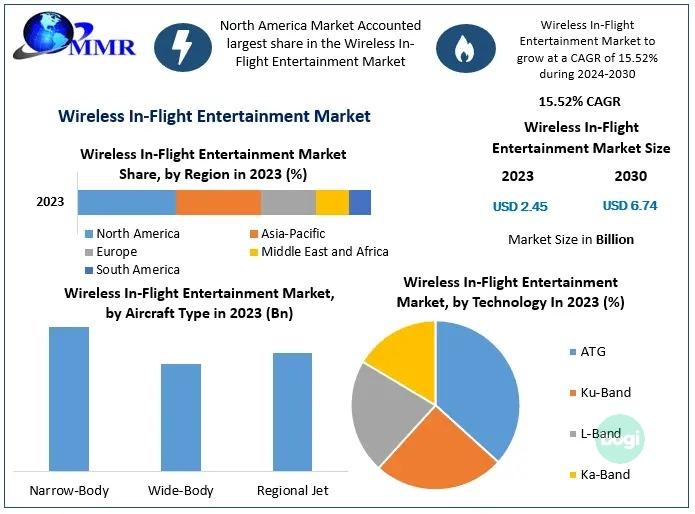
    The Wireless In-Flight Entertainment Market was valued at USD 2.45 billion in 2023 and is projected to reach approximately USD 6.74 billion by 2030, growing at a compound annual growth rate (CAGR) of 15.52% during the forecast period from 2024 to 2030. The market is experiencing significant transformation as airlines increasingly adopt wireless technologies to deliver convenient, personalized, and cost-effective entertainment services to passengers.

    Wireless in-flight entertainment systems enable passengers to access movies, television programs, music, games, and other digital services through personal smartphones, tablets, and laptops using onboard wireless networks. Unlike traditional seatback entertainment systems, wireless solutions can reduce aircraft weight, simplify installation, and lower maintenance expenses. These advantages are encouraging airlines to modernize existing fleets while improving the overall passenger experience.

    Increasing air passenger traffic, growing smartphone penetration, and rising expectations for seamless digital connectivity are major growth drivers. Passengers increasingly expect entertainment options similar to those available at home, including personalized content libraries and convenient streaming experiences. Airlines are responding by investing in wireless access points, advanced modems, satellite connectivity, and integrated onboard digital platforms.

    Significant opportunities exist in aircraft retrofitting, cloud-based content management, targeted advertising, and partnerships between airlines, connectivity providers, and entertainment platforms. However, high installation costs, cybersecurity concerns, bandwidth limitations, and regulatory requirements remain important challenges. Companies capable of delivering secure, scalable, and reliable connectivity solutions are well positioned to benefit from the market's expansion.

    Get Your Free Sample Report Link : https://www.maximizemarketresearch.com/request-sample/19884/

    Wireless In-Flight Entertainment Market Key Growth Drivers and Industry Challenges Report by MMR Wireless In-Flight Entertainment Market to Reach USD 6.74 Billion by 2030, Driven by High-Speed Connectivity and Personalized Passenger Experiences Market Estimation, Growth Drivers, and Opportunities The Wireless In-Flight Entertainment Market was valued at USD 2.45 billion in 2023 and is projected to reach approximately USD 6.74 billion by 2030, growing at a compound annual growth rate (CAGR) of 15.52% during the forecast period from 2024 to 2030. The market is experiencing significant transformation as airlines increasingly adopt wireless technologies to deliver convenient, personalized, and cost-effective entertainment services to passengers. Wireless in-flight entertainment systems enable passengers to access movies, television programs, music, games, and other digital services through personal smartphones, tablets, and laptops using onboard wireless networks. Unlike traditional seatback entertainment systems, wireless solutions can reduce aircraft weight, simplify installation, and lower maintenance expenses. These advantages are encouraging airlines to modernize existing fleets while improving the overall passenger experience. Increasing air passenger traffic, growing smartphone penetration, and rising expectations for seamless digital connectivity are major growth drivers. Passengers increasingly expect entertainment options similar to those available at home, including personalized content libraries and convenient streaming experiences. Airlines are responding by investing in wireless access points, advanced modems, satellite connectivity, and integrated onboard digital platforms. Significant opportunities exist in aircraft retrofitting, cloud-based content management, targeted advertising, and partnerships between airlines, connectivity providers, and entertainment platforms. However, high installation costs, cybersecurity concerns, bandwidth limitations, and regulatory requirements remain important challenges. Companies capable of delivering secure, scalable, and reliable connectivity solutions are well positioned to benefit from the market's expansion. Get Your Free Sample Report Link : https://www.maximizemarketresearch.com/request-sample/19884/
    0 Commentaires 0 Parts 48 Vue
  • Global Hard Carbon Anode Market to Reach USD 9.2 Billion by 2034 at 6.3% CAGR as Sodium-Ion Battery Adoption Expands

    View the complete report: https://www.24chemicalresearch.com/reports/288946/global-hard-carbon-anode-forecast-market-2025-2032-587

    The market is witnessing evolving opportunities across bio-based carbon materials, specialised feedstocks, and advanced battery applications. Asia-Pacific remains the leading regional market, while material qualification, precursor availability, and competition from established battery materials continue to shape industry development.
    Global Hard Carbon Anode Market to Reach USD 9.2 Billion by 2034 at 6.3% CAGR as Sodium-Ion Battery Adoption Expands View the complete report: https://www.24chemicalresearch.com/reports/288946/global-hard-carbon-anode-forecast-market-2025-2032-587 The market is witnessing evolving opportunities across bio-based carbon materials, specialised feedstocks, and advanced battery applications. Asia-Pacific remains the leading regional market, while material qualification, precursor availability, and competition from established battery materials continue to shape industry development.
    0 Commentaires 0 Parts 23 Vue
  • Wearable Injectors Market Key Highlights and Future Opportunities Till 2035
    The Large Volume Wearable Injectors Market is experiencing dynamic growth driven by the shift toward subcutaneous delivery of high-concentration biologics, monoclonal antibodies, and complex oncology therapeutics. As biopharmaceutical developers seek to replace lengthy intravenous (IV) infusions administered in clinical settings with convenient, patient-administered subcutaneous patches, large-volume wearable injectors (capable of delivering 2 mL to over 50 mL of drug formulation) offer superior patient convenience, shorter administration times, and reduced healthcare facility overhead.

    Key Takeaways

    High-Viscosity Biologic Delivery: Formulate wearable patch pumps engineered to deliver large-volume, highly viscous protein formulations smoothly over extended durations.
    Shifting from IV to Subcutaneous Care: Convert hospital-based intravenous infusions into convenient at-home subcutaneous wearable injections, enhancing patient quality of life.
    Expanding Drug-Device Combinations: Evaluate pre-filled drug-device combination products across immunology, oncology, and rare disease pipelines.
    Advanced Electromechanical Features: Integrate automated needle insertion safety mechanisms, end-of-dose indicators, and smartphone-connected adherence tracking.
    What Key Challenges Define the Wearable Injectors Market?

    Developing and commercializing large-volume wearable injectors requires overcoming complex electromechanical and human factors engineering hurdles.

    The three primary structural challenges include:

    Drug Stability and Formulation Viscosity: Delivering large volumes of high-concentration biologics without causing protein aggregation, needle clogging, or high injection site pain.
    Multidisciplinary Component Integration: Coordinating complex electrical modules, micro-pumps, spring-driven actuators, and primary container closures during device manufacturing.
    Human Factors and Usability Errors: Ensuring elderly or mobility-impaired patients can successfully apply, activate, and wear adhesive patch injectors without operational errors.
    Definition — Large Volume Wearable Injectors: Advanced, adhesive-mounted drug delivery devices designed to administer subcutaneous therapeutic volumes ranging from 2 mL up to 50+ mL over extended time periods.

    What Role Does Specialized Market Intelligence Play in Device Strategy?

    Navigating the competitive landscape of wearable drug delivery systems requires granular data on drug-device combination pipelines, patent portfolios, and contract manufacturing partnerships.

    Utilizing dedicated reports for Large Volume Wearable Injectors enables medical device executives, biopharma developers, and investors to benchmark device platforms, track intellectual property filings, and optimize commercialization strategies.

    By grounding device development in objective market research, stakeholders can navigate technical hurdles and capture high-growth market opportunities.

    Read More: https://www.rootsanalysis.com/reports/large-volume-wearable-injectors/238.html
    Wearable Injectors Market Key Highlights and Future Opportunities Till 2035 The Large Volume Wearable Injectors Market is experiencing dynamic growth driven by the shift toward subcutaneous delivery of high-concentration biologics, monoclonal antibodies, and complex oncology therapeutics. As biopharmaceutical developers seek to replace lengthy intravenous (IV) infusions administered in clinical settings with convenient, patient-administered subcutaneous patches, large-volume wearable injectors (capable of delivering 2 mL to over 50 mL of drug formulation) offer superior patient convenience, shorter administration times, and reduced healthcare facility overhead. Key Takeaways High-Viscosity Biologic Delivery: Formulate wearable patch pumps engineered to deliver large-volume, highly viscous protein formulations smoothly over extended durations. Shifting from IV to Subcutaneous Care: Convert hospital-based intravenous infusions into convenient at-home subcutaneous wearable injections, enhancing patient quality of life. Expanding Drug-Device Combinations: Evaluate pre-filled drug-device combination products across immunology, oncology, and rare disease pipelines. Advanced Electromechanical Features: Integrate automated needle insertion safety mechanisms, end-of-dose indicators, and smartphone-connected adherence tracking. What Key Challenges Define the Wearable Injectors Market? Developing and commercializing large-volume wearable injectors requires overcoming complex electromechanical and human factors engineering hurdles. The three primary structural challenges include: Drug Stability and Formulation Viscosity: Delivering large volumes of high-concentration biologics without causing protein aggregation, needle clogging, or high injection site pain. Multidisciplinary Component Integration: Coordinating complex electrical modules, micro-pumps, spring-driven actuators, and primary container closures during device manufacturing. Human Factors and Usability Errors: Ensuring elderly or mobility-impaired patients can successfully apply, activate, and wear adhesive patch injectors without operational errors. Definition — Large Volume Wearable Injectors: Advanced, adhesive-mounted drug delivery devices designed to administer subcutaneous therapeutic volumes ranging from 2 mL up to 50+ mL over extended time periods. What Role Does Specialized Market Intelligence Play in Device Strategy? Navigating the competitive landscape of wearable drug delivery systems requires granular data on drug-device combination pipelines, patent portfolios, and contract manufacturing partnerships. Utilizing dedicated reports for Large Volume Wearable Injectors enables medical device executives, biopharma developers, and investors to benchmark device platforms, track intellectual property filings, and optimize commercialization strategies. By grounding device development in objective market research, stakeholders can navigate technical hurdles and capture high-growth market opportunities. Read More: https://www.rootsanalysis.com/reports/large-volume-wearable-injectors/238.html
    WWW.ROOTSANALYSIS.COM
    Large Volume Wearable Injectors Market Size 2035
    The large volume wearable injectors market is expected to grow from USD 12.6 bn in 2025 to USD 16.4 bn in 2026 and USD 31.4 bn by 2035, at a CAGR of 7.5%
    0 Commentaires 0 Parts 39 Vue
  • Global Bio-based Platform Chemicals Market to Reach USD 21.6 Billion by 2034 at 8.7% CAGR as Renewable Carbon Demand Grows

    View the complete report: https://www.24chemicalresearch.com/reports/287666/global-biobased-platform-chemicals-forecast-market-2025-2032-905

    The market is witnessing growing interest in renewable chemical building blocks used across plastics, industrial chemicals, coatings, and formulated products. Advancements in fermentation, feedstock traceability, and biomass conversion are shaping industry development, while production costs and agricultural feedstock availability remain important considerations.
    Global Bio-based Platform Chemicals Market to Reach USD 21.6 Billion by 2034 at 8.7% CAGR as Renewable Carbon Demand Grows View the complete report: https://www.24chemicalresearch.com/reports/287666/global-biobased-platform-chemicals-forecast-market-2025-2032-905 The market is witnessing growing interest in renewable chemical building blocks used across plastics, industrial chemicals, coatings, and formulated products. Advancements in fermentation, feedstock traceability, and biomass conversion are shaping industry development, while production costs and agricultural feedstock availability remain important considerations.
    0 Commentaires 0 Parts 19 Vue