

• Wearable Injectors Market Key Highlights and Future Opportunities Till 2035
    The Large Volume Wearable Injectors Market is experiencing dynamic growth driven by the shift toward subcutaneous delivery of high-concentration biologics, monoclonal antibodies, and complex oncology therapeutics. As biopharmaceutical developers seek to replace lengthy intravenous (IV) infusions administered in clinical settings with convenient, patient-administered subcutaneous patches, large-volume wearable injectors (capable of delivering 2 mL to over 50 mL of drug formulation) offer superior patient convenience, shorter administration times, and reduced healthcare facility overhead.

    Key Takeaways

    High-Viscosity Biologic Delivery: Formulate wearable patch pumps engineered to deliver large-volume, highly viscous protein formulations smoothly over extended durations.
    Shifting from IV to Subcutaneous Care: Convert hospital-based intravenous infusions into convenient at-home subcutaneous wearable injections, enhancing patient quality of life.
    Expanding Drug-Device Combinations: Evaluate pre-filled drug-device combination products across immunology, oncology, and rare disease pipelines.
    Advanced Electromechanical Features: Integrate automated needle insertion safety mechanisms, end-of-dose indicators, and smartphone-connected adherence tracking.
    What Key Challenges Define the Wearable Injectors Market?

    Developing and commercializing large-volume wearable injectors requires overcoming complex electromechanical and human factors engineering hurdles.

    The three primary structural challenges include:

    Drug Stability and Formulation Viscosity: Delivering large volumes of high-concentration biologics without causing protein aggregation, needle clogging, or high injection site pain.
    Multidisciplinary Component Integration: Coordinating complex electrical modules, micro-pumps, spring-driven actuators, and primary container closures during device manufacturing.
    Human Factors and Usability Errors: Ensuring elderly or mobility-impaired patients can successfully apply, activate, and wear adhesive patch injectors without operational errors.
    Definition — Large Volume Wearable Injectors: Advanced, adhesive-mounted drug delivery devices designed to administer subcutaneous therapeutic volumes ranging from 2 mL up to 50+ mL over extended time periods.

    What Role Does Specialized Market Intelligence Play in Device Strategy?

    Navigating the competitive landscape of wearable drug delivery systems requires granular data on drug-device combination pipelines, patent portfolios, and contract manufacturing partnerships.

    Utilizing dedicated reports for Large Volume Wearable Injectors enables medical device executives, biopharma developers, and investors to benchmark device platforms, track intellectual property filings, and optimize commercialization strategies.

    By grounding device development in objective market research, stakeholders can navigate technical hurdles and capture high-growth market opportunities.

    Read More: https://www.rootsanalysis.com/reports/large-volume-wearable-injectors/238.html
    Wearable Injectors Market Key Highlights and Future Opportunities Till 2035 The Large Volume Wearable Injectors Market is experiencing dynamic growth driven by the shift toward subcutaneous delivery of high-concentration biologics, monoclonal antibodies, and complex oncology therapeutics. As biopharmaceutical developers seek to replace lengthy intravenous (IV) infusions administered in clinical settings with convenient, patient-administered subcutaneous patches, large-volume wearable injectors (capable of delivering 2 mL to over 50 mL of drug formulation) offer superior patient convenience, shorter administration times, and reduced healthcare facility overhead. Key Takeaways High-Viscosity Biologic Delivery: Formulate wearable patch pumps engineered to deliver large-volume, highly viscous protein formulations smoothly over extended durations. Shifting from IV to Subcutaneous Care: Convert hospital-based intravenous infusions into convenient at-home subcutaneous wearable injections, enhancing patient quality of life. Expanding Drug-Device Combinations: Evaluate pre-filled drug-device combination products across immunology, oncology, and rare disease pipelines. Advanced Electromechanical Features: Integrate automated needle insertion safety mechanisms, end-of-dose indicators, and smartphone-connected adherence tracking. What Key Challenges Define the Wearable Injectors Market? Developing and commercializing large-volume wearable injectors requires overcoming complex electromechanical and human factors engineering hurdles. The three primary structural challenges include: Drug Stability and Formulation Viscosity: Delivering large volumes of high-concentration biologics without causing protein aggregation, needle clogging, or high injection site pain. Multidisciplinary Component Integration: Coordinating complex electrical modules, micro-pumps, spring-driven actuators, and primary container closures during device manufacturing. Human Factors and Usability Errors: Ensuring elderly or mobility-impaired patients can successfully apply, activate, and wear adhesive patch injectors without operational errors. Definition — Large Volume Wearable Injectors: Advanced, adhesive-mounted drug delivery devices designed to administer subcutaneous therapeutic volumes ranging from 2 mL up to 50+ mL over extended time periods. What Role Does Specialized Market Intelligence Play in Device Strategy? Navigating the competitive landscape of wearable drug delivery systems requires granular data on drug-device combination pipelines, patent portfolios, and contract manufacturing partnerships. Utilizing dedicated reports for Large Volume Wearable Injectors enables medical device executives, biopharma developers, and investors to benchmark device platforms, track intellectual property filings, and optimize commercialization strategies. By grounding device development in objective market research, stakeholders can navigate technical hurdles and capture high-growth market opportunities. Read More: https://www.rootsanalysis.com/reports/large-volume-wearable-injectors/238.html
    WWW.ROOTSANALYSIS.COM
    Large Volume Wearable Injectors Market Size 2035
    The large volume wearable injectors market is expected to grow from USD 12.6 bn in 2025 to USD 16.4 bn in 2026 and USD 31.4 bn by 2035, at a CAGR of 7.5%
    0 التعليقات 0 المشاركات 13 مشاهدة
  • Wireless In-Flight Entertainment Market Key Growth Drivers and Industry Challenges Report by MMR

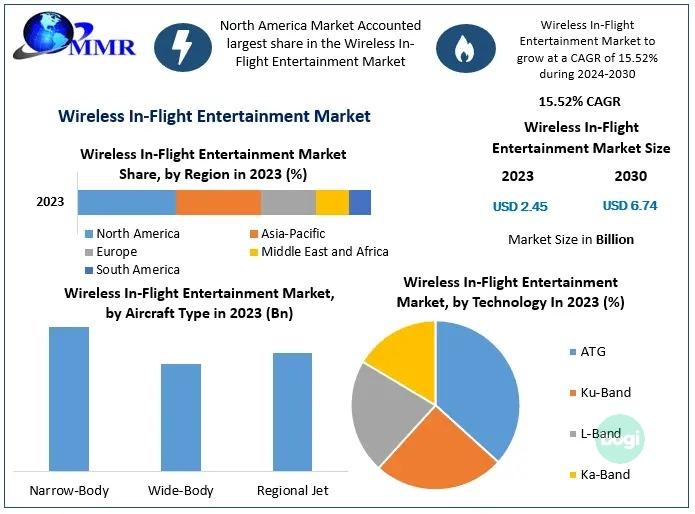
    Wireless In-Flight Entertainment Market to Reach USD 6.74 Billion by 2030, Driven by High-Speed Connectivity and Personalized Passenger Experiences

    Market Estimation, Growth Drivers, and Opportunities

    The Wireless In-Flight Entertainment Market was valued at USD 2.45 billion in 2023 and is projected to reach approximately USD 6.74 billion by 2030, growing at a compound annual growth rate (CAGR) of 15.52% during the forecast period from 2024 to 2030. The market is experiencing significant transformation as airlines increasingly adopt wireless technologies to deliver convenient, personalized, and cost-effective entertainment services to passengers.

    Wireless in-flight entertainment systems enable passengers to access movies, television programs, music, games, and other digital services through personal smartphones, tablets, and laptops using onboard wireless networks. Unlike traditional seatback entertainment systems, wireless solutions can reduce aircraft weight, simplify installation, and lower maintenance expenses. These advantages are encouraging airlines to modernize existing fleets while improving the overall passenger experience.

    Increasing air passenger traffic, growing smartphone penetration, and rising expectations for seamless digital connectivity are major growth drivers. Passengers increasingly expect entertainment options similar to those available at home, including personalized content libraries and convenient streaming experiences. Airlines are responding by investing in wireless access points, advanced modems, satellite connectivity, and integrated onboard digital platforms.

    Significant opportunities exist in aircraft retrofitting, cloud-based content management, targeted advertising, and partnerships between airlines, connectivity providers, and entertainment platforms. However, high installation costs, cybersecurity concerns, bandwidth limitations, and regulatory requirements remain important challenges. Companies capable of delivering secure, scalable, and reliable connectivity solutions are well positioned to benefit from the market's expansion.

    Get Your Free Sample Report Link : https://www.maximizemarketresearch.com/request-sample/19884/

    Wireless In-Flight Entertainment Market Key Growth Drivers and Industry Challenges Report by MMR Wireless In-Flight Entertainment Market to Reach USD 6.74 Billion by 2030, Driven by High-Speed Connectivity and Personalized Passenger Experiences Market Estimation, Growth Drivers, and Opportunities The Wireless In-Flight Entertainment Market was valued at USD 2.45 billion in 2023 and is projected to reach approximately USD 6.74 billion by 2030, growing at a compound annual growth rate (CAGR) of 15.52% during the forecast period from 2024 to 2030. The market is experiencing significant transformation as airlines increasingly adopt wireless technologies to deliver convenient, personalized, and cost-effective entertainment services to passengers. Wireless in-flight entertainment systems enable passengers to access movies, television programs, music, games, and other digital services through personal smartphones, tablets, and laptops using onboard wireless networks. Unlike traditional seatback entertainment systems, wireless solutions can reduce aircraft weight, simplify installation, and lower maintenance expenses. These advantages are encouraging airlines to modernize existing fleets while improving the overall passenger experience. Increasing air passenger traffic, growing smartphone penetration, and rising expectations for seamless digital connectivity are major growth drivers. Passengers increasingly expect entertainment options similar to those available at home, including personalized content libraries and convenient streaming experiences. Airlines are responding by investing in wireless access points, advanced modems, satellite connectivity, and integrated onboard digital platforms. Significant opportunities exist in aircraft retrofitting, cloud-based content management, targeted advertising, and partnerships between airlines, connectivity providers, and entertainment platforms. However, high installation costs, cybersecurity concerns, bandwidth limitations, and regulatory requirements remain important challenges. Companies capable of delivering secure, scalable, and reliable connectivity solutions are well positioned to benefit from the market's expansion. Get Your Free Sample Report Link : https://www.maximizemarketresearch.com/request-sample/19884/
    0 التعليقات 0 المشاركات 19 مشاهدة
  • Supercritical Water Oxidation Technology Market to Reach USD 900.0 Million by 2034 at 9.1% CAGR as PFAS Treatment and Industrial Waste Management Needs Expand

    View the complete report: https://www.24chemicalresearch.com/reports/303864/supercritical-water-oxidation-technology-market

    The report examines reactor operation, feed-treatment categories, system configurations, and customer industries shaping the SCWO technology market. It also highlights regional demand, operational challenges, and technology providers involved in high-pressure aqueous oxidation treatment systems.
    Supercritical Water Oxidation Technology Market to Reach USD 900.0 Million by 2034 at 9.1% CAGR as PFAS Treatment and Industrial Waste Management Needs Expand View the complete report: https://www.24chemicalresearch.com/reports/303864/supercritical-water-oxidation-technology-market The report examines reactor operation, feed-treatment categories, system configurations, and customer industries shaping the SCWO technology market. It also highlights regional demand, operational challenges, and technology providers involved in high-pressure aqueous oxidation treatment systems.
    0 التعليقات 0 المشاركات 29 مشاهدة
  • Maize Silage Market to Reach USD 8.9 Billion by 2034 at 2.9% CAGR as Demand for High-Quality Livestock Feed Expands

    View the complete report: https://www.24chemicalresearch.com/reports/291954/global-maize-silage-market

    The market is shaped by advancements in silage-making technology, improved fermentation management, and growing adoption of preserved forage in intensive livestock farming. North America remains the leading regional market, while dairy cattle represent the largest livestock-use segment.
    Maize Silage Market to Reach USD 8.9 Billion by 2034 at 2.9% CAGR as Demand for High-Quality Livestock Feed Expands View the complete report: https://www.24chemicalresearch.com/reports/291954/global-maize-silage-market The market is shaped by advancements in silage-making technology, improved fermentation management, and growing adoption of preserved forage in intensive livestock farming. North America remains the leading regional market, while dairy cattle represent the largest livestock-use segment.
    0 التعليقات 0 المشاركات 198 مشاهدة
  • Silicon Carbide Membranes Market to Reach USD 2.4 Billion by 2034 at 7.2% CAGR as Industrial Water Treatment Demand Grows

    View the complete report: https://www.24chemicalresearch.com/reports/291866/silicon-carbide-membranes-market

    Increasing demand for durable filtration technologies is encouraging industries to adopt silicon carbide membranes for challenging wastewater treatment applications. Advancements in membrane technology, growing water reuse requirements, and the need for reliable performance under extreme operating conditions are shaping market opportunities across industrial sectors.
    Silicon Carbide Membranes Market to Reach USD 2.4 Billion by 2034 at 7.2% CAGR as Industrial Water Treatment Demand Grows View the complete report: https://www.24chemicalresearch.com/reports/291866/silicon-carbide-membranes-market Increasing demand for durable filtration technologies is encouraging industries to adopt silicon carbide membranes for challenging wastewater treatment applications. Advancements in membrane technology, growing water reuse requirements, and the need for reliable performance under extreme operating conditions are shaping market opportunities across industrial sectors.
    0 التعليقات 0 المشاركات 180 مشاهدة
  • Flexible CSST Systems Market to Reach USD 3.3 Billion by 2034 at 8.6% CAGR as Certified Fuel-Gas Piping Demand Expands

    View the complete report: https://www.24chemicalresearch.com/reports/276787/global-flexible-csst-systems-market

    The market is shaped by certification requirements, installation practices, stainless steel costs, and the availability of skilled technicians. North America held the largest regional share in 2025, while CSST tubing and residential fuel-gas applications represented the leading market segments.
    Flexible CSST Systems Market to Reach USD 3.3 Billion by 2034 at 8.6% CAGR as Certified Fuel-Gas Piping Demand Expands View the complete report: https://www.24chemicalresearch.com/reports/276787/global-flexible-csst-systems-market The market is shaped by certification requirements, installation practices, stainless steel costs, and the availability of skilled technicians. North America held the largest regional share in 2025, while CSST tubing and residential fuel-gas applications represented the leading market segments.
    0 التعليقات 0 المشاركات 212 مشاهدة
  • Polyvinyl Chloride (PVC) Market Future Growth and Industry Development – Report by MMR

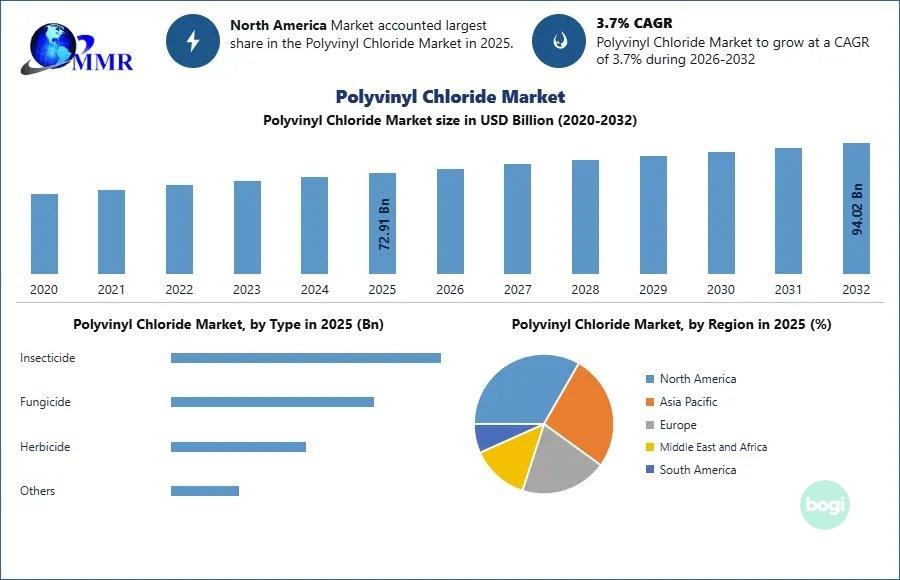
    Polyvinyl Chloride (PVC) Market to Reach USD 94.02 Billion by 2032, Driven by Construction, Infrastructure Development, and Material Innovation

    The Polyvinyl Chloride (PVC) Market is witnessing steady growth, supported by increasing demand for durable, cost-effective, and versatile materials across construction, infrastructure, automotive, electrical, and packaging applications. According to Maximize Market Research, the market was valued at USD 72.91 billion in 2025 and is projected to grow at a compound annual growth rate (CAGR) of 3.7% from 2025 to 2032, reaching nearly USD 94.02 billion by 2032. Growing investments in water supply networks, residential construction, urban development, and energy infrastructure are expected to create significant opportunities for PVC manufacturers worldwide.

    Market Estimation, Growth Drivers, and Opportunities

    PVC is one of the most widely used synthetic polymers because of its durability, chemical resistance, electrical insulation properties, low maintenance requirements, and adaptability to rigid and flexible applications. These characteristics make it an important material for pipes, fittings, window profiles, flooring, cable insulation, medical products, and protective coatings.

    Infrastructure expansion remains a major growth driver. Governments and private developers are investing in water distribution, wastewater treatment, drainage systems, housing, and commercial buildings, increasing demand for PVC pipes and profiles. The material's resistance to corrosion and relatively low installation costs make it attractive for long-term infrastructure projects.

    The transition toward energy-efficient buildings and the modernization of electrical networks also support market growth. PVC is widely used in insulation for electrical wires and cables, while its versatility enables manufacturers to develop specialized formulations for different industrial requirements.

    Emerging opportunities include recycled PVC, bio-attributed feedstocks, improved plasticizer technologies, and advanced recycling processes. Manufacturers are increasingly exploring circular-economy strategies to reduce waste, improve resource efficiency, and meet sustainability expectations. However, volatility in feedstock prices, environmental concerns regarding chlorine-based materials, and increasingly stringent waste-management requirements may challenge market participants.

    Get Your Free Sample Report Link : https://www.maximizemarketresearch.com/request-sample/23367/

    United States Market: Latest Trends and Investment in 2025

    In 2025, the US PVC market continued to benefit from infrastructure modernization, housing requirements, utility upgrades, and investment in domestic manufacturing. Federal infrastructure programs, including the Infrastructure Investment and Jobs Act, continued to support projects involving water systems, transportation infrastructure, and public utilities.
    Polyvinyl Chloride (PVC) Market Future Growth and Industry Development – Report by MMR Polyvinyl Chloride (PVC) Market to Reach USD 94.02 Billion by 2032, Driven by Construction, Infrastructure Development, and Material Innovation The Polyvinyl Chloride (PVC) Market is witnessing steady growth, supported by increasing demand for durable, cost-effective, and versatile materials across construction, infrastructure, automotive, electrical, and packaging applications. According to Maximize Market Research, the market was valued at USD 72.91 billion in 2025 and is projected to grow at a compound annual growth rate (CAGR) of 3.7% from 2025 to 2032, reaching nearly USD 94.02 billion by 2032. Growing investments in water supply networks, residential construction, urban development, and energy infrastructure are expected to create significant opportunities for PVC manufacturers worldwide. Market Estimation, Growth Drivers, and Opportunities PVC is one of the most widely used synthetic polymers because of its durability, chemical resistance, electrical insulation properties, low maintenance requirements, and adaptability to rigid and flexible applications. These characteristics make it an important material for pipes, fittings, window profiles, flooring, cable insulation, medical products, and protective coatings. Infrastructure expansion remains a major growth driver. Governments and private developers are investing in water distribution, wastewater treatment, drainage systems, housing, and commercial buildings, increasing demand for PVC pipes and profiles. The material's resistance to corrosion and relatively low installation costs make it attractive for long-term infrastructure projects. The transition toward energy-efficient buildings and the modernization of electrical networks also support market growth. PVC is widely used in insulation for electrical wires and cables, while its versatility enables manufacturers to develop specialized formulations for different industrial requirements. Emerging opportunities include recycled PVC, bio-attributed feedstocks, improved plasticizer technologies, and advanced recycling processes. Manufacturers are increasingly exploring circular-economy strategies to reduce waste, improve resource efficiency, and meet sustainability expectations. However, volatility in feedstock prices, environmental concerns regarding chlorine-based materials, and increasingly stringent waste-management requirements may challenge market participants. Get Your Free Sample Report Link : https://www.maximizemarketresearch.com/request-sample/23367/ United States Market: Latest Trends and Investment in 2025 In 2025, the US PVC market continued to benefit from infrastructure modernization, housing requirements, utility upgrades, and investment in domestic manufacturing. Federal infrastructure programs, including the Infrastructure Investment and Jobs Act, continued to support projects involving water systems, transportation infrastructure, and public utilities.
    0 التعليقات 0 المشاركات 853 مشاهدة
  • Dry Type Transformer Market Competitive Analysis and Top Companies Report by MMR

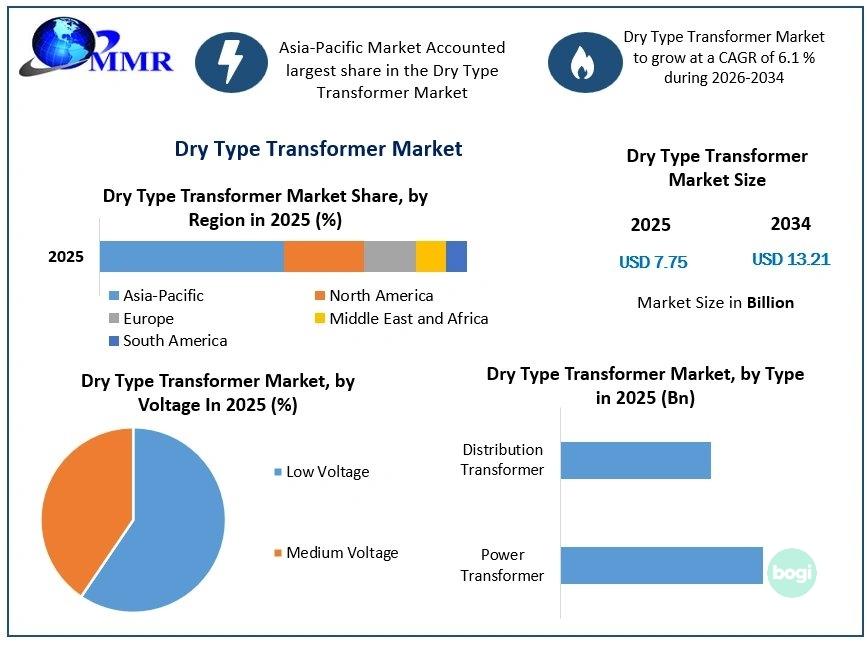
    Dry Type Transformer Market to Reach US$ 13.21 Billion by 2034, Driven by Grid Modernization and Rising Electricity Demand

    The Dry Type Transformer Market is witnessing steady growth as industries, utilities, commercial buildings, and renewable energy projects increasingly require reliable, energy-efficient, and safer electrical distribution systems. According to Maximize Market Research, the market was valued at US$ 7.75 billion in 2025 and is projected to grow at a compound annual growth rate (CAGR) of 6.1% from 2026 to 2034, reaching nearly US$ 13.21 billion by 2034.

    Dry type transformers use air or solid insulation systems instead of liquid insulating oil, making them suitable for indoor installations and locations where fire safety, reduced maintenance, and environmental considerations are important. Increasing electricity consumption, expanding data center infrastructure, electrification of industrial processes, and investments in modern power grids are supporting demand for these transformers worldwide.

    Market Estimation, Growth Drivers, and Opportunities

    The market is expected to expand significantly during the forecast period as electricity networks adapt to changing consumption patterns and the integration of renewable energy sources. Aging electrical infrastructure in developed economies requires upgrades, while emerging economies are investing in industrial facilities, commercial developments, transportation infrastructure, and new power distribution networks.

    Key growth drivers include the increasing adoption of renewable energy, rising demand for dependable electricity distribution, and stricter requirements for electrical safety in buildings and industrial facilities. Dry type transformers eliminate the need for liquid dielectric insulation, reducing the risk of oil leakage and associated environmental contamination. Their suitability for hospitals, airports, commercial complexes, underground installations, manufacturing plants, and data centers further strengthens their market position.

    Significant opportunities are emerging from smart grids, electric vehicle charging infrastructure, battery energy storage systems, and the expansion of digital infrastructure. Manufacturers can also benefit from developing energy-efficient transformer designs, advanced insulation materials, improved thermal management systems, and digital monitoring technologies. These innovations can help reduce energy losses, improve operational reliability, and extend equipment service life.

    Get a Sample Insight Report Now : https://www.maximizemarketresearch.com/request-sample/11250/

    Dry Type Transformer Market Competitive Analysis and Top Companies Report by MMR Dry Type Transformer Market to Reach US$ 13.21 Billion by 2034, Driven by Grid Modernization and Rising Electricity Demand The Dry Type Transformer Market is witnessing steady growth as industries, utilities, commercial buildings, and renewable energy projects increasingly require reliable, energy-efficient, and safer electrical distribution systems. According to Maximize Market Research, the market was valued at US$ 7.75 billion in 2025 and is projected to grow at a compound annual growth rate (CAGR) of 6.1% from 2026 to 2034, reaching nearly US$ 13.21 billion by 2034. Dry type transformers use air or solid insulation systems instead of liquid insulating oil, making them suitable for indoor installations and locations where fire safety, reduced maintenance, and environmental considerations are important. Increasing electricity consumption, expanding data center infrastructure, electrification of industrial processes, and investments in modern power grids are supporting demand for these transformers worldwide. Market Estimation, Growth Drivers, and Opportunities The market is expected to expand significantly during the forecast period as electricity networks adapt to changing consumption patterns and the integration of renewable energy sources. Aging electrical infrastructure in developed economies requires upgrades, while emerging economies are investing in industrial facilities, commercial developments, transportation infrastructure, and new power distribution networks. Key growth drivers include the increasing adoption of renewable energy, rising demand for dependable electricity distribution, and stricter requirements for electrical safety in buildings and industrial facilities. Dry type transformers eliminate the need for liquid dielectric insulation, reducing the risk of oil leakage and associated environmental contamination. Their suitability for hospitals, airports, commercial complexes, underground installations, manufacturing plants, and data centers further strengthens their market position. Significant opportunities are emerging from smart grids, electric vehicle charging infrastructure, battery energy storage systems, and the expansion of digital infrastructure. Manufacturers can also benefit from developing energy-efficient transformer designs, advanced insulation materials, improved thermal management systems, and digital monitoring technologies. These innovations can help reduce energy losses, improve operational reliability, and extend equipment service life. Get a Sample Insight Report Now : https://www.maximizemarketresearch.com/request-sample/11250/
    0 التعليقات 0 المشاركات 736 مشاهدة
  • Urea Market Recent Developments and Industry Outlook Report by MMR

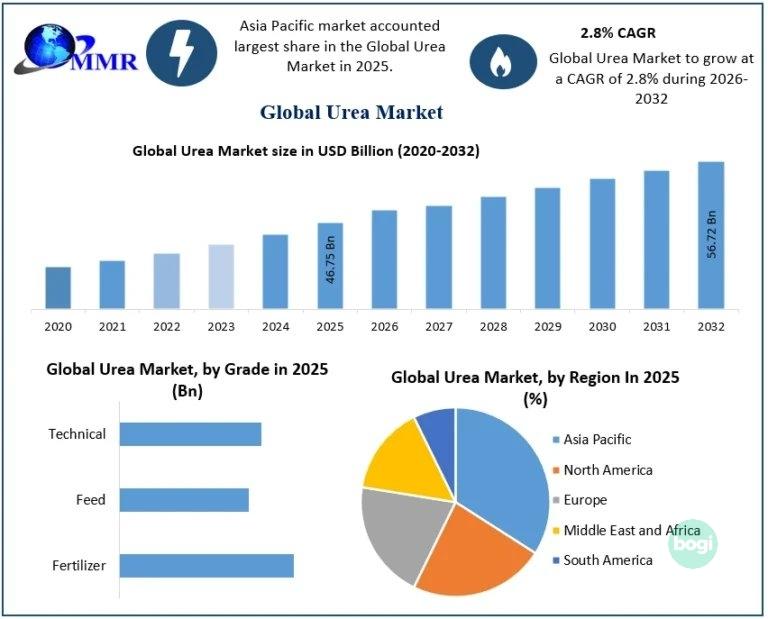
    Urea Market to Reach USD 56.72 Billion by 2032, Driven by Rising Agricultural Demand and Sustainable Fertilizer Production

    The Urea Market was valued at USD 46.75 billion in 2025 and is projected to reach nearly USD 56.72 billion by 2032, growing at a compound annual growth rate (CAGR) of 2.8% during the forecast period from 2026 to 2032. According to Maximize Market Research, increasing demand for nitrogen-based fertilizers, growing agricultural productivity requirements, expanding industrial applications, and advancements in sustainable fertilizer manufacturing are expected to support market expansion. Urea remains an essential agricultural input because of its high nitrogen content, affordability, and effectiveness in supporting crop growth. Additionally, increasing applications in chemical manufacturing, industrial resins, and automotive emission-control technologies are creating opportunities for manufacturers worldwide.

    Urea Market Estimation, Growth Drivers, and Opportunities

    The Urea Market is experiencing steady growth as agricultural producers seek to improve crop yields and meet rising global food requirements. With a nitrogen content of approximately 46%, urea is widely used to support the growth of cereals, grains, vegetables, fruits, and other agricultural crops. Population growth, limited arable land, and the increasing need for food security are encouraging farmers to adopt effective fertilizer solutions.

    Government fertilizer subsidies, agricultural modernization programs, and precision farming practices are further supporting demand. Developing economies continue to offer substantial opportunities because of their large agricultural sectors and growing fertilizer consumption.

    Industrial applications are also creating new growth opportunities. Urea is used in urea-formaldehyde resins, adhesives, plastics, and diesel exhaust fluid (DEF), which helps reduce nitrogen oxide emissions from diesel-powered vehicles. Manufacturers investing in energy-efficient production, enhanced-efficiency fertilizers, carbon capture, and low-carbon ammonia technologies can strengthen their competitiveness. However, natural gas price fluctuations, environmental concerns, and international supply-chain disruptions remain important challenges for the industry.

    Request Your Sample Market Report PDF : https://www.maximizemarketresearch.com/request-sample/26788/
    Urea Market Recent Developments and Industry Outlook Report by MMR Urea Market to Reach USD 56.72 Billion by 2032, Driven by Rising Agricultural Demand and Sustainable Fertilizer Production The Urea Market was valued at USD 46.75 billion in 2025 and is projected to reach nearly USD 56.72 billion by 2032, growing at a compound annual growth rate (CAGR) of 2.8% during the forecast period from 2026 to 2032. According to Maximize Market Research, increasing demand for nitrogen-based fertilizers, growing agricultural productivity requirements, expanding industrial applications, and advancements in sustainable fertilizer manufacturing are expected to support market expansion. Urea remains an essential agricultural input because of its high nitrogen content, affordability, and effectiveness in supporting crop growth. Additionally, increasing applications in chemical manufacturing, industrial resins, and automotive emission-control technologies are creating opportunities for manufacturers worldwide. Urea Market Estimation, Growth Drivers, and Opportunities The Urea Market is experiencing steady growth as agricultural producers seek to improve crop yields and meet rising global food requirements. With a nitrogen content of approximately 46%, urea is widely used to support the growth of cereals, grains, vegetables, fruits, and other agricultural crops. Population growth, limited arable land, and the increasing need for food security are encouraging farmers to adopt effective fertilizer solutions. Government fertilizer subsidies, agricultural modernization programs, and precision farming practices are further supporting demand. Developing economies continue to offer substantial opportunities because of their large agricultural sectors and growing fertilizer consumption. Industrial applications are also creating new growth opportunities. Urea is used in urea-formaldehyde resins, adhesives, plastics, and diesel exhaust fluid (DEF), which helps reduce nitrogen oxide emissions from diesel-powered vehicles. Manufacturers investing in energy-efficient production, enhanced-efficiency fertilizers, carbon capture, and low-carbon ammonia technologies can strengthen their competitiveness. However, natural gas price fluctuations, environmental concerns, and international supply-chain disruptions remain important challenges for the industry. Request Your Sample Market Report PDF : https://www.maximizemarketresearch.com/request-sample/26788/
    0 التعليقات 0 المشاركات 550 مشاهدة
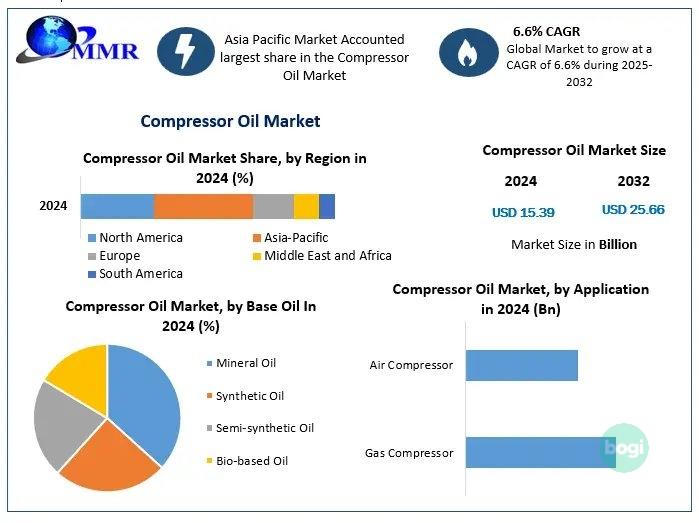
  • Compressor Oil Market Competitive Analysis and Top Companies – Report by MMR

    Compressor Oil Market to Reach USD 25.66 Billion by 2032, Driven by Industrial Expansion and Advanced Lubrication Technologies

    Market Overview

    The Compressor Oil Market was valued at USD 15.39 billion in 2024 and is projected to reach nearly USD 25.66 billion by 2032, growing at a compound annual growth rate (CAGR) of 6.6% during the forecast period from 2025 to 2032. Increasing industrialization, expanding manufacturing activities, and rising demand for efficient machinery are supporting market growth. Compressor oils are essential lubricants that minimize friction, control operating temperatures, prevent corrosion, and improve equipment reliability across industrial applications.

    According to Maximize Market Research, increasing investments in industrial infrastructure, oil and gas operations, chemical processing, and construction are creating significant opportunities for compressor oil manufacturers worldwide.

    Market Estimation, Growth Drivers, and Opportunities

    Compressor oil demand is increasing as industries prioritize equipment performance, operational efficiency, and maintenance cost reduction. Modern compressors operate under demanding pressure and temperature conditions, requiring lubricants that provide oxidation stability, anti-wear protection, rust prevention, and effective foam control.

    The expansion of manufacturing facilities and automated production systems is another significant growth driver. Compressor oils help reduce equipment downtime and extend service intervals, allowing industrial operators to improve productivity. Growing oil and gas exploration, chemical production, mining activities, and power generation are also creating additional demand.

    Opportunities are emerging through advanced synthetic lubricants, longer-lasting formulations, and bio-based alternatives. Manufacturers investing in improved lubricant chemistry can address changing industrial requirements while helping customers reduce lubricant consumption, maintenance frequency, and operating expenses.

    Request a Sample of the Full Market Report : https://www.maximizemarketresearch.com/request-sample/99721/

    US Market Trends and Investment in 2025

    The United States remains an important market for industrial lubricants because of its established manufacturing infrastructure, energy industry, and demand for reliable industrial equipment. In August 2025, ExxonMobil announced a final investment decision for a major reconfiguration project at its Baytown, Texas, complex. The investment aims to increase production of higher-value products, including Group III base stocks used in premium lubricant formulations, with operations planned to start in 2028.
    Compressor Oil Market Competitive Analysis and Top Companies – Report by MMR Compressor Oil Market to Reach USD 25.66 Billion by 2032, Driven by Industrial Expansion and Advanced Lubrication Technologies Market Overview The Compressor Oil Market was valued at USD 15.39 billion in 2024 and is projected to reach nearly USD 25.66 billion by 2032, growing at a compound annual growth rate (CAGR) of 6.6% during the forecast period from 2025 to 2032. Increasing industrialization, expanding manufacturing activities, and rising demand for efficient machinery are supporting market growth. Compressor oils are essential lubricants that minimize friction, control operating temperatures, prevent corrosion, and improve equipment reliability across industrial applications. According to Maximize Market Research, increasing investments in industrial infrastructure, oil and gas operations, chemical processing, and construction are creating significant opportunities for compressor oil manufacturers worldwide. Market Estimation, Growth Drivers, and Opportunities Compressor oil demand is increasing as industries prioritize equipment performance, operational efficiency, and maintenance cost reduction. Modern compressors operate under demanding pressure and temperature conditions, requiring lubricants that provide oxidation stability, anti-wear protection, rust prevention, and effective foam control. The expansion of manufacturing facilities and automated production systems is another significant growth driver. Compressor oils help reduce equipment downtime and extend service intervals, allowing industrial operators to improve productivity. Growing oil and gas exploration, chemical production, mining activities, and power generation are also creating additional demand. Opportunities are emerging through advanced synthetic lubricants, longer-lasting formulations, and bio-based alternatives. Manufacturers investing in improved lubricant chemistry can address changing industrial requirements while helping customers reduce lubricant consumption, maintenance frequency, and operating expenses. Request a Sample of the Full Market Report : https://www.maximizemarketresearch.com/request-sample/99721/ US Market Trends and Investment in 2025 The United States remains an important market for industrial lubricants because of its established manufacturing infrastructure, energy industry, and demand for reliable industrial equipment. In August 2025, ExxonMobil announced a final investment decision for a major reconfiguration project at its Baytown, Texas, complex. The investment aims to increase production of higher-value products, including Group III base stocks used in premium lubricant formulations, with operations planned to start in 2028.
    0 التعليقات 0 المشاركات 734 مشاهدة
الصفحات المعززة