

• Viral Vector And Plasmid Dna Manufacturing Market Research Accure Strong Growth in Forecast to 2035
    A recently published research report on the Viral Vector and Plasmid DNA Manufacturing Market delivers a thorough analysis of historical trends and future projections till 2035. The article offers an overview of how the market has evolved in terms of size, structure, and geographic performance. It presents factual insights into how various regions and application areas have contributed to the overall expansion of this market in recent years.

    The global viral vector and plasmid DNA manufacturing market, valued at USD 843 million in 2025, is projected to reach USD 937 million in 2026 and USD 2,161 million by 2035, with a CAGR of 9.73% during the forecast period 2026 to 2035. The research takes a grounded approach in presenting its findings, focusing on performance indicators across segments and territories without making speculative claims. Key developments, general industry behavior, and practical observations form the basis of the market forecast provided within this article.

    The article segments the market by Distribution by Historical Trend: Since 2021, Forecast Period: Till 2035, Market Size 2025: $ 843 Million, Market Size 2035: $ 2,161 Million, CAGR (Till 2035): 9.73%, Scale of Operation, Preclinical, Clinical, Commercial, Application Area, Cell Therapies, Gene Therapies, Vaccines, Type of Vector Manufactured, AAV Vectors, Adenoviral Vectors, Lentiviral Vectors, Retroviral Vectors, Non-viral Vectors, Other Vectors, Therapeutic Area, Oncological Disorders, Rare Disorders, Immunological Disorders, Neurological Disorders, Sensory Disorders, Metabolic Disorders, Blood Disorders, Musculoskeletal Disorders, Infectious Diseases, Ophthalmic Disorders, Other Disorders, Type of Manufacturer, In-house Manufacturers, Contract Manufacturing Organizations, Geographical Regions, North America, Europe, Asia-Pacific, Middle East and North Africa, Latin America, Excel Data Packs(Complimentary), Viral Vector Manufacturing (Industry Players) Landscape, Non-Viral Vector Manufacturing (Industry Players) Landscape, Vector Manufacturing (Non-Industry Players) Landscape, Technology Landscape, Company Competitiveness Analysis, Partnerships and Collaborations, Recent Expansions, Strategic Partner Analysis, Key Insights, Go-No-Go Framework, Capacity Analysis, Demand and Supply Analysis, Market Forecast and Opportunity Analysis, Key Players Profiled, Advanced BioScience Laboratories, AGC Biologics, Aldevron, Celonic, Catalent Biologics, Charles River Laboratories, Novartis, Oxford BioMedica, PowerPoint Presentation(Complimentary): Available, Customization Scope: 15% Free Customization.

    Key Geographies

    North America, Europe, Asia-Pacific, Middle East and North Africa, Latin America

    Geographic segmentation includes revenue performance and estimated demand across each of these key regions. The analysis reviews how various territories contribute to the Viral Vector and Plasmid DNA Manufacturing Market share and what role regional market conditions may play in shaping future growth. Without introducing speculative drivers, the research presents regional estimates based on verified indicators and current availability of products and infrastructure.

    Origin of Information: https://www.rootsanalysis.com/reports/viral-vectors-non-viral-vectors-and-gene-therapy-manufacturing-market-/274.html
    Viral Vector And Plasmid Dna Manufacturing Market Research Accure Strong Growth in Forecast to 2035 A recently published research report on the Viral Vector and Plasmid DNA Manufacturing Market delivers a thorough analysis of historical trends and future projections till 2035. The article offers an overview of how the market has evolved in terms of size, structure, and geographic performance. It presents factual insights into how various regions and application areas have contributed to the overall expansion of this market in recent years. The global viral vector and plasmid DNA manufacturing market, valued at USD 843 million in 2025, is projected to reach USD 937 million in 2026 and USD 2,161 million by 2035, with a CAGR of 9.73% during the forecast period 2026 to 2035. The research takes a grounded approach in presenting its findings, focusing on performance indicators across segments and territories without making speculative claims. Key developments, general industry behavior, and practical observations form the basis of the market forecast provided within this article. The article segments the market by Distribution by Historical Trend: Since 2021, Forecast Period: Till 2035, Market Size 2025: $ 843 Million, Market Size 2035: $ 2,161 Million, CAGR (Till 2035): 9.73%, Scale of Operation, Preclinical, Clinical, Commercial, Application Area, Cell Therapies, Gene Therapies, Vaccines, Type of Vector Manufactured, AAV Vectors, Adenoviral Vectors, Lentiviral Vectors, Retroviral Vectors, Non-viral Vectors, Other Vectors, Therapeutic Area, Oncological Disorders, Rare Disorders, Immunological Disorders, Neurological Disorders, Sensory Disorders, Metabolic Disorders, Blood Disorders, Musculoskeletal Disorders, Infectious Diseases, Ophthalmic Disorders, Other Disorders, Type of Manufacturer, In-house Manufacturers, Contract Manufacturing Organizations, Geographical Regions, North America, Europe, Asia-Pacific, Middle East and North Africa, Latin America, Excel Data Packs(Complimentary), Viral Vector Manufacturing (Industry Players) Landscape, Non-Viral Vector Manufacturing (Industry Players) Landscape, Vector Manufacturing (Non-Industry Players) Landscape, Technology Landscape, Company Competitiveness Analysis, Partnerships and Collaborations, Recent Expansions, Strategic Partner Analysis, Key Insights, Go-No-Go Framework, Capacity Analysis, Demand and Supply Analysis, Market Forecast and Opportunity Analysis, Key Players Profiled, Advanced BioScience Laboratories, AGC Biologics, Aldevron, Celonic, Catalent Biologics, Charles River Laboratories, Novartis, Oxford BioMedica, PowerPoint Presentation(Complimentary): Available, Customization Scope: 15% Free Customization. Key Geographies North America, Europe, Asia-Pacific, Middle East and North Africa, Latin America Geographic segmentation includes revenue performance and estimated demand across each of these key regions. The analysis reviews how various territories contribute to the Viral Vector and Plasmid DNA Manufacturing Market share and what role regional market conditions may play in shaping future growth. Without introducing speculative drivers, the research presents regional estimates based on verified indicators and current availability of products and infrastructure. Origin of Information: https://www.rootsanalysis.com/reports/viral-vectors-non-viral-vectors-and-gene-therapy-manufacturing-market-/274.html
    WWW.ROOTSANALYSIS.COM
    Viral Vector and Plasmid DNA Manufacturing Market Size 2035
    The viral vector & plasmid DNA manufacturing market is expected to grow from USD 843 mn in 2025 to USD 937 mn in 2026 and USD 2,161 mn by 2035, at 9.73% CAGR
    0 Kommentare 0 Anteile 287 Ansichten
  • Air Pollution Control Systems Market Development Key Insights and Emerging Opportunities

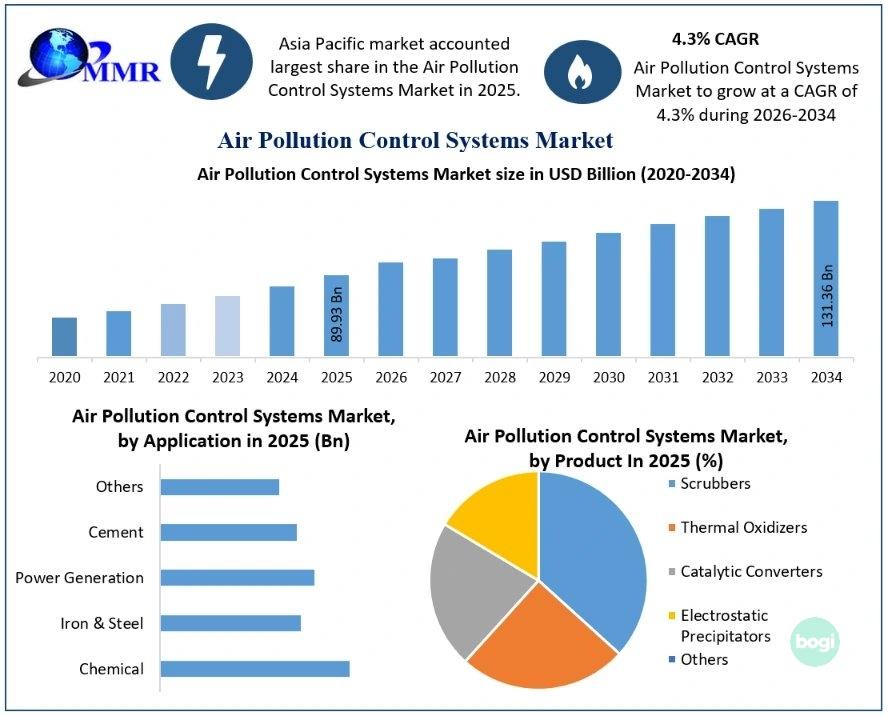
    Air Pollution Control Systems Market to Reach USD 131.36 Billion by 2034, Supported by Industrial Expansion and Stricter Emission Management

    The Air Pollution Control Systems Market was valued at USD 89.93 billion in 2025 and is projected to reach USD 131.36 billion by 2034, expanding at a CAGR of 4.3% from 2026 to 2034. Rapid industrialization, urban populations, respiratory-health concerns, and demand for cleaner environments are shaping the market. Increasing investment in power generation, chemicals, iron and steel, cement, and other pollution-intensive industries is creating sustained demand for emission-control equipment. Manufacturers are focusing on energy-efficient systems, digital monitoring, advanced filtration, and technologies capable of controlling multiple pollutants. Opportunities are emerging from modernization and retrofit projects, particularly where aging plants must improve environmental performance without replacing entire production assets. Developing-economy industrial expansion and cleaner production requirements are creating opportunities for system suppliers and engineering companies.

    U.S. Market Trends and Investment

    The U.S. market is experiencing a complex transition in 2025 as electricity demand rises alongside changes in federal environmental policy. The U.S. Environmental Protection Agency proposed in June 2025 to repeal federal greenhouse-gas emissions standards for fossil-fuel power plants and amendments to the Mercury and Air Toxics Standards. While the proposals could reduce compliance costs and alter investment timing for some operators, the installed base of pollution-control equipment, state-level requirements, industrial modernization, and demand from data centers continue to support air-quality technologies. U.S. investment is increasingly focused on upgrades, maintenance, monitoring, efficiency improvements, and emissions-control retrofits. Suppliers offering flexible, cost-effective systems can benefit.

    Market Segmentation: Largest Shares

    By product, the Scrubbers segment held the dominant position in the global Air Pollution Control Systems Market in terms of revenue. Scrubbers remove particulate matter and gases using liquid-based treatment and are widely applied for contaminant control. By application, power generation is expected to witness the fastest growth through the forecast period, while iron and steel is the highest-growth application. By region, Asia Pacific held the highest market share and is projected to maintain its leadership, supported by industrial expansion and investment in power generation, chemicals, mining, and heavy industry.

    Access a Free Sample Report Copy : https://www.maximizemarketresearch.com/request-sample/20592/

    Air Pollution Control Systems Market Development Key Insights and Emerging Opportunities Air Pollution Control Systems Market to Reach USD 131.36 Billion by 2034, Supported by Industrial Expansion and Stricter Emission Management The Air Pollution Control Systems Market was valued at USD 89.93 billion in 2025 and is projected to reach USD 131.36 billion by 2034, expanding at a CAGR of 4.3% from 2026 to 2034. Rapid industrialization, urban populations, respiratory-health concerns, and demand for cleaner environments are shaping the market. Increasing investment in power generation, chemicals, iron and steel, cement, and other pollution-intensive industries is creating sustained demand for emission-control equipment. Manufacturers are focusing on energy-efficient systems, digital monitoring, advanced filtration, and technologies capable of controlling multiple pollutants. Opportunities are emerging from modernization and retrofit projects, particularly where aging plants must improve environmental performance without replacing entire production assets. Developing-economy industrial expansion and cleaner production requirements are creating opportunities for system suppliers and engineering companies. U.S. Market Trends and Investment The U.S. market is experiencing a complex transition in 2025 as electricity demand rises alongside changes in federal environmental policy. The U.S. Environmental Protection Agency proposed in June 2025 to repeal federal greenhouse-gas emissions standards for fossil-fuel power plants and amendments to the Mercury and Air Toxics Standards. While the proposals could reduce compliance costs and alter investment timing for some operators, the installed base of pollution-control equipment, state-level requirements, industrial modernization, and demand from data centers continue to support air-quality technologies. U.S. investment is increasingly focused on upgrades, maintenance, monitoring, efficiency improvements, and emissions-control retrofits. Suppliers offering flexible, cost-effective systems can benefit. Market Segmentation: Largest Shares By product, the Scrubbers segment held the dominant position in the global Air Pollution Control Systems Market in terms of revenue. Scrubbers remove particulate matter and gases using liquid-based treatment and are widely applied for contaminant control. By application, power generation is expected to witness the fastest growth through the forecast period, while iron and steel is the highest-growth application. By region, Asia Pacific held the highest market share and is projected to maintain its leadership, supported by industrial expansion and investment in power generation, chemicals, mining, and heavy industry. Access a Free Sample Report Copy : https://www.maximizemarketresearch.com/request-sample/20592/
    0 Kommentare 0 Anteile 1191 Ansichten
  • Precision Medicine Software Market Estimated to Experience a Hike in Growth by 2035
    A recently published research report on the Precision Medicine Software Market delivers a thorough analysis of historical trends and future projections till 2035. The article offers an overview of how the market has evolved in terms of size, structure, and geographic performance. It presents factual insights into how various regions and application areas have contributed to the overall expansion of this market in recent years.

    The research takes a grounded approach in presenting its findings, focusing on performance indicators across segments and territories without making speculative claims. Key developments, general industry behavior, and practical observations form the basis of the market forecast provided within this article.

    The article segments the market by Distribution by Historical Trend: Since 2021, Forecast Period: Till 2032, Market Size 2026: $ 81 Million, Market Size 2032: $ 324 Million, CAGR (Till 2032): 26.0%, Distribution byTherapeutic Indications, Oncological Disorders, Cardiovascular Disorders, Metabolic Disorders, Neurological Disorders, Type of End Users, Healthcare Providers, Research and Government Institutes, Pharmaceutical and Biotech Companies, Key Geographical Region, North America, Europe, Asia-Pacific, Rest of the World, Key Companies Profiled, AceTech, Ariel Precision Medicine, C2i Genomics, Fabric Genomics, Genedata, GenomOncology, Human Longevity, Inspirata, IQVIA, SOPHiA GENETICS, Syapse, PowerPoint Presentation(Complimentary): Available, Customization Scope: 15% Free Customization, Excel Data Packs(Complimentary), Market Landscape Analysis, Company Competitiveness Analysis, Patent Analysis, Partnerships and Collaborations, Funding and Investment Analysis, Attractiveness Competitiveness Matrix, Market Forecast and Future Opportunity Analysis.

    Key Geographies

    Geographic segmentation includes revenue performance and estimated demand across each of these key regions. The analysis reviews how various territories contribute to the Precision Medicine Software Market share and what role regional market conditions may play in shaping future growth. Without introducing speculative drivers, the research presents regional estimates based on verified indicators and current availability of products and infrastructure.

    Origin of Information: https://www.rootsanalysis.com/reports/precision-medicine-software-developers-market.html

    A core section of the report profiles some of the top companies in Precision Medicine Software. These include AceTech, Ariel Precision Medicine, C2i Genomics, Fabric Genomics, Genedata, GenomOncology, Human Longevity, Inspirata, IQVIA, SOPHiA GENETICS, Syapse. The article reviews their regional presence, product strategy, and manufacturing or distribution strengths. The focus remains on factual descriptions of business operations and their contributions to the broader Precision Medicine Software Market growth. While market positions may differ, each company’s strategic alignment, sales footprint, and application coverage are considered as part of the competitive assessment.

    Additional insights include a review of pricing trends, supplier relationships, cost structures, and how materials flow across production stages. The research highlights interactions between upstream and downstream segments, giving readers a view into the broader functioning of the Precision Medicine Software industry. These insights are grounded in observed practices and data rather than hypothetical or promotional interpretations.

    Strategic developments such as acquisitions, expansions, and regional market entries are also included in the analysis. The article outlines these shifts in the context of their immediate impact, without speculating on long-term consequences or performance outcomes. Information is included to help readers understand where the industry is today and how recent activity reflects changing market priorities.

    Research Methodology
    The research team employed a combination of primary and secondary data sources to compile this report. Sources include public filings, interviews, industry databases, and internal assessments. All information presented has been reviewed for accuracy and consistency. This approach ensures a balanced understanding of the biopesticides industry for readers seeking reliable and actionable insights.

    For further clarification or to request a customized version of this report, feel free to reach out. Our team is ready to help with any specific business needs related to the Precision Medicine Software Market.
    Precision Medicine Software Market Estimated to Experience a Hike in Growth by 2035 A recently published research report on the Precision Medicine Software Market delivers a thorough analysis of historical trends and future projections till 2035. The article offers an overview of how the market has evolved in terms of size, structure, and geographic performance. It presents factual insights into how various regions and application areas have contributed to the overall expansion of this market in recent years. The research takes a grounded approach in presenting its findings, focusing on performance indicators across segments and territories without making speculative claims. Key developments, general industry behavior, and practical observations form the basis of the market forecast provided within this article. The article segments the market by Distribution by Historical Trend: Since 2021, Forecast Period: Till 2032, Market Size 2026: $ 81 Million, Market Size 2032: $ 324 Million, CAGR (Till 2032): 26.0%, Distribution byTherapeutic Indications, Oncological Disorders, Cardiovascular Disorders, Metabolic Disorders, Neurological Disorders, Type of End Users, Healthcare Providers, Research and Government Institutes, Pharmaceutical and Biotech Companies, Key Geographical Region, North America, Europe, Asia-Pacific, Rest of the World, Key Companies Profiled, AceTech, Ariel Precision Medicine, C2i Genomics, Fabric Genomics, Genedata, GenomOncology, Human Longevity, Inspirata, IQVIA, SOPHiA GENETICS, Syapse, PowerPoint Presentation(Complimentary): Available, Customization Scope: 15% Free Customization, Excel Data Packs(Complimentary), Market Landscape Analysis, Company Competitiveness Analysis, Patent Analysis, Partnerships and Collaborations, Funding and Investment Analysis, Attractiveness Competitiveness Matrix, Market Forecast and Future Opportunity Analysis. Key Geographies Geographic segmentation includes revenue performance and estimated demand across each of these key regions. The analysis reviews how various territories contribute to the Precision Medicine Software Market share and what role regional market conditions may play in shaping future growth. Without introducing speculative drivers, the research presents regional estimates based on verified indicators and current availability of products and infrastructure. Origin of Information: https://www.rootsanalysis.com/reports/precision-medicine-software-developers-market.html A core section of the report profiles some of the top companies in Precision Medicine Software. These include AceTech, Ariel Precision Medicine, C2i Genomics, Fabric Genomics, Genedata, GenomOncology, Human Longevity, Inspirata, IQVIA, SOPHiA GENETICS, Syapse. The article reviews their regional presence, product strategy, and manufacturing or distribution strengths. The focus remains on factual descriptions of business operations and their contributions to the broader Precision Medicine Software Market growth. While market positions may differ, each company’s strategic alignment, sales footprint, and application coverage are considered as part of the competitive assessment. Additional insights include a review of pricing trends, supplier relationships, cost structures, and how materials flow across production stages. The research highlights interactions between upstream and downstream segments, giving readers a view into the broader functioning of the Precision Medicine Software industry. These insights are grounded in observed practices and data rather than hypothetical or promotional interpretations. Strategic developments such as acquisitions, expansions, and regional market entries are also included in the analysis. The article outlines these shifts in the context of their immediate impact, without speculating on long-term consequences or performance outcomes. Information is included to help readers understand where the industry is today and how recent activity reflects changing market priorities. Research Methodology The research team employed a combination of primary and secondary data sources to compile this report. Sources include public filings, interviews, industry databases, and internal assessments. All information presented has been reviewed for accuracy and consistency. This approach ensures a balanced understanding of the biopesticides industry for readers seeking reliable and actionable insights. For further clarification or to request a customized version of this report, feel free to reach out. Our team is ready to help with any specific business needs related to the Precision Medicine Software Market.
    WWW.ROOTSANALYSIS.COM
    Precision Medicine Software Market Size & Trends, 2032
    Precision medicine software market is expected to grow from USD 43 mn in 2025 to USD 81 mn in 2026 and USD 324 mn by 2035, at a CAGR of 26.0%.
    0 Kommentare 0 Anteile 2109 Ansichten
  • Ethylene Oxide Market Growth Drivers and Opportunities Across Emerging Industries

    Ethylene Oxide Market Set to Reach USD 86.19 Billion by 2032 as Demand for Derivatives, Packaging, Healthcare and Specialty Chemicals Accelerates

    Market Estimation, Growth Drivers and Opportunities

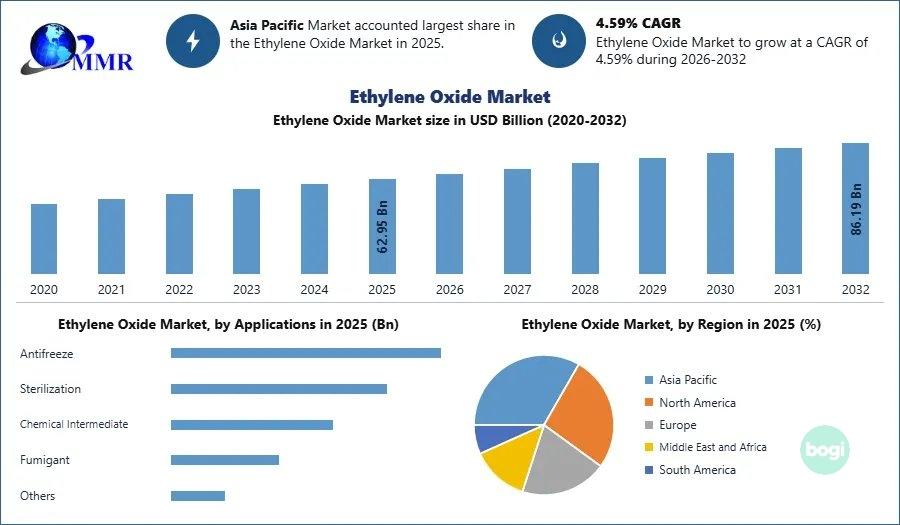
    The Ethylene Oxide Market was valued at USD 62.95 billion in 2025 and is projected to reach nearly USD 86.19 billion by 2032, expanding at a CAGR of 4.59% during 2026–2032. Ethylene oxide is a critical intermediate used to manufacture ethylene glycol, ethoxylates, ethanolamines, glycol ethers and polyethylene glycol. Its broad industrial relevance supports demand across packaging, textiles, automotive, detergents, personal care, pharmaceuticals and healthcare.

    The primary growth driver is rising demand for ethylene glycol, particularly for PET resins, polyester fibers, antifreeze and industrial coolants. Growing PET packaging, textile production and automotive manufacturing are strengthening downstream demand. Healthcare is another important opportunity because ethylene oxide is widely used to sterilize heat- and moisture-sensitive medical devices and pharmaceutical packaging. Producers are also investing in catalysts, energy-efficient processes, emission-control systems, digital monitoring and lower-carbon feedstocks, creating opportunities for chemical manufacturers.

    US Market Trends and Investment

    The United States remains strategically important because of its established petrochemical infrastructure and abundant ethylene feedstock. During 2025, US ethylene and ethylene glycol/ethylene oxide markets were influenced by planned maintenance and tighter first-quarter supply. Dow announced that it would indefinitely shut its 300,000-tonne-per-year ethylene glycol unit at Seadrift, Texas, while focusing the site on purified ethylene oxide and downstream derivatives. ExxonMobil also evaluated a potential ethane cracker and polyethylene project near Corpus Christi, with possible investment of approximately USD 8.6 billion, demonstrating continued interest in Gulf Coast integration.

    Access a Free Sample Report Copy : https://www.maximizemarketresearch.com/request-sample/41828/

    Market Segmentation: Largest Share

    By derivatives, Ethylene Glycol held the largest share of the market in 2025. Its dominance is supported by extensive use in PET resins, polyester fibers, antifreeze and industrial coolants.

    By application, Chemical Intermediate accounted for the largest share in 2025. Ethylene oxide is an essential feedstock for ethylene glycol, ethanolamines, ethoxylates, glycol ethers and polyethylene glycol, making this application central to multiple industrial value chains.
    Ethylene Oxide Market Growth Drivers and Opportunities Across Emerging Industries Ethylene Oxide Market Set to Reach USD 86.19 Billion by 2032 as Demand for Derivatives, Packaging, Healthcare and Specialty Chemicals Accelerates Market Estimation, Growth Drivers and Opportunities The Ethylene Oxide Market was valued at USD 62.95 billion in 2025 and is projected to reach nearly USD 86.19 billion by 2032, expanding at a CAGR of 4.59% during 2026–2032. Ethylene oxide is a critical intermediate used to manufacture ethylene glycol, ethoxylates, ethanolamines, glycol ethers and polyethylene glycol. Its broad industrial relevance supports demand across packaging, textiles, automotive, detergents, personal care, pharmaceuticals and healthcare. The primary growth driver is rising demand for ethylene glycol, particularly for PET resins, polyester fibers, antifreeze and industrial coolants. Growing PET packaging, textile production and automotive manufacturing are strengthening downstream demand. Healthcare is another important opportunity because ethylene oxide is widely used to sterilize heat- and moisture-sensitive medical devices and pharmaceutical packaging. Producers are also investing in catalysts, energy-efficient processes, emission-control systems, digital monitoring and lower-carbon feedstocks, creating opportunities for chemical manufacturers. US Market Trends and Investment The United States remains strategically important because of its established petrochemical infrastructure and abundant ethylene feedstock. During 2025, US ethylene and ethylene glycol/ethylene oxide markets were influenced by planned maintenance and tighter first-quarter supply. Dow announced that it would indefinitely shut its 300,000-tonne-per-year ethylene glycol unit at Seadrift, Texas, while focusing the site on purified ethylene oxide and downstream derivatives. ExxonMobil also evaluated a potential ethane cracker and polyethylene project near Corpus Christi, with possible investment of approximately USD 8.6 billion, demonstrating continued interest in Gulf Coast integration. Access a Free Sample Report Copy : https://www.maximizemarketresearch.com/request-sample/41828/ Market Segmentation: Largest Share By derivatives, Ethylene Glycol held the largest share of the market in 2025. Its dominance is supported by extensive use in PET resins, polyester fibers, antifreeze and industrial coolants. By application, Chemical Intermediate accounted for the largest share in 2025. Ethylene oxide is an essential feedstock for ethylene glycol, ethanolamines, ethoxylates, glycol ethers and polyethylene glycol, making this application central to multiple industrial value chains.
    0 Kommentare 0 Anteile 1209 Ansichten
  • Acetaldehyde Market Growth, Industry Trends and Future Development Analysis

    Key Highlights

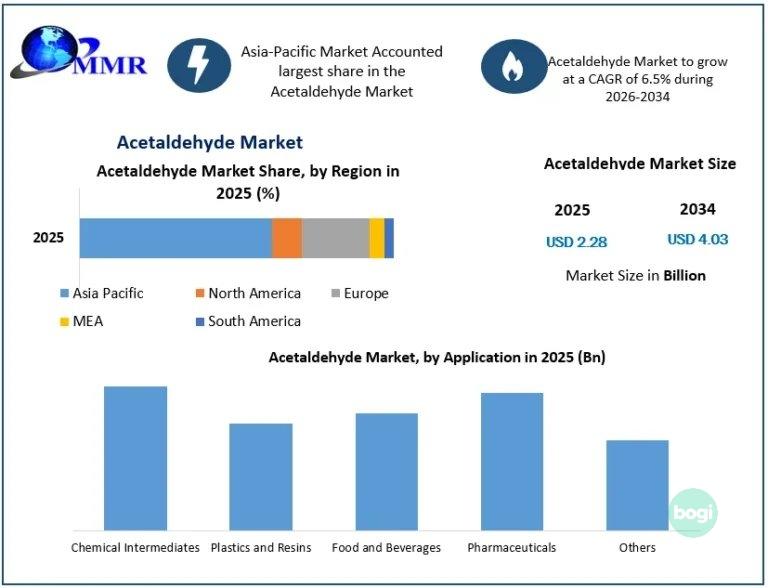
    Valued at USD 2.28 billion in 2025, the market is projected to reach USD 4.03 billion by 2034.
    Revenue is forecast to expand at a 6.5% CAGR from 2026 to 2034.
    Oxidation of Ethylene through the Wacker Process led the process segment in 2025.
    Asia Pacific is expected to maintain regional dominance.
    Bio-based production is emerging as an important sustainability-focused trend.
    Market Overview

    The Acetaldehyde Market is entering a period of sustained expansion as acetaldehyde remains an important chemical building block for acetic acid, pyridine derivatives, ethyl acetate, plastics, pharmaceuticals, and other downstream products. Its broad industrial utility gives producers exposure to several end-use industries rather than a single demand channel.

    The market was valued at USD 2.28 billion in 2025. This scale highlights the continuing importance of acetaldehyde within global chemical manufacturing, while the forecast trajectory indicates increasing commercial opportunities for producers and downstream suppliers.

    Why This Market Matters Now

    The Acetaldehyde Market matters because manufacturers increasingly need reliable intermediates that can support diversified downstream production. Growing requirements for acetic acid, plastics, pharmaceuticals, flavors, fragrances, and related chemical products are strengthening demand across multiple industrial value chains.

    At the same time, safety and environmental considerations are becoming more important. Acetaldehyde's flammability and potential health hazards mean producers must invest in handling, monitoring, risk management, and compliance capabilities, increasing the strategic importance of efficient manufacturing systems.

    Get Your Free Sample Report Link : https://www.maximizemarketresearch.com/request-sample/6262/

    Key Trends Driving Growth

    One of the most significant developments is the shift toward bio-based acetaldehyde production. Renewable feedstocks, biotechnology, fermentation techniques, and cleaner production processes are attracting attention as manufacturers respond to sustainability objectives and environmental pressures.

    Another important trend is process optimization. Producers are focusing on improving selectivity, yield, resource utilization, and emissions performance. These improvements can strengthen operational efficiency while helping manufacturers respond to increasingly demanding environmental expectations.
    Acetaldehyde Market Growth, Industry Trends and Future Development Analysis Key Highlights Valued at USD 2.28 billion in 2025, the market is projected to reach USD 4.03 billion by 2034. Revenue is forecast to expand at a 6.5% CAGR from 2026 to 2034. Oxidation of Ethylene through the Wacker Process led the process segment in 2025. Asia Pacific is expected to maintain regional dominance. Bio-based production is emerging as an important sustainability-focused trend. Market Overview The Acetaldehyde Market is entering a period of sustained expansion as acetaldehyde remains an important chemical building block for acetic acid, pyridine derivatives, ethyl acetate, plastics, pharmaceuticals, and other downstream products. Its broad industrial utility gives producers exposure to several end-use industries rather than a single demand channel. The market was valued at USD 2.28 billion in 2025. This scale highlights the continuing importance of acetaldehyde within global chemical manufacturing, while the forecast trajectory indicates increasing commercial opportunities for producers and downstream suppliers. Why This Market Matters Now The Acetaldehyde Market matters because manufacturers increasingly need reliable intermediates that can support diversified downstream production. Growing requirements for acetic acid, plastics, pharmaceuticals, flavors, fragrances, and related chemical products are strengthening demand across multiple industrial value chains. At the same time, safety and environmental considerations are becoming more important. Acetaldehyde's flammability and potential health hazards mean producers must invest in handling, monitoring, risk management, and compliance capabilities, increasing the strategic importance of efficient manufacturing systems. Get Your Free Sample Report Link : https://www.maximizemarketresearch.com/request-sample/6262/ Key Trends Driving Growth One of the most significant developments is the shift toward bio-based acetaldehyde production. Renewable feedstocks, biotechnology, fermentation techniques, and cleaner production processes are attracting attention as manufacturers respond to sustainability objectives and environmental pressures. Another important trend is process optimization. Producers are focusing on improving selectivity, yield, resource utilization, and emissions performance. These improvements can strengthen operational efficiency while helping manufacturers respond to increasingly demanding environmental expectations.
    0 Kommentare 0 Anteile 1046 Ansichten
  • Healthcare Biometrics Market Size, Demand, Analytical Overview, Comprehensive Analysis, Segmentation, Competitive Landscape 2035
    The research takes a grounded approach in presenting its findings, focusing on performance indicators across segments and territories without making speculative claims. Key developments, general industry behavior, and practical observations form the basis of the market forecast provided within this article.
    The article segments the market by Distribution by Historical Trend: Since 2020, Forecast Period: Till 2035, Market Size 2025: USD 12.0 Billion, Market Size 2035: USD 75.81 Billion, CAGR (Till 2035): 20.2%.
    https://www.rootsanalysis.com/reports/healthcare-biometrics-market.html
    Healthcare Biometrics Market Size, Demand, Analytical Overview, Comprehensive Analysis, Segmentation, Competitive Landscape 2035 The research takes a grounded approach in presenting its findings, focusing on performance indicators across segments and territories without making speculative claims. Key developments, general industry behavior, and practical observations form the basis of the market forecast provided within this article. The article segments the market by Distribution by Historical Trend: Since 2020, Forecast Period: Till 2035, Market Size 2025: USD 12.0 Billion, Market Size 2035: USD 75.81 Billion, CAGR (Till 2035): 20.2%. https://www.rootsanalysis.com/reports/healthcare-biometrics-market.html
    WWW.ROOTSANALYSIS.COM
    Healthcare Biometrics Market Size & Industry Trends [2035]
    Healthcare biometrics market size is expected to grow from USD 9.47 billion in 2024 to USD 12.0 billion in 2025 and USD 75.81 billion by 2035, at CAGR of 20.2%
    0 Kommentare 0 Anteile 872 Ansichten
  • Data Center Structured Cabling Market Recent Developments and Business Opportunities

    Key Highlights

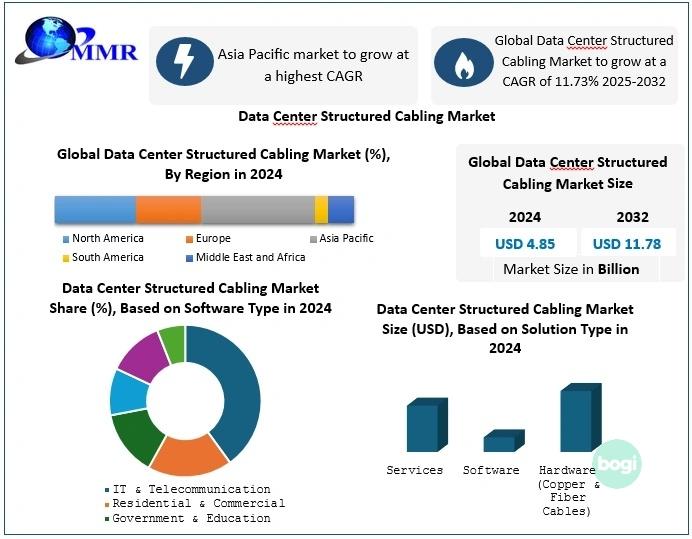
    Data Center Structured Cabling Market size was valued at USD 4.85 billion in 2024.
    The market is projected to reach nearly USD 11.78 billion by 2032.
    The market is expected to expand at a CAGR of 11.73% from 2025 to 2032.
    Rising cloud adoption and hyperscale facilities are increasing demand for advanced structured cabling solutions.
    Fiber optic technologies continue to gain momentum as businesses prioritize higher bandwidth and network efficiency.
    Digital transformation initiatives are encouraging enterprises to modernize data center infrastructure.
    Market Overview

    The Data Center Structured Cabling Market is becoming a fundamental part of the global digital economy as organizations continue investing in reliable and scalable network infrastructure. The market was valued at USD 4.85 billion in 2024 and is expected to reach nearly USD 11.78 billion by 2032, growing at a CAGR of 11.73% during the forecast period. This steady expansion reflects increasing investments in modern data centers, creating significant opportunities for infrastructure providers, technology vendors, and enterprise customers.

    Structured cabling provides an organized foundation that supports high-speed data transmission, easier maintenance, and long-term operational efficiency. As digital ecosystems become increasingly complex, businesses are recognizing that robust cabling infrastructure directly influences network performance and business continuity.

    Why This Market Matters Now

    The digital economy continues to generate enormous volumes of information across industries. Enterprises are deploying cloud platforms, artificial intelligence applications, edge computing solutions, and advanced analytics that require highly reliable network infrastructure. As a result, the Data Center Structured Cabling Market has become a critical enabler of business growth.

    Organizations are also focusing on reducing operational downtime while improving scalability. Modern structured cabling systems simplify upgrades, reduce maintenance costs, and provide flexibility for future expansion. This shift is encouraging procurement teams to prioritize high-performance infrastructure capable of supporting evolving digital requirements.

    Request Your Sample Report Now : https://www.maximizemarketresearch.com/request-sample/63877/

    Key Trends Driving Growth

    One of the strongest trends transforming the Data Center Structured Cabling Market is the increasing deployment of hyperscale data centers. These facilities require highly organized and efficient cabling systems that can support growing server density and higher network speeds.
    Data Center Structured Cabling Market Recent Developments and Business Opportunities Key Highlights Data Center Structured Cabling Market size was valued at USD 4.85 billion in 2024. The market is projected to reach nearly USD 11.78 billion by 2032. The market is expected to expand at a CAGR of 11.73% from 2025 to 2032. Rising cloud adoption and hyperscale facilities are increasing demand for advanced structured cabling solutions. Fiber optic technologies continue to gain momentum as businesses prioritize higher bandwidth and network efficiency. Digital transformation initiatives are encouraging enterprises to modernize data center infrastructure. Market Overview The Data Center Structured Cabling Market is becoming a fundamental part of the global digital economy as organizations continue investing in reliable and scalable network infrastructure. The market was valued at USD 4.85 billion in 2024 and is expected to reach nearly USD 11.78 billion by 2032, growing at a CAGR of 11.73% during the forecast period. This steady expansion reflects increasing investments in modern data centers, creating significant opportunities for infrastructure providers, technology vendors, and enterprise customers. Structured cabling provides an organized foundation that supports high-speed data transmission, easier maintenance, and long-term operational efficiency. As digital ecosystems become increasingly complex, businesses are recognizing that robust cabling infrastructure directly influences network performance and business continuity. Why This Market Matters Now The digital economy continues to generate enormous volumes of information across industries. Enterprises are deploying cloud platforms, artificial intelligence applications, edge computing solutions, and advanced analytics that require highly reliable network infrastructure. As a result, the Data Center Structured Cabling Market has become a critical enabler of business growth. Organizations are also focusing on reducing operational downtime while improving scalability. Modern structured cabling systems simplify upgrades, reduce maintenance costs, and provide flexibility for future expansion. This shift is encouraging procurement teams to prioritize high-performance infrastructure capable of supporting evolving digital requirements. Request Your Sample Report Now : https://www.maximizemarketresearch.com/request-sample/63877/ Key Trends Driving Growth One of the strongest trends transforming the Data Center Structured Cabling Market is the increasing deployment of hyperscale data centers. These facilities require highly organized and efficient cabling systems that can support growing server density and higher network speeds.
    0 Kommentare 0 Anteile 1317 Ansichten
  • Geomembrane Market Top Companies, Industry Overview and Market Development

    Key Highlights

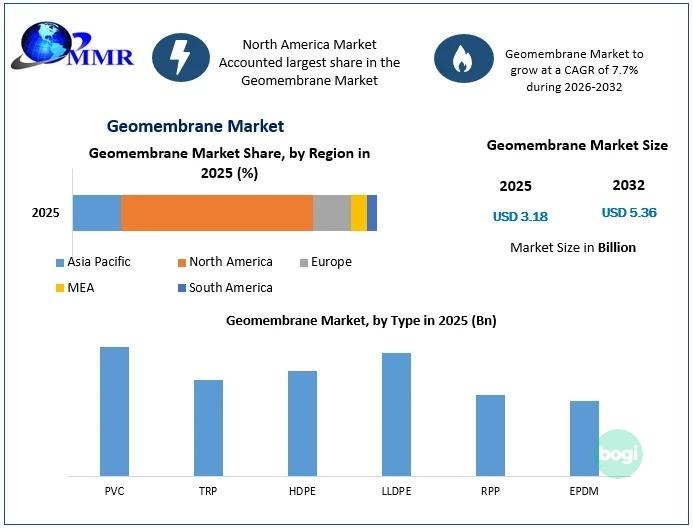
    Geomembrane Market size was valued at USD 3.18 Bn in 2025.
    The market is projected to reach USD 5.36 Bn by 2032.
    The market is expected to grow at a CAGR of 7.7% during the forecast period.
    Infrastructure expansion and environmental regulations continue to strengthen demand.
    Mining, waste management, water conservation, and construction remain key application areas.
    Manufacturers are focusing on product innovation and sustainable material solutions.
    Market Overview

    The Geomembrane Market continues to gain momentum as industries invest in reliable containment technologies to improve operational efficiency and environmental performance. Valued at USD 3.18 Bn in 2025 and expected to reach USD 5.36 Bn by 2032 at a CAGR of 7.7%, the sector reflects increasing confidence in advanced engineering materials. This growth signals expanding business opportunities for manufacturers, suppliers, and infrastructure developers seeking durable and cost-effective lining systems.

    As governments strengthen environmental policies and industries modernize aging infrastructure, geomembranes are becoming an essential component across multiple sectors. Their ability to minimize leakage, protect natural resources, and improve project durability makes them increasingly valuable in large-scale industrial developments.

    Why This Market Matters Now

    Environmental compliance has become a strategic business priority rather than simply a regulatory obligation. Organizations across mining, municipal infrastructure, and industrial processing are investing in advanced containment solutions to reduce operational risks while supporting sustainability goals.

    The Geomembrane Market is benefiting from this transition because reliable lining systems help companies reduce maintenance costs, extend infrastructure life, and improve environmental performance. Growing investments in waste management facilities, water conservation projects, and renewable energy infrastructure further reinforce demand, creating long-term growth opportunities for material suppliers and technology providers.

    Access a Free Sample Report Copy : https://www.maximizemarketresearch.com/request-sample/16651/

    Key Trends Driving Growth

    Several industry trends are reshaping the Geomembrane Market. Increased adoption of high-performance polymer materials is improving product durability, chemical resistance, and installation efficiency. Manufacturers are also introducing innovative production technologies that enhance flexibility while maintaining high mechanical strength.

    Another important trend is the expansion of water management projects. Rising concerns over water scarcity are encouraging investments in reservoirs, canals, irrigation systems, and wastewater treatment facilities where geomembranes provide dependable waterproofing performance.

    Mining operations are also increasing demand for advanced containment systems. Modern mining facilities require secure tailings storage and environmental protection measures, making geomembranes an essential material for responsible resource development.

    Digital project planning and improved installation techniques are further enhancing productivity, allowing contractors to complete complex infrastructure projects more efficiently.

    Market Growth Outlook

    The Geomembrane Market is positioned for sustained expansion as governments continue investing in infrastructure modernization and environmental protection initiatives. The projected increase from USD 3.18 Bn in 2025 to USD 5.36 Bn by 2032 reflects strong demand across both developed and emerging economies. This growth indicates expanding opportunities for manufacturers to strengthen production capacity, diversify product portfolios, and establish strategic partnerships with engineering and construction companies.

    Businesses that focus on product quality, regulatory compliance, and application-specific solutions are expected to strengthen their competitive positions as industrial customers increasingly prioritize long-term reliability over short-term cost savings.

    Market Segmentation

    The Geomembrane Market serves a diverse range of industries through multiple product types and applications. Different geomembrane materials are selected based on project requirements, including durability, chemical resistance, flexibility, and environmental conditions.

    Application areas continue to expand across waste management, mining, water management, construction, transportation infrastructure, and industrial containment systems. Each segment presents unique opportunities as project developers seek specialized solutions capable of delivering long operational life while meeting evolving regulatory standards.

    Geomembrane Market Top Companies, Industry Overview and Market Development Key Highlights Geomembrane Market size was valued at USD 3.18 Bn in 2025. The market is projected to reach USD 5.36 Bn by 2032. The market is expected to grow at a CAGR of 7.7% during the forecast period. Infrastructure expansion and environmental regulations continue to strengthen demand. Mining, waste management, water conservation, and construction remain key application areas. Manufacturers are focusing on product innovation and sustainable material solutions. Market Overview The Geomembrane Market continues to gain momentum as industries invest in reliable containment technologies to improve operational efficiency and environmental performance. Valued at USD 3.18 Bn in 2025 and expected to reach USD 5.36 Bn by 2032 at a CAGR of 7.7%, the sector reflects increasing confidence in advanced engineering materials. This growth signals expanding business opportunities for manufacturers, suppliers, and infrastructure developers seeking durable and cost-effective lining systems. As governments strengthen environmental policies and industries modernize aging infrastructure, geomembranes are becoming an essential component across multiple sectors. Their ability to minimize leakage, protect natural resources, and improve project durability makes them increasingly valuable in large-scale industrial developments. Why This Market Matters Now Environmental compliance has become a strategic business priority rather than simply a regulatory obligation. Organizations across mining, municipal infrastructure, and industrial processing are investing in advanced containment solutions to reduce operational risks while supporting sustainability goals. The Geomembrane Market is benefiting from this transition because reliable lining systems help companies reduce maintenance costs, extend infrastructure life, and improve environmental performance. Growing investments in waste management facilities, water conservation projects, and renewable energy infrastructure further reinforce demand, creating long-term growth opportunities for material suppliers and technology providers. Access a Free Sample Report Copy : https://www.maximizemarketresearch.com/request-sample/16651/ Key Trends Driving Growth Several industry trends are reshaping the Geomembrane Market. Increased adoption of high-performance polymer materials is improving product durability, chemical resistance, and installation efficiency. Manufacturers are also introducing innovative production technologies that enhance flexibility while maintaining high mechanical strength. Another important trend is the expansion of water management projects. Rising concerns over water scarcity are encouraging investments in reservoirs, canals, irrigation systems, and wastewater treatment facilities where geomembranes provide dependable waterproofing performance. Mining operations are also increasing demand for advanced containment systems. Modern mining facilities require secure tailings storage and environmental protection measures, making geomembranes an essential material for responsible resource development. Digital project planning and improved installation techniques are further enhancing productivity, allowing contractors to complete complex infrastructure projects more efficiently. Market Growth Outlook The Geomembrane Market is positioned for sustained expansion as governments continue investing in infrastructure modernization and environmental protection initiatives. The projected increase from USD 3.18 Bn in 2025 to USD 5.36 Bn by 2032 reflects strong demand across both developed and emerging economies. This growth indicates expanding opportunities for manufacturers to strengthen production capacity, diversify product portfolios, and establish strategic partnerships with engineering and construction companies. Businesses that focus on product quality, regulatory compliance, and application-specific solutions are expected to strengthen their competitive positions as industrial customers increasingly prioritize long-term reliability over short-term cost savings. Market Segmentation The Geomembrane Market serves a diverse range of industries through multiple product types and applications. Different geomembrane materials are selected based on project requirements, including durability, chemical resistance, flexibility, and environmental conditions. Application areas continue to expand across waste management, mining, water management, construction, transportation infrastructure, and industrial containment systems. Each segment presents unique opportunities as project developers seek specialized solutions capable of delivering long operational life while meeting evolving regulatory standards.
    0 Kommentare 0 Anteile 2472 Ansichten
  • Sulfur Market Growth Analysis, Emerging Opportunities and Industry Trends

    Key Highlights

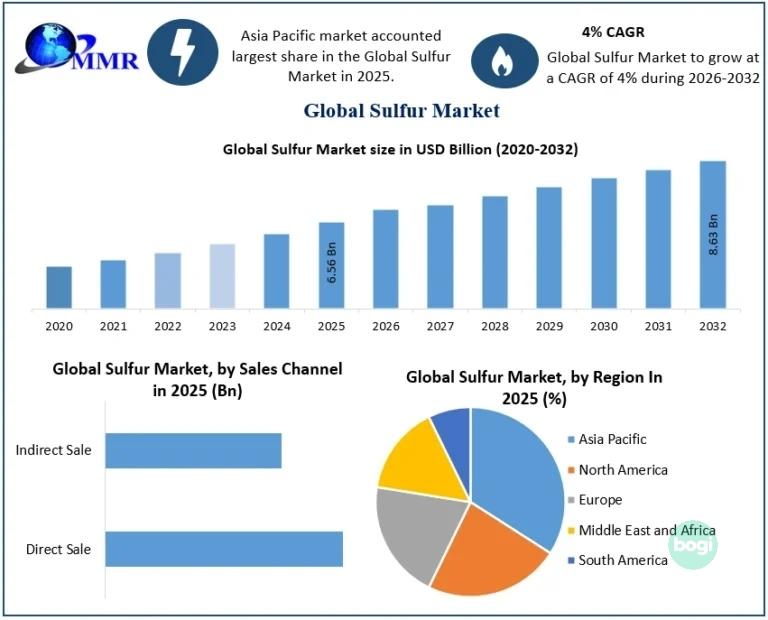
    Sulfur market valued at USD 6.56 Billion in 2025.
    Expected to reach nearly USD 8.63 Billion by 2032.
    Forecast to grow at a CAGR of 4% through 2032.
    Fertilizer production continues to support strong consumption.
    Industrial applications are expanding across multiple sectors.
    Sustainability initiatives are encouraging efficient sulfur utilization.
    Strategic investments are strengthening supply chains.
    Market Overview

    The Sulfur Market continues to play a critical role in the global industrial ecosystem because sulfur serves as an essential raw material across multiple manufacturing processes. Its importance extends beyond fertilizers to include petroleum refining, chemical production, metal processing, pharmaceuticals, and industrial manufacturing.

    As industries increase production while focusing on operational efficiency, demand for dependable sulfur supplies continues to rise. This shift is encouraging producers to improve production capabilities, optimize logistics, and develop stronger supply partnerships. The result is a market that is steadily evolving to support changing industrial requirements while maintaining long-term growth potential.

    Why This Market Matters Now

    Several industries are entering a phase where consistent access to sulfur has become increasingly valuable. Agricultural productivity remains a global priority, creating sustained demand for sulfur-based fertilizers that help improve soil quality and crop yields. At the same time, chemical manufacturers continue expanding production capacities to meet growing requirements from downstream industries.

    The sulfur market also benefits from broader industrial modernization. Companies are investing in cleaner production technologies and more efficient manufacturing processes, increasing the need for reliable sulfur supplies. As businesses pursue operational resilience, procurement strategies are shifting toward long-term supplier relationships and diversified sourcing models.

    Get a Sample Copy – Market Report : https://www.maximizemarketresearch.com/request-sample/26714/

    Sulfur Market Growth Analysis, Emerging Opportunities and Industry Trends Key Highlights Sulfur market valued at USD 6.56 Billion in 2025. Expected to reach nearly USD 8.63 Billion by 2032. Forecast to grow at a CAGR of 4% through 2032. Fertilizer production continues to support strong consumption. Industrial applications are expanding across multiple sectors. Sustainability initiatives are encouraging efficient sulfur utilization. Strategic investments are strengthening supply chains. Market Overview The Sulfur Market continues to play a critical role in the global industrial ecosystem because sulfur serves as an essential raw material across multiple manufacturing processes. Its importance extends beyond fertilizers to include petroleum refining, chemical production, metal processing, pharmaceuticals, and industrial manufacturing. As industries increase production while focusing on operational efficiency, demand for dependable sulfur supplies continues to rise. This shift is encouraging producers to improve production capabilities, optimize logistics, and develop stronger supply partnerships. The result is a market that is steadily evolving to support changing industrial requirements while maintaining long-term growth potential. Why This Market Matters Now Several industries are entering a phase where consistent access to sulfur has become increasingly valuable. Agricultural productivity remains a global priority, creating sustained demand for sulfur-based fertilizers that help improve soil quality and crop yields. At the same time, chemical manufacturers continue expanding production capacities to meet growing requirements from downstream industries. The sulfur market also benefits from broader industrial modernization. Companies are investing in cleaner production technologies and more efficient manufacturing processes, increasing the need for reliable sulfur supplies. As businesses pursue operational resilience, procurement strategies are shifting toward long-term supplier relationships and diversified sourcing models. Get a Sample Copy – Market Report : https://www.maximizemarketresearch.com/request-sample/26714/
    0 Kommentare 0 Anteile 1600 Ansichten
  • Sulfur Market Industry Trends, Growth Opportunities and Market Analysis

    Key Highlights

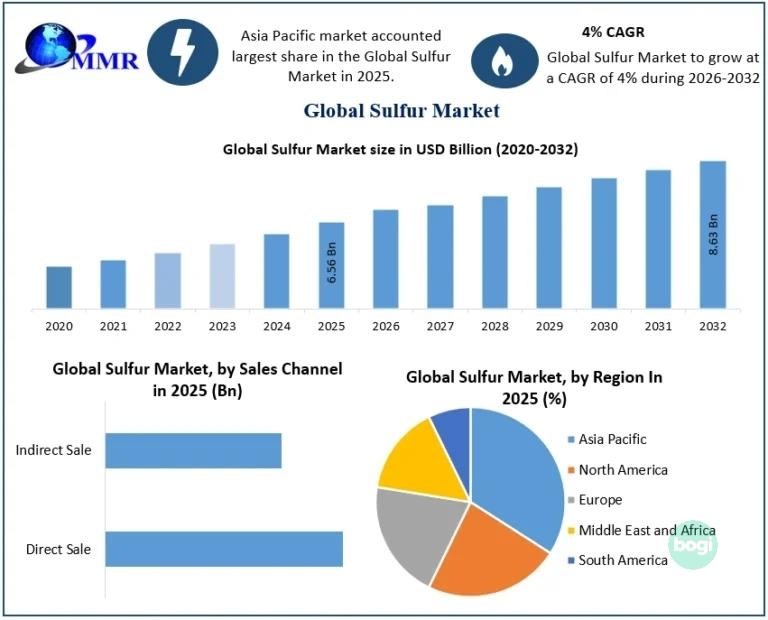
    Sulfur market valued at USD 6.56 Billion in 2025.
    Expected to reach nearly USD 8.63 Billion by 2032.
    Forecast to grow at a CAGR of 4% through 2032.
    Fertilizer production continues to support strong consumption.
    Industrial applications are expanding across multiple sectors.
    Sustainability initiatives are encouraging efficient sulfur utilization.
    Strategic investments are strengthening supply chains.
    Market Overview

    The Sulfur Market continues to play a critical role in the global industrial ecosystem because sulfur serves as an essential raw material across multiple manufacturing processes. Its importance extends beyond fertilizers to include petroleum refining, chemical production, metal processing, pharmaceuticals, and industrial manufacturing.

    As industries increase production while focusing on operational efficiency, demand for dependable sulfur supplies continues to rise. This shift is encouraging producers to improve production capabilities, optimize logistics, and develop stronger supply partnerships. The result is a market that is steadily evolving to support changing industrial requirements while maintaining long-term growth potential.

    Why This Market Matters Now

    Several industries are entering a phase where consistent access to sulfur has become increasingly valuable. Agricultural productivity remains a global priority, creating sustained demand for sulfur-based fertilizers that help improve soil quality and crop yields. At the same time, chemical manufacturers continue expanding production capacities to meet growing requirements from downstream industries.

    The sulfur market also benefits from broader industrial modernization. Companies are investing in cleaner production technologies and more efficient manufacturing processes, increasing the need for reliable sulfur supplies. As businesses pursue operational resilience, procurement strategies are shifting toward long-term supplier relationships and diversified sourcing models.

    Get a Sample Copy – Market Report : https://www.maximizemarketresearch.com/request-sample/26714/

    Key Trends Driving Growth

    One of the most significant trends influencing the sulfur market is the increasing focus on sustainable industrial operations. Manufacturers are improving resource efficiency while maximizing the value of sulfur recovered from industrial processes. This approach supports both environmental objectives and commercial performance.

    Another important trend is the growing integration of sulfur across specialized chemical applications. Industrial innovation continues to create new opportunities for sulfur-based products in manufacturing, processing, and material development.

    Digital supply chain management is also improving visibility across procurement and inventory planning. Companies are leveraging better forecasting and logistics coordination to reduce disruptions while ensuring continuous material availability.

    Market Growth Outlook

    The sulfur market is positioned for stable expansion over the coming years as industrial production continues to recover and agricultural demand remains strong. The projected CAGR of 4% reflects consistent business opportunities rather than short-term market fluctuations, allowing companies to make long-term investment decisions with greater confidence.

    This growth outlook supports capital investments in production facilities, infrastructure improvements, and distribution networks. Businesses that strengthen supplier relationships and optimize procurement strategies are likely to benefit from improving market conditions while maintaining competitive operational performance.

    Market Segmentation

    The sulfur market serves a diverse customer base across multiple industrial sectors. Fertilizer applications continue to represent one of the most significant demand segments due to sulfur's essential role in agricultural productivity and soil nutrition.

    Beyond agriculture, sulfur supports chemical manufacturing, petroleum refining, metal processing, and various industrial applications that require high-quality raw materials. This diversified demand base strengthens market stability by reducing dependence on a single end-use industry.

    Different application segments also encourage product innovation as manufacturers develop solutions designed to meet evolving industrial performance standards and operational requirements.

    Sulfur Market Industry Trends, Growth Opportunities and Market Analysis Key Highlights Sulfur market valued at USD 6.56 Billion in 2025. Expected to reach nearly USD 8.63 Billion by 2032. Forecast to grow at a CAGR of 4% through 2032. Fertilizer production continues to support strong consumption. Industrial applications are expanding across multiple sectors. Sustainability initiatives are encouraging efficient sulfur utilization. Strategic investments are strengthening supply chains. Market Overview The Sulfur Market continues to play a critical role in the global industrial ecosystem because sulfur serves as an essential raw material across multiple manufacturing processes. Its importance extends beyond fertilizers to include petroleum refining, chemical production, metal processing, pharmaceuticals, and industrial manufacturing. As industries increase production while focusing on operational efficiency, demand for dependable sulfur supplies continues to rise. This shift is encouraging producers to improve production capabilities, optimize logistics, and develop stronger supply partnerships. The result is a market that is steadily evolving to support changing industrial requirements while maintaining long-term growth potential. Why This Market Matters Now Several industries are entering a phase where consistent access to sulfur has become increasingly valuable. Agricultural productivity remains a global priority, creating sustained demand for sulfur-based fertilizers that help improve soil quality and crop yields. At the same time, chemical manufacturers continue expanding production capacities to meet growing requirements from downstream industries. The sulfur market also benefits from broader industrial modernization. Companies are investing in cleaner production technologies and more efficient manufacturing processes, increasing the need for reliable sulfur supplies. As businesses pursue operational resilience, procurement strategies are shifting toward long-term supplier relationships and diversified sourcing models. Get a Sample Copy – Market Report : https://www.maximizemarketresearch.com/request-sample/26714/ Key Trends Driving Growth One of the most significant trends influencing the sulfur market is the increasing focus on sustainable industrial operations. Manufacturers are improving resource efficiency while maximizing the value of sulfur recovered from industrial processes. This approach supports both environmental objectives and commercial performance. Another important trend is the growing integration of sulfur across specialized chemical applications. Industrial innovation continues to create new opportunities for sulfur-based products in manufacturing, processing, and material development. Digital supply chain management is also improving visibility across procurement and inventory planning. Companies are leveraging better forecasting and logistics coordination to reduce disruptions while ensuring continuous material availability. Market Growth Outlook The sulfur market is positioned for stable expansion over the coming years as industrial production continues to recover and agricultural demand remains strong. The projected CAGR of 4% reflects consistent business opportunities rather than short-term market fluctuations, allowing companies to make long-term investment decisions with greater confidence. This growth outlook supports capital investments in production facilities, infrastructure improvements, and distribution networks. Businesses that strengthen supplier relationships and optimize procurement strategies are likely to benefit from improving market conditions while maintaining competitive operational performance. Market Segmentation The sulfur market serves a diverse customer base across multiple industrial sectors. Fertilizer applications continue to represent one of the most significant demand segments due to sulfur's essential role in agricultural productivity and soil nutrition. Beyond agriculture, sulfur supports chemical manufacturing, petroleum refining, metal processing, and various industrial applications that require high-quality raw materials. This diversified demand base strengthens market stability by reducing dependence on a single end-use industry. Different application segments also encourage product innovation as manufacturers develop solutions designed to meet evolving industrial performance standards and operational requirements.
    0 Kommentare 0 Anteile 1581 Ansichten
Suchergebnis