


• Microfinance Market Key Insights, Industry Trends, and Revenue Growth Forecast

    Key Highlights

    The Microfinance Market was valued at USD 235.21 billion in 2025.
    Revenue is projected to reach nearly USD 536.45 billion by 2032.
    The market is expected to expand at a 12.5% CAGR from 2025 to 2032.
    Mobile banking and fintech are expanding access while reducing operating costs.
    Product diversification is moving beyond traditional microloans.
    Market Overview

    The Microfinance Market is evolving from a traditional small-loan model into a broader financial-services ecosystem. Microfinance institutions are increasingly offering savings accounts, insurance, money transfers, and leasing services alongside lending products, allowing providers to address more aspects of customers’ financial needs.

    The market reached USD 235.21 billion in 2025, establishing a substantial revenue base for the next growth cycle. For providers, this scale creates opportunities to expand portfolios, improve digital infrastructure, and develop services for previously underserved customer groups.

    Why This Market Matters Now

    Financial inclusion remains a central growth catalyst. The report highlights that around 1.4 billion adults worldwide lack access to traditional banking services, leaving a substantial customer opportunity for alternative financial providers.

    For the Microfinance Market, this gap means demand is not limited to conventional borrowing. Individuals, small enterprises, women entrepreneurs, farmers, and rural communities require accessible financial products that support business activity, household needs, and agricultural productivity.

    Request Your Sample Report Now : https://www.maximizemarketresearch.com/request-sample/230628/
    Microfinance Market Key Insights, Industry Trends, and Revenue Growth Forecast Key Highlights The Microfinance Market was valued at USD 235.21 billion in 2025. Revenue is projected to reach nearly USD 536.45 billion by 2032. The market is expected to expand at a 12.5% CAGR from 2025 to 2032. Mobile banking and fintech are expanding access while reducing operating costs. Product diversification is moving beyond traditional microloans. Market Overview The Microfinance Market is evolving from a traditional small-loan model into a broader financial-services ecosystem. Microfinance institutions are increasingly offering savings accounts, insurance, money transfers, and leasing services alongside lending products, allowing providers to address more aspects of customers’ financial needs. The market reached USD 235.21 billion in 2025, establishing a substantial revenue base for the next growth cycle. For providers, this scale creates opportunities to expand portfolios, improve digital infrastructure, and develop services for previously underserved customer groups. Why This Market Matters Now Financial inclusion remains a central growth catalyst. The report highlights that around 1.4 billion adults worldwide lack access to traditional banking services, leaving a substantial customer opportunity for alternative financial providers. For the Microfinance Market, this gap means demand is not limited to conventional borrowing. Individuals, small enterprises, women entrepreneurs, farmers, and rural communities require accessible financial products that support business activity, household needs, and agricultural productivity. Request Your Sample Report Now : https://www.maximizemarketresearch.com/request-sample/230628/
    0 Comments 0 Shares 771 Views
  • Gaming Console Market Share, Growth Drivers, and Competitive Industry Analysis

    Key Highlights

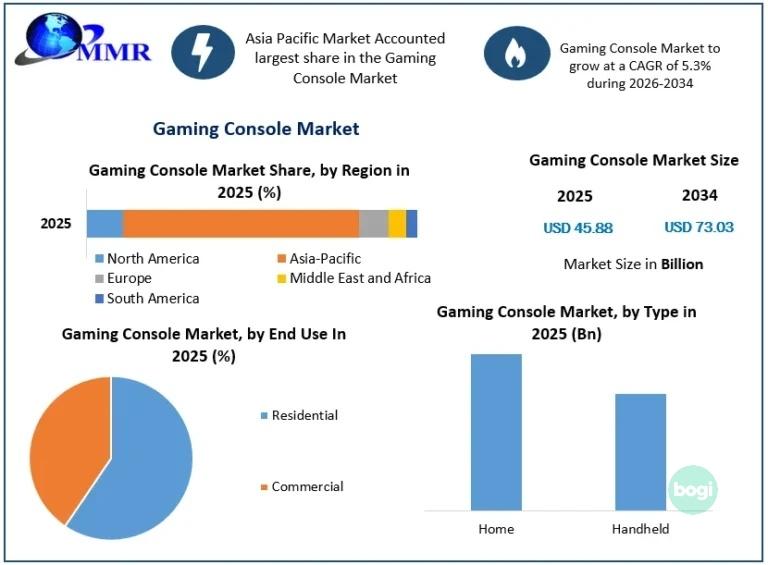
    The Gaming Console Market is expected to grow from USD 45.88 billion in 2025 to USD 73.03 billion by 2034.
    The market is projected to expand at a CAGR of 5.3% during the forecast period from 2026 to 2034.
    Growing consumer demand for immersive gaming experiences continues to support long-term industry expansion.
    Digital game distribution, subscription services, and cloud connectivity are reshaping purchasing behavior.
    Hardware innovation and exclusive gaming content remain major competitive differentiators.
    Market Overview

    The Gaming Console Market is entering a new phase of growth as evolving consumer expectations reshape the interactive entertainment industry. For manufacturers, investors, and technology providers, the rising demand signals stronger competition and greater opportunities to capture long-term value. The market is projected to increase from USD 45.88 billion in 2025 to USD 73.03 billion by 2034, registering a CAGR of 5.3% during the forecast period. This sustained expansion indicates continued investment opportunities for hardware developers, software publishers, component suppliers, and retail channels.

    Unlike previous growth cycles driven primarily by hardware launches, today's market is increasingly influenced by digital ecosystems, online services, and recurring subscription revenues. As a result, companies are shifting their business strategies beyond device sales to build stronger customer engagement and recurring income streams.

    Why This Market Matters Now

    Consumer entertainment habits have changed significantly over the past few years. Gaming has become a mainstream activity across multiple age groups, creating stronger demand for premium gaming experiences and connected digital services. This shift has encouraged console manufacturers to focus on high-performance hardware, exclusive game libraries, and seamless online connectivity.

    The Gaming Console Market also benefits from the growing popularity of esports, multiplayer gaming, and live streaming. These trends increase player engagement while encouraging consumers to invest in advanced gaming systems and accessories. Businesses operating across the gaming value chain now have greater opportunities to expand through partnerships, subscription models, and digital content offerings.

    Request Your Sample Market Report PDF : https://www.maximizemarketresearch.com/request-sample/21598/

    Gaming Console Market Share, Growth Drivers, and Competitive Industry Analysis Key Highlights The Gaming Console Market is expected to grow from USD 45.88 billion in 2025 to USD 73.03 billion by 2034. The market is projected to expand at a CAGR of 5.3% during the forecast period from 2026 to 2034. Growing consumer demand for immersive gaming experiences continues to support long-term industry expansion. Digital game distribution, subscription services, and cloud connectivity are reshaping purchasing behavior. Hardware innovation and exclusive gaming content remain major competitive differentiators. Market Overview The Gaming Console Market is entering a new phase of growth as evolving consumer expectations reshape the interactive entertainment industry. For manufacturers, investors, and technology providers, the rising demand signals stronger competition and greater opportunities to capture long-term value. The market is projected to increase from USD 45.88 billion in 2025 to USD 73.03 billion by 2034, registering a CAGR of 5.3% during the forecast period. This sustained expansion indicates continued investment opportunities for hardware developers, software publishers, component suppliers, and retail channels. Unlike previous growth cycles driven primarily by hardware launches, today's market is increasingly influenced by digital ecosystems, online services, and recurring subscription revenues. As a result, companies are shifting their business strategies beyond device sales to build stronger customer engagement and recurring income streams. Why This Market Matters Now Consumer entertainment habits have changed significantly over the past few years. Gaming has become a mainstream activity across multiple age groups, creating stronger demand for premium gaming experiences and connected digital services. This shift has encouraged console manufacturers to focus on high-performance hardware, exclusive game libraries, and seamless online connectivity. The Gaming Console Market also benefits from the growing popularity of esports, multiplayer gaming, and live streaming. These trends increase player engagement while encouraging consumers to invest in advanced gaming systems and accessories. Businesses operating across the gaming value chain now have greater opportunities to expand through partnerships, subscription models, and digital content offerings. Request Your Sample Market Report PDF : https://www.maximizemarketresearch.com/request-sample/21598/
    0 Comments 0 Shares 623 Views
  • Educational Toy Industry Growth Driven by Parent Awareness

    Anticipated Growth in Revenue: The Educational Toy Market size was valued at USD 87.97 Billion in 2024 and the total Educational Toy revenue is expected to grow at a CAGR of 8.54% from 2025 to 2032, reaching nearly USD 169.45 Billion.

    Market Overview

    The global Educational Toy Market is witnessing remarkable growth as parents, schools, and childcare institutions increasingly recognize the importance of interactive learning experiences for children. Educational toys are specially designed products that encourage cognitive development, creativity, problem-solving, emotional intelligence, and practical skills through engaging play activities. These toys are no longer limited to traditional alphabet blocks or puzzle games. Today’s market includes STEM kits, coding robots, sensory toys, language-learning devices, science experiment sets, and eco-friendly learning products.

    The rapid transformation of the education sector, combined with digital innovation, has significantly expanded the scope of educational toys worldwide. Parents are now investing more in toys that support brain development and reduce excessive screen time. Educational toys have become essential tools that combine entertainment with knowledge, making learning enjoyable and effective for children across different age groups.

    Download Your Free Sample Report for Exclusive Market Trends : https://www.maximizemarketresearch.com/request-sample/147976/

    Market Growth Outlook: A Blend of Tradition and Innovation

    The Educational Toy Market is growing steadily due to changing consumer preferences and rising awareness about early childhood education. Traditional educational toys such as building blocks, memory games, and wooden learning kits still hold strong market value because of their developmental benefits and long-lasting appeal. However, modern technology has introduced a new generation of smart educational toys that use artificial intelligence, augmented reality, and digital interaction to create immersive learning experiences.

    The combination of traditional learning methods and advanced technologies is driving strong market expansion. Educational toys that teach coding, robotics, mathematics, and engineering concepts are becoming increasingly popular among parents seeking future-ready skills for their children.

    Online retail platforms have also played a major role in accelerating market growth. Consumers can easily compare products, read reviews, and purchase educational toys from global brands through e-commerce websites. Additionally, the growing popularity of homeschooling and remote learning has increased demand for learning-based toys and activity kits.

    The market is expected to continue expanding as educational institutions integrate play-based learning techniques into their curriculum and as parents prioritize child development investments.

    What Is the Goal of the Market, and What Are Its Types?

    The primary goal of the Educational Toy Market is to support children’s intellectual, social, emotional, and physical development through interactive and engaging activities. Educational toys help children learn naturally while improving concentration, communication, creativity, and analytical thinking.

    Educational toys are available in several categories designed for different developmental objectives and age groups.

    STEM Toys

    STEM toys focus on science, technology, engineering, and mathematics learning. These include robotics kits, coding games, engineering models, and scientific experiment sets.

    Cognitive Development Toys

    These toys improve memory, logic, and problem-solving skills. Puzzles, strategy games, and matching activities fall under this segment.

    Language and Literacy Toys

    Alphabet boards, storytelling kits, phonics games, and interactive reading devices help children develop communication and language skills.

    Creative and Artistic Toys

    Drawing kits, musical instruments, clay modeling sets, and painting tools encourage imagination and artistic expression.

    Sensory and Motor Skill Toys

    These toys support physical coordination and sensory development, especially for toddlers and children with special learning needs.

    Eco-Friendly Educational Toys

    Sustainable toys made from wood, recycled plastic, or biodegradable materials are gaining popularity among environmentally conscious consumers.
    Educational Toy Industry Growth Driven by Parent Awareness Anticipated Growth in Revenue: The Educational Toy Market size was valued at USD 87.97 Billion in 2024 and the total Educational Toy revenue is expected to grow at a CAGR of 8.54% from 2025 to 2032, reaching nearly USD 169.45 Billion. Market Overview The global Educational Toy Market is witnessing remarkable growth as parents, schools, and childcare institutions increasingly recognize the importance of interactive learning experiences for children. Educational toys are specially designed products that encourage cognitive development, creativity, problem-solving, emotional intelligence, and practical skills through engaging play activities. These toys are no longer limited to traditional alphabet blocks or puzzle games. Today’s market includes STEM kits, coding robots, sensory toys, language-learning devices, science experiment sets, and eco-friendly learning products. The rapid transformation of the education sector, combined with digital innovation, has significantly expanded the scope of educational toys worldwide. Parents are now investing more in toys that support brain development and reduce excessive screen time. Educational toys have become essential tools that combine entertainment with knowledge, making learning enjoyable and effective for children across different age groups. Download Your Free Sample Report for Exclusive Market Trends : https://www.maximizemarketresearch.com/request-sample/147976/ Market Growth Outlook: A Blend of Tradition and Innovation The Educational Toy Market is growing steadily due to changing consumer preferences and rising awareness about early childhood education. Traditional educational toys such as building blocks, memory games, and wooden learning kits still hold strong market value because of their developmental benefits and long-lasting appeal. However, modern technology has introduced a new generation of smart educational toys that use artificial intelligence, augmented reality, and digital interaction to create immersive learning experiences. The combination of traditional learning methods and advanced technologies is driving strong market expansion. Educational toys that teach coding, robotics, mathematics, and engineering concepts are becoming increasingly popular among parents seeking future-ready skills for their children. Online retail platforms have also played a major role in accelerating market growth. Consumers can easily compare products, read reviews, and purchase educational toys from global brands through e-commerce websites. Additionally, the growing popularity of homeschooling and remote learning has increased demand for learning-based toys and activity kits. The market is expected to continue expanding as educational institutions integrate play-based learning techniques into their curriculum and as parents prioritize child development investments. What Is the Goal of the Market, and What Are Its Types? The primary goal of the Educational Toy Market is to support children’s intellectual, social, emotional, and physical development through interactive and engaging activities. Educational toys help children learn naturally while improving concentration, communication, creativity, and analytical thinking. Educational toys are available in several categories designed for different developmental objectives and age groups. STEM Toys STEM toys focus on science, technology, engineering, and mathematics learning. These include robotics kits, coding games, engineering models, and scientific experiment sets. Cognitive Development Toys These toys improve memory, logic, and problem-solving skills. Puzzles, strategy games, and matching activities fall under this segment. Language and Literacy Toys Alphabet boards, storytelling kits, phonics games, and interactive reading devices help children develop communication and language skills. Creative and Artistic Toys Drawing kits, musical instruments, clay modeling sets, and painting tools encourage imagination and artistic expression. Sensory and Motor Skill Toys These toys support physical coordination and sensory development, especially for toddlers and children with special learning needs. Eco-Friendly Educational Toys Sustainable toys made from wood, recycled plastic, or biodegradable materials are gaining popularity among environmentally conscious consumers.
    WWW.MAXIMIZEMARKETRESEARCH.COM
    Request Sample
    for Request Sample fill the form
    0 Comments 0 Shares 3098 Views
  • Global French Fries Market Experiencing Strong Growth Driven by Quick-Service Restaurants and Convenience Food Demand

    The global French fries market is witnessing robust growth, fueled by the increasing popularity of fast food, expanding quick-service restaurant (QSR) chains, and rising consumer demand for convenient and ready-to-eat food products. French fries remain one of the most widely consumed potato-based products worldwide, appealing to consumers across all age groups. The market is expected to expand steadily over the forecast period, supported by innovations in processing, packaging, and product offerings.

    Request a Sample of Full Market Report Link: https://www.maximizemarketresearch.com/request-sample/148519/

    Market Estimation, Growth Drivers & Opportunities
    The global French fries market is projected to grow at a significant CAGR, reaching a substantial valuation by the end of the forecast period. This growth is primarily driven by the rapid expansion of QSRs and fast-food chains, where French fries are a staple menu item. The increasing consumption of frozen and processed foods, particularly in urban areas, is further contributing to market expansion.

    One of the key growth drivers is the rising demand for convenience foods due to busy lifestyles and changing eating habits. Consumers are increasingly opting for easy-to-prepare frozen French fries that offer consistent taste and quality. Additionally, the growth of food delivery platforms has amplified the consumption of French fries as part of online food orders.

    Technological advancements in freezing and processing techniques have improved product quality, shelf life, and texture, making French fries more appealing to consumers. The introduction of healthier variants, such as low-fat and air-fried options, is also driving demand among health-conscious consumers.

    Opportunities in the market are emerging from the increasing demand for organic and clean-label products. Manufacturers are focusing on using non-GMO potatoes and natural ingredients to meet consumer preferences. Expansion into emerging markets, along with innovations in flavors and seasoning, is expected to create new growth avenues.

    Get Free Sample of Full Market Report Link: https://www.maximizemarketresearch.com/request-sample/148519/

    US Market Trends and Investment (2024 Insights)
    In 2024, the United States French fries market continues to dominate globally, supported by a well-established fast-food industry and high consumption rates. Major QSR chains are investing in menu innovation, offering new flavors and premium French fry options to attract customers.

    A key trend in the US market is the adoption of advanced processing technologies to enhance product consistency and reduce waste. Companies are also investing in sustainable sourcing practices and energy-efficient production facilities. The growing popularity of plant-based diets has led to the introduction of alternative frying oils and healthier preparation methods.

    Additionally, investments in automation and digitalization within food processing plants are improving operational efficiency. Strategic partnerships between food manufacturers and restaurant chains are further strengthening the market, enabling large-scale distribution and product innovation.

    Global French Fries Market https://www.maximizemarketresearch.com/market-report/french-fries-market/148519/
    About Us
    Maximize Market Research is a leading market research and consulting firm, providing comprehensive insights and strategic analysis across a wide range of industries. The company is committed to delivering accurate, data-driven solutions that enable businesses to make informed decisions and achieve sustainable growth in a competitive global environment.

    Global French Fries Market Experiencing Strong Growth Driven by Quick-Service Restaurants and Convenience Food Demand The global French fries market is witnessing robust growth, fueled by the increasing popularity of fast food, expanding quick-service restaurant (QSR) chains, and rising consumer demand for convenient and ready-to-eat food products. French fries remain one of the most widely consumed potato-based products worldwide, appealing to consumers across all age groups. The market is expected to expand steadily over the forecast period, supported by innovations in processing, packaging, and product offerings. Request a Sample of Full Market Report Link: https://www.maximizemarketresearch.com/request-sample/148519/ Market Estimation, Growth Drivers & Opportunities The global French fries market is projected to grow at a significant CAGR, reaching a substantial valuation by the end of the forecast period. This growth is primarily driven by the rapid expansion of QSRs and fast-food chains, where French fries are a staple menu item. The increasing consumption of frozen and processed foods, particularly in urban areas, is further contributing to market expansion. One of the key growth drivers is the rising demand for convenience foods due to busy lifestyles and changing eating habits. Consumers are increasingly opting for easy-to-prepare frozen French fries that offer consistent taste and quality. Additionally, the growth of food delivery platforms has amplified the consumption of French fries as part of online food orders. Technological advancements in freezing and processing techniques have improved product quality, shelf life, and texture, making French fries more appealing to consumers. The introduction of healthier variants, such as low-fat and air-fried options, is also driving demand among health-conscious consumers. Opportunities in the market are emerging from the increasing demand for organic and clean-label products. Manufacturers are focusing on using non-GMO potatoes and natural ingredients to meet consumer preferences. Expansion into emerging markets, along with innovations in flavors and seasoning, is expected to create new growth avenues. Get Free Sample of Full Market Report Link: https://www.maximizemarketresearch.com/request-sample/148519/ US Market Trends and Investment (2024 Insights) In 2024, the United States French fries market continues to dominate globally, supported by a well-established fast-food industry and high consumption rates. Major QSR chains are investing in menu innovation, offering new flavors and premium French fry options to attract customers. A key trend in the US market is the adoption of advanced processing technologies to enhance product consistency and reduce waste. Companies are also investing in sustainable sourcing practices and energy-efficient production facilities. The growing popularity of plant-based diets has led to the introduction of alternative frying oils and healthier preparation methods. Additionally, investments in automation and digitalization within food processing plants are improving operational efficiency. Strategic partnerships between food manufacturers and restaurant chains are further strengthening the market, enabling large-scale distribution and product innovation. Global French Fries Market https://www.maximizemarketresearch.com/market-report/french-fries-market/148519/ About Us Maximize Market Research is a leading market research and consulting firm, providing comprehensive insights and strategic analysis across a wide range of industries. The company is committed to delivering accurate, data-driven solutions that enable businesses to make informed decisions and achieve sustainable growth in a competitive global environment.
    0 Comments 0 Shares 1101 Views