


• Geomembrane Market Top Companies, Industry Overview and Market Development

    Key Highlights

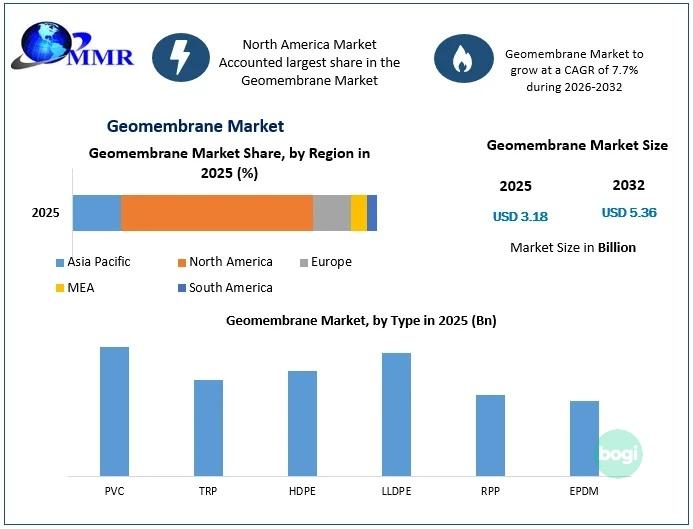
    Geomembrane Market size was valued at USD 3.18 Bn in 2025.
    The market is projected to reach USD 5.36 Bn by 2032.
    The market is expected to grow at a CAGR of 7.7% during the forecast period.
    Infrastructure expansion and environmental regulations continue to strengthen demand.
    Mining, waste management, water conservation, and construction remain key application areas.
    Manufacturers are focusing on product innovation and sustainable material solutions.
    Market Overview

    The Geomembrane Market continues to gain momentum as industries invest in reliable containment technologies to improve operational efficiency and environmental performance. Valued at USD 3.18 Bn in 2025 and expected to reach USD 5.36 Bn by 2032 at a CAGR of 7.7%, the sector reflects increasing confidence in advanced engineering materials. This growth signals expanding business opportunities for manufacturers, suppliers, and infrastructure developers seeking durable and cost-effective lining systems.

    As governments strengthen environmental policies and industries modernize aging infrastructure, geomembranes are becoming an essential component across multiple sectors. Their ability to minimize leakage, protect natural resources, and improve project durability makes them increasingly valuable in large-scale industrial developments.

    Why This Market Matters Now

    Environmental compliance has become a strategic business priority rather than simply a regulatory obligation. Organizations across mining, municipal infrastructure, and industrial processing are investing in advanced containment solutions to reduce operational risks while supporting sustainability goals.

    The Geomembrane Market is benefiting from this transition because reliable lining systems help companies reduce maintenance costs, extend infrastructure life, and improve environmental performance. Growing investments in waste management facilities, water conservation projects, and renewable energy infrastructure further reinforce demand, creating long-term growth opportunities for material suppliers and technology providers.

    Access a Free Sample Report Copy : https://www.maximizemarketresearch.com/request-sample/16651/

    Key Trends Driving Growth

    Several industry trends are reshaping the Geomembrane Market. Increased adoption of high-performance polymer materials is improving product durability, chemical resistance, and installation efficiency. Manufacturers are also introducing innovative production technologies that enhance flexibility while maintaining high mechanical strength.

    Another important trend is the expansion of water management projects. Rising concerns over water scarcity are encouraging investments in reservoirs, canals, irrigation systems, and wastewater treatment facilities where geomembranes provide dependable waterproofing performance.

    Mining operations are also increasing demand for advanced containment systems. Modern mining facilities require secure tailings storage and environmental protection measures, making geomembranes an essential material for responsible resource development.

    Digital project planning and improved installation techniques are further enhancing productivity, allowing contractors to complete complex infrastructure projects more efficiently.

    Market Growth Outlook

    The Geomembrane Market is positioned for sustained expansion as governments continue investing in infrastructure modernization and environmental protection initiatives. The projected increase from USD 3.18 Bn in 2025 to USD 5.36 Bn by 2032 reflects strong demand across both developed and emerging economies. This growth indicates expanding opportunities for manufacturers to strengthen production capacity, diversify product portfolios, and establish strategic partnerships with engineering and construction companies.

    Businesses that focus on product quality, regulatory compliance, and application-specific solutions are expected to strengthen their competitive positions as industrial customers increasingly prioritize long-term reliability over short-term cost savings.

    Market Segmentation

    The Geomembrane Market serves a diverse range of industries through multiple product types and applications. Different geomembrane materials are selected based on project requirements, including durability, chemical resistance, flexibility, and environmental conditions.

    Application areas continue to expand across waste management, mining, water management, construction, transportation infrastructure, and industrial containment systems. Each segment presents unique opportunities as project developers seek specialized solutions capable of delivering long operational life while meeting evolving regulatory standards.
    Geomembrane Market Top Companies, Industry Overview and Market Development Key Highlights Geomembrane Market size was valued at USD 3.18 Bn in 2025. The market is projected to reach USD 5.36 Bn by 2032. The market is expected to grow at a CAGR of 7.7% during the forecast period. Infrastructure expansion and environmental regulations continue to strengthen demand. Mining, waste management, water conservation, and construction remain key application areas. Manufacturers are focusing on product innovation and sustainable material solutions. Market Overview The Geomembrane Market continues to gain momentum as industries invest in reliable containment technologies to improve operational efficiency and environmental performance. Valued at USD 3.18 Bn in 2025 and expected to reach USD 5.36 Bn by 2032 at a CAGR of 7.7%, the sector reflects increasing confidence in advanced engineering materials. This growth signals expanding business opportunities for manufacturers, suppliers, and infrastructure developers seeking durable and cost-effective lining systems. As governments strengthen environmental policies and industries modernize aging infrastructure, geomembranes are becoming an essential component across multiple sectors. Their ability to minimize leakage, protect natural resources, and improve project durability makes them increasingly valuable in large-scale industrial developments. Why This Market Matters Now Environmental compliance has become a strategic business priority rather than simply a regulatory obligation. Organizations across mining, municipal infrastructure, and industrial processing are investing in advanced containment solutions to reduce operational risks while supporting sustainability goals. The Geomembrane Market is benefiting from this transition because reliable lining systems help companies reduce maintenance costs, extend infrastructure life, and improve environmental performance. Growing investments in waste management facilities, water conservation projects, and renewable energy infrastructure further reinforce demand, creating long-term growth opportunities for material suppliers and technology providers. Access a Free Sample Report Copy : https://www.maximizemarketresearch.com/request-sample/16651/ Key Trends Driving Growth Several industry trends are reshaping the Geomembrane Market. Increased adoption of high-performance polymer materials is improving product durability, chemical resistance, and installation efficiency. Manufacturers are also introducing innovative production technologies that enhance flexibility while maintaining high mechanical strength. Another important trend is the expansion of water management projects. Rising concerns over water scarcity are encouraging investments in reservoirs, canals, irrigation systems, and wastewater treatment facilities where geomembranes provide dependable waterproofing performance. Mining operations are also increasing demand for advanced containment systems. Modern mining facilities require secure tailings storage and environmental protection measures, making geomembranes an essential material for responsible resource development. Digital project planning and improved installation techniques are further enhancing productivity, allowing contractors to complete complex infrastructure projects more efficiently. Market Growth Outlook The Geomembrane Market is positioned for sustained expansion as governments continue investing in infrastructure modernization and environmental protection initiatives. The projected increase from USD 3.18 Bn in 2025 to USD 5.36 Bn by 2032 reflects strong demand across both developed and emerging economies. This growth indicates expanding opportunities for manufacturers to strengthen production capacity, diversify product portfolios, and establish strategic partnerships with engineering and construction companies. Businesses that focus on product quality, regulatory compliance, and application-specific solutions are expected to strengthen their competitive positions as industrial customers increasingly prioritize long-term reliability over short-term cost savings. Market Segmentation The Geomembrane Market serves a diverse range of industries through multiple product types and applications. Different geomembrane materials are selected based on project requirements, including durability, chemical resistance, flexibility, and environmental conditions. Application areas continue to expand across waste management, mining, water management, construction, transportation infrastructure, and industrial containment systems. Each segment presents unique opportunities as project developers seek specialized solutions capable of delivering long operational life while meeting evolving regulatory standards.
    0 Commentarii 0 Distribuiri 83 Views
  • Sulfur Market Growth Analysis, Emerging Opportunities and Industry Trends

    Key Highlights

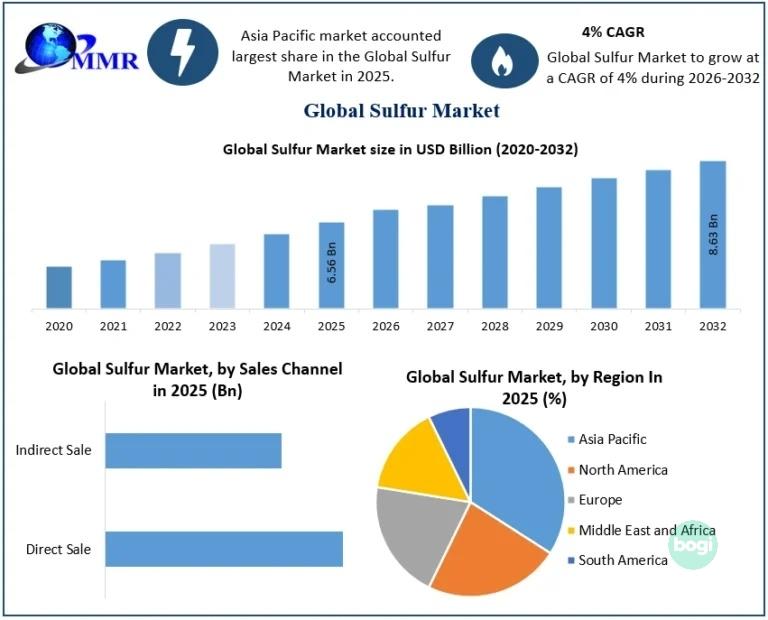
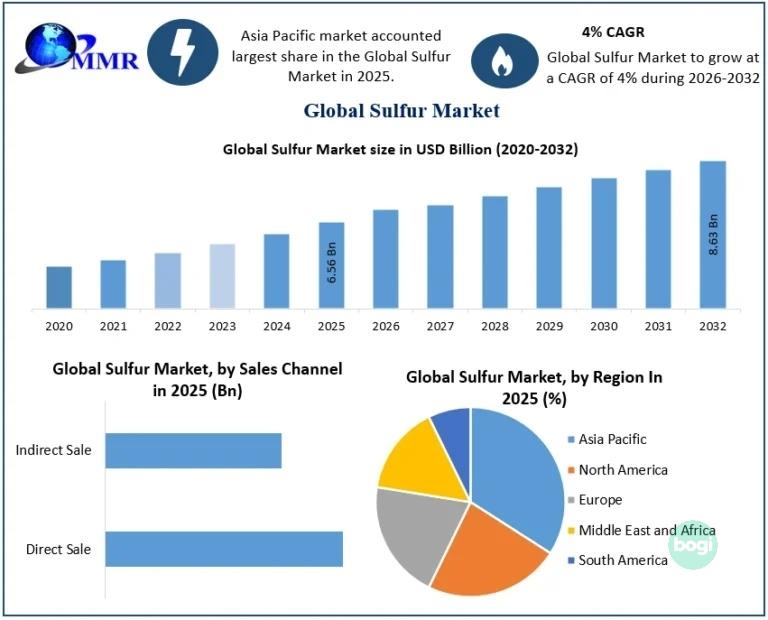
    Sulfur market valued at USD 6.56 Billion in 2025.
    Expected to reach nearly USD 8.63 Billion by 2032.
    Forecast to grow at a CAGR of 4% through 2032.
    Fertilizer production continues to support strong consumption.
    Industrial applications are expanding across multiple sectors.
    Sustainability initiatives are encouraging efficient sulfur utilization.
    Strategic investments are strengthening supply chains.
    Market Overview

    The Sulfur Market continues to play a critical role in the global industrial ecosystem because sulfur serves as an essential raw material across multiple manufacturing processes. Its importance extends beyond fertilizers to include petroleum refining, chemical production, metal processing, pharmaceuticals, and industrial manufacturing.

    As industries increase production while focusing on operational efficiency, demand for dependable sulfur supplies continues to rise. This shift is encouraging producers to improve production capabilities, optimize logistics, and develop stronger supply partnerships. The result is a market that is steadily evolving to support changing industrial requirements while maintaining long-term growth potential.

    Why This Market Matters Now

    Several industries are entering a phase where consistent access to sulfur has become increasingly valuable. Agricultural productivity remains a global priority, creating sustained demand for sulfur-based fertilizers that help improve soil quality and crop yields. At the same time, chemical manufacturers continue expanding production capacities to meet growing requirements from downstream industries.

    The sulfur market also benefits from broader industrial modernization. Companies are investing in cleaner production technologies and more efficient manufacturing processes, increasing the need for reliable sulfur supplies. As businesses pursue operational resilience, procurement strategies are shifting toward long-term supplier relationships and diversified sourcing models.

    Get a Sample Copy – Market Report : https://www.maximizemarketresearch.com/request-sample/26714/

    Sulfur Market Growth Analysis, Emerging Opportunities and Industry Trends Key Highlights Sulfur market valued at USD 6.56 Billion in 2025. Expected to reach nearly USD 8.63 Billion by 2032. Forecast to grow at a CAGR of 4% through 2032. Fertilizer production continues to support strong consumption. Industrial applications are expanding across multiple sectors. Sustainability initiatives are encouraging efficient sulfur utilization. Strategic investments are strengthening supply chains. Market Overview The Sulfur Market continues to play a critical role in the global industrial ecosystem because sulfur serves as an essential raw material across multiple manufacturing processes. Its importance extends beyond fertilizers to include petroleum refining, chemical production, metal processing, pharmaceuticals, and industrial manufacturing. As industries increase production while focusing on operational efficiency, demand for dependable sulfur supplies continues to rise. This shift is encouraging producers to improve production capabilities, optimize logistics, and develop stronger supply partnerships. The result is a market that is steadily evolving to support changing industrial requirements while maintaining long-term growth potential. Why This Market Matters Now Several industries are entering a phase where consistent access to sulfur has become increasingly valuable. Agricultural productivity remains a global priority, creating sustained demand for sulfur-based fertilizers that help improve soil quality and crop yields. At the same time, chemical manufacturers continue expanding production capacities to meet growing requirements from downstream industries. The sulfur market also benefits from broader industrial modernization. Companies are investing in cleaner production technologies and more efficient manufacturing processes, increasing the need for reliable sulfur supplies. As businesses pursue operational resilience, procurement strategies are shifting toward long-term supplier relationships and diversified sourcing models. Get a Sample Copy – Market Report : https://www.maximizemarketresearch.com/request-sample/26714/
    0 Commentarii 0 Distribuiri 492 Views
  • Sulfur Market Industry Trends, Growth Opportunities and Market Analysis

    Key Highlights

    Sulfur market valued at USD 6.56 Billion in 2025.
    Expected to reach nearly USD 8.63 Billion by 2032.
    Forecast to grow at a CAGR of 4% through 2032.
    Fertilizer production continues to support strong consumption.
    Industrial applications are expanding across multiple sectors.
    Sustainability initiatives are encouraging efficient sulfur utilization.
    Strategic investments are strengthening supply chains.
    Market Overview

    The Sulfur Market continues to play a critical role in the global industrial ecosystem because sulfur serves as an essential raw material across multiple manufacturing processes. Its importance extends beyond fertilizers to include petroleum refining, chemical production, metal processing, pharmaceuticals, and industrial manufacturing.

    As industries increase production while focusing on operational efficiency, demand for dependable sulfur supplies continues to rise. This shift is encouraging producers to improve production capabilities, optimize logistics, and develop stronger supply partnerships. The result is a market that is steadily evolving to support changing industrial requirements while maintaining long-term growth potential.

    Why This Market Matters Now

    Several industries are entering a phase where consistent access to sulfur has become increasingly valuable. Agricultural productivity remains a global priority, creating sustained demand for sulfur-based fertilizers that help improve soil quality and crop yields. At the same time, chemical manufacturers continue expanding production capacities to meet growing requirements from downstream industries.

    The sulfur market also benefits from broader industrial modernization. Companies are investing in cleaner production technologies and more efficient manufacturing processes, increasing the need for reliable sulfur supplies. As businesses pursue operational resilience, procurement strategies are shifting toward long-term supplier relationships and diversified sourcing models.

    Get a Sample Copy – Market Report : https://www.maximizemarketresearch.com/request-sample/26714/

    Key Trends Driving Growth

    One of the most significant trends influencing the sulfur market is the increasing focus on sustainable industrial operations. Manufacturers are improving resource efficiency while maximizing the value of sulfur recovered from industrial processes. This approach supports both environmental objectives and commercial performance.

    Another important trend is the growing integration of sulfur across specialized chemical applications. Industrial innovation continues to create new opportunities for sulfur-based products in manufacturing, processing, and material development.

    Digital supply chain management is also improving visibility across procurement and inventory planning. Companies are leveraging better forecasting and logistics coordination to reduce disruptions while ensuring continuous material availability.

    Market Growth Outlook

    The sulfur market is positioned for stable expansion over the coming years as industrial production continues to recover and agricultural demand remains strong. The projected CAGR of 4% reflects consistent business opportunities rather than short-term market fluctuations, allowing companies to make long-term investment decisions with greater confidence.

    This growth outlook supports capital investments in production facilities, infrastructure improvements, and distribution networks. Businesses that strengthen supplier relationships and optimize procurement strategies are likely to benefit from improving market conditions while maintaining competitive operational performance.

    Market Segmentation

    The sulfur market serves a diverse customer base across multiple industrial sectors. Fertilizer applications continue to represent one of the most significant demand segments due to sulfur's essential role in agricultural productivity and soil nutrition.

    Beyond agriculture, sulfur supports chemical manufacturing, petroleum refining, metal processing, and various industrial applications that require high-quality raw materials. This diversified demand base strengthens market stability by reducing dependence on a single end-use industry.

    Different application segments also encourage product innovation as manufacturers develop solutions designed to meet evolving industrial performance standards and operational requirements.

    Sulfur Market Industry Trends, Growth Opportunities and Market Analysis Key Highlights Sulfur market valued at USD 6.56 Billion in 2025. Expected to reach nearly USD 8.63 Billion by 2032. Forecast to grow at a CAGR of 4% through 2032. Fertilizer production continues to support strong consumption. Industrial applications are expanding across multiple sectors. Sustainability initiatives are encouraging efficient sulfur utilization. Strategic investments are strengthening supply chains. Market Overview The Sulfur Market continues to play a critical role in the global industrial ecosystem because sulfur serves as an essential raw material across multiple manufacturing processes. Its importance extends beyond fertilizers to include petroleum refining, chemical production, metal processing, pharmaceuticals, and industrial manufacturing. As industries increase production while focusing on operational efficiency, demand for dependable sulfur supplies continues to rise. This shift is encouraging producers to improve production capabilities, optimize logistics, and develop stronger supply partnerships. The result is a market that is steadily evolving to support changing industrial requirements while maintaining long-term growth potential. Why This Market Matters Now Several industries are entering a phase where consistent access to sulfur has become increasingly valuable. Agricultural productivity remains a global priority, creating sustained demand for sulfur-based fertilizers that help improve soil quality and crop yields. At the same time, chemical manufacturers continue expanding production capacities to meet growing requirements from downstream industries. The sulfur market also benefits from broader industrial modernization. Companies are investing in cleaner production technologies and more efficient manufacturing processes, increasing the need for reliable sulfur supplies. As businesses pursue operational resilience, procurement strategies are shifting toward long-term supplier relationships and diversified sourcing models. Get a Sample Copy – Market Report : https://www.maximizemarketresearch.com/request-sample/26714/ Key Trends Driving Growth One of the most significant trends influencing the sulfur market is the increasing focus on sustainable industrial operations. Manufacturers are improving resource efficiency while maximizing the value of sulfur recovered from industrial processes. This approach supports both environmental objectives and commercial performance. Another important trend is the growing integration of sulfur across specialized chemical applications. Industrial innovation continues to create new opportunities for sulfur-based products in manufacturing, processing, and material development. Digital supply chain management is also improving visibility across procurement and inventory planning. Companies are leveraging better forecasting and logistics coordination to reduce disruptions while ensuring continuous material availability. Market Growth Outlook The sulfur market is positioned for stable expansion over the coming years as industrial production continues to recover and agricultural demand remains strong. The projected CAGR of 4% reflects consistent business opportunities rather than short-term market fluctuations, allowing companies to make long-term investment decisions with greater confidence. This growth outlook supports capital investments in production facilities, infrastructure improvements, and distribution networks. Businesses that strengthen supplier relationships and optimize procurement strategies are likely to benefit from improving market conditions while maintaining competitive operational performance. Market Segmentation The sulfur market serves a diverse customer base across multiple industrial sectors. Fertilizer applications continue to represent one of the most significant demand segments due to sulfur's essential role in agricultural productivity and soil nutrition. Beyond agriculture, sulfur supports chemical manufacturing, petroleum refining, metal processing, and various industrial applications that require high-quality raw materials. This diversified demand base strengthens market stability by reducing dependence on a single end-use industry. Different application segments also encourage product innovation as manufacturers develop solutions designed to meet evolving industrial performance standards and operational requirements.
    0 Commentarii 0 Distribuiri 494 Views
  • Hot Melt Adhesives Market Size Analysis, Growth Drivers and Competitive Landscape

    Key Highlights

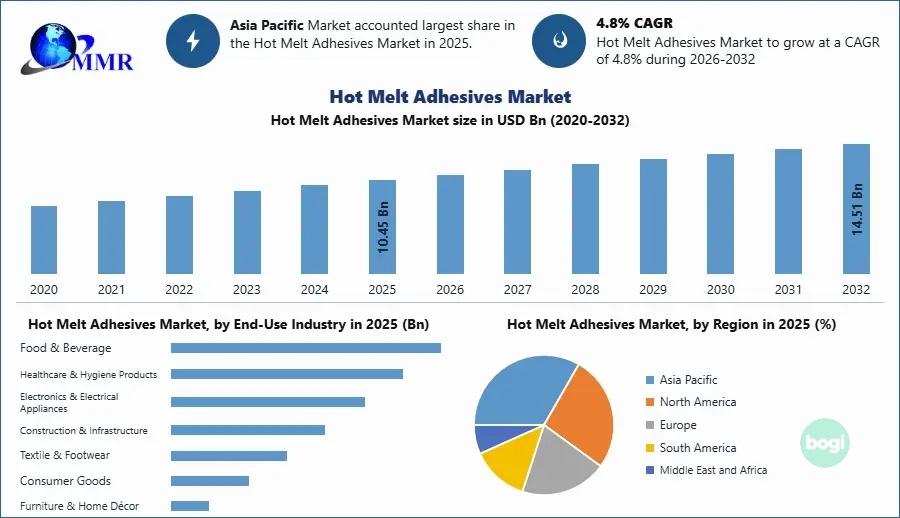
    Hot Melt Adhesives Market was valued at USD 10.45 Billion in 2025.
    The market is projected to reach nearly USD 14.51 Billion by 2032.
    The industry is expected to expand at a CAGR of 4.8% during 2025–2032.
    Packaging remains one of the major application areas driving demand.
    Product innovation and sustainable manufacturing continue to reshape competition.
    Market Overview

    The Hot Melt Adhesives Market is entering a new phase of industrial expansion as manufacturers seek faster, cleaner, and more efficient bonding solutions across multiple industries. Rising demand from packaging, automotive, construction, and consumer goods is encouraging businesses to modernize production lines and adopt advanced adhesive technologies.

    The Hot Melt Adhesives Market size was valued at USD 10.45 Billion in 2025 and is expected to reach nearly USD 14.51 Billion by 2032, growing at a CAGR of 4.8% during the forecast period. This steady expansion creates new opportunities for adhesive manufacturers, equipment suppliers, procurement teams, and industrial investors looking to capitalize on long-term demand growth.

    Why This Market Matters Now

    Manufacturers are under increasing pressure to improve productivity while reducing production waste and operational costs. Hot melt adhesives have become an attractive solution because they provide rapid bonding, eliminate drying time, and support high-speed manufacturing environments.

    At the same time, industries are focusing on sustainable packaging, lightweight products, and efficient assembly processes. These changing business priorities are encouraging companies to replace conventional bonding methods with advanced adhesive solutions that improve operational efficiency without compromising product quality.

    As industrial automation continues to expand, the Hot Melt Adhesives Market is expected to benefit from greater adoption across automated production facilities where consistency and speed are critical business requirements.

    Key Trends Driving Growth

    Packaging remains one of the strongest growth drivers for the Hot Melt Adhesives Market. E-commerce expansion and increasing demand for secure, durable packaging solutions are encouraging manufacturers to invest in high-performance adhesive technologies that improve packaging efficiency.

    Another significant trend is the growing use of hot melt adhesives in automotive manufacturing. Vehicle manufacturers are increasingly adopting lightweight materials and advanced assembly techniques that require reliable bonding solutions capable of delivering durability and production efficiency.

    Construction activities also continue to generate new opportunities as builders seek adhesives that offer strong performance, faster installation, and long-lasting durability. Meanwhile, consumer goods manufacturers are introducing innovative products that rely on efficient adhesive applications to maintain production speed and product consistency.

    Product innovation is becoming another competitive advantage as manufacturers develop adhesives with improved heat resistance, flexibility, and compatibility with a broader range of materials.

    Get a Free Sample Market Report Link : https://www.maximizemarketresearch.com/request-sample/20569/

    Hot Melt Adhesives Market Size Analysis, Growth Drivers and Competitive Landscape Key Highlights Hot Melt Adhesives Market was valued at USD 10.45 Billion in 2025. The market is projected to reach nearly USD 14.51 Billion by 2032. The industry is expected to expand at a CAGR of 4.8% during 2025–2032. Packaging remains one of the major application areas driving demand. Product innovation and sustainable manufacturing continue to reshape competition. Market Overview The Hot Melt Adhesives Market is entering a new phase of industrial expansion as manufacturers seek faster, cleaner, and more efficient bonding solutions across multiple industries. Rising demand from packaging, automotive, construction, and consumer goods is encouraging businesses to modernize production lines and adopt advanced adhesive technologies. The Hot Melt Adhesives Market size was valued at USD 10.45 Billion in 2025 and is expected to reach nearly USD 14.51 Billion by 2032, growing at a CAGR of 4.8% during the forecast period. This steady expansion creates new opportunities for adhesive manufacturers, equipment suppliers, procurement teams, and industrial investors looking to capitalize on long-term demand growth. Why This Market Matters Now Manufacturers are under increasing pressure to improve productivity while reducing production waste and operational costs. Hot melt adhesives have become an attractive solution because they provide rapid bonding, eliminate drying time, and support high-speed manufacturing environments. At the same time, industries are focusing on sustainable packaging, lightweight products, and efficient assembly processes. These changing business priorities are encouraging companies to replace conventional bonding methods with advanced adhesive solutions that improve operational efficiency without compromising product quality. As industrial automation continues to expand, the Hot Melt Adhesives Market is expected to benefit from greater adoption across automated production facilities where consistency and speed are critical business requirements. Key Trends Driving Growth Packaging remains one of the strongest growth drivers for the Hot Melt Adhesives Market. E-commerce expansion and increasing demand for secure, durable packaging solutions are encouraging manufacturers to invest in high-performance adhesive technologies that improve packaging efficiency. Another significant trend is the growing use of hot melt adhesives in automotive manufacturing. Vehicle manufacturers are increasingly adopting lightweight materials and advanced assembly techniques that require reliable bonding solutions capable of delivering durability and production efficiency. Construction activities also continue to generate new opportunities as builders seek adhesives that offer strong performance, faster installation, and long-lasting durability. Meanwhile, consumer goods manufacturers are introducing innovative products that rely on efficient adhesive applications to maintain production speed and product consistency. Product innovation is becoming another competitive advantage as manufacturers develop adhesives with improved heat resistance, flexibility, and compatibility with a broader range of materials. Get a Free Sample Market Report Link : https://www.maximizemarketresearch.com/request-sample/20569/
    0 Commentarii 0 Distribuiri 723 Views
  • Synthetic Rubber Market Development Analysis, Future Opportunities and Revenue Growth

    Key Highlights

    Synthetic Rubber Market size reached USD 30.41 Billion in 2025.
    The market is projected to reach nearly USD 41.60 Billion by 2032.
    The market is expected to grow at a CAGR of 4.58% from 2026 to 2032.
    Rising automotive production continues to strengthen demand for synthetic rubber.
    Expanding industrial applications and infrastructure investments support long-term market growth.
    Manufacturers are focusing on performance, durability, and sustainable production technologies.
    Market Overview

    Supply chains are evolving rapidly, and industrial manufacturers are under increasing pressure to secure reliable raw materials that deliver both performance and cost efficiency. The Synthetic Rubber Market is becoming a strategic priority as industries seek durable alternatives capable of supporting next-generation manufacturing and mobility.

    The Synthetic Rubber Market was valued at USD 30.41 Billion in 2025 and is expected to reach nearly USD 41.60 Billion by 2032, growing at a CAGR of 4.58% during the forecast period. This steady expansion reflects growing industrial consumption, creating new opportunities for manufacturers, suppliers, and investors looking to benefit from consistent demand across multiple end-use sectors.

    Why This Market Matters Now

    The Synthetic Rubber Market has become increasingly important because manufacturers require materials that offer superior resistance to heat, abrasion, chemicals, and changing environmental conditions. Industries ranging from automotive to construction depend on synthetic rubber to improve product quality while meeting stricter performance standards.

    Another significant shift is the growing emphasis on supply chain resilience. Companies are investing in advanced production capabilities and diversified sourcing strategies to reduce operational risks. As industrial production expands globally, buyers are prioritizing dependable material suppliers capable of maintaining quality and delivery consistency.

    Key Trends Driving Growth

    The automotive sector remains one of the strongest growth engines for the Synthetic Rubber Market. Modern vehicles require high-performance tires, seals, hoses, belts, and vibration-control components that enhance durability and safety. This trend creates sustained procurement opportunities for rubber manufacturers serving original equipment manufacturers and aftermarket suppliers.

    Industrial automation is also contributing to rising demand. Manufacturing facilities increasingly rely on specialized rubber products that withstand continuous mechanical stress and harsh operating environments. As factories modernize production systems, the need for advanced synthetic rubber materials continues to increase.

    Another important trend is product innovation. Manufacturers are developing specialized rubber grades that deliver improved flexibility, chemical resistance, and longer service life. These innovations help industrial customers improve operational efficiency while reducing maintenance costs.

    Growing sustainability initiatives are further encouraging investment in cleaner manufacturing processes and resource-efficient production technologies, positioning the Synthetic Rubber Market for long-term competitiveness.

    Market Growth Outlook

    The outlook for the Synthetic Rubber Market remains positive as industrial expansion, infrastructure development, and transportation investments continue to generate stable demand. Consistent market growth provides businesses with greater confidence when planning production capacity, expanding manufacturing facilities, and strengthening supplier partnerships.

    Increasing investment across manufacturing industries is expected to support broader adoption of high-performance rubber materials. At the same time, continuous product development allows manufacturers to address evolving customer requirements across both traditional and emerging applications.

    Companies that focus on operational efficiency, advanced product development, and sustainable manufacturing practices are likely to strengthen their market positions as competition continues to evolve.

    Request Your Sample Report Now : https://www.maximizemarketresearch.com/request-sample/513/

    Synthetic Rubber Market Development Analysis, Future Opportunities and Revenue Growth Key Highlights Synthetic Rubber Market size reached USD 30.41 Billion in 2025. The market is projected to reach nearly USD 41.60 Billion by 2032. The market is expected to grow at a CAGR of 4.58% from 2026 to 2032. Rising automotive production continues to strengthen demand for synthetic rubber. Expanding industrial applications and infrastructure investments support long-term market growth. Manufacturers are focusing on performance, durability, and sustainable production technologies. Market Overview Supply chains are evolving rapidly, and industrial manufacturers are under increasing pressure to secure reliable raw materials that deliver both performance and cost efficiency. The Synthetic Rubber Market is becoming a strategic priority as industries seek durable alternatives capable of supporting next-generation manufacturing and mobility. The Synthetic Rubber Market was valued at USD 30.41 Billion in 2025 and is expected to reach nearly USD 41.60 Billion by 2032, growing at a CAGR of 4.58% during the forecast period. This steady expansion reflects growing industrial consumption, creating new opportunities for manufacturers, suppliers, and investors looking to benefit from consistent demand across multiple end-use sectors. Why This Market Matters Now The Synthetic Rubber Market has become increasingly important because manufacturers require materials that offer superior resistance to heat, abrasion, chemicals, and changing environmental conditions. Industries ranging from automotive to construction depend on synthetic rubber to improve product quality while meeting stricter performance standards. Another significant shift is the growing emphasis on supply chain resilience. Companies are investing in advanced production capabilities and diversified sourcing strategies to reduce operational risks. As industrial production expands globally, buyers are prioritizing dependable material suppliers capable of maintaining quality and delivery consistency. Key Trends Driving Growth The automotive sector remains one of the strongest growth engines for the Synthetic Rubber Market. Modern vehicles require high-performance tires, seals, hoses, belts, and vibration-control components that enhance durability and safety. This trend creates sustained procurement opportunities for rubber manufacturers serving original equipment manufacturers and aftermarket suppliers. Industrial automation is also contributing to rising demand. Manufacturing facilities increasingly rely on specialized rubber products that withstand continuous mechanical stress and harsh operating environments. As factories modernize production systems, the need for advanced synthetic rubber materials continues to increase. Another important trend is product innovation. Manufacturers are developing specialized rubber grades that deliver improved flexibility, chemical resistance, and longer service life. These innovations help industrial customers improve operational efficiency while reducing maintenance costs. Growing sustainability initiatives are further encouraging investment in cleaner manufacturing processes and resource-efficient production technologies, positioning the Synthetic Rubber Market for long-term competitiveness. Market Growth Outlook The outlook for the Synthetic Rubber Market remains positive as industrial expansion, infrastructure development, and transportation investments continue to generate stable demand. Consistent market growth provides businesses with greater confidence when planning production capacity, expanding manufacturing facilities, and strengthening supplier partnerships. Increasing investment across manufacturing industries is expected to support broader adoption of high-performance rubber materials. At the same time, continuous product development allows manufacturers to address evolving customer requirements across both traditional and emerging applications. Companies that focus on operational efficiency, advanced product development, and sustainable manufacturing practices are likely to strengthen their market positions as competition continues to evolve. Request Your Sample Report Now : https://www.maximizemarketresearch.com/request-sample/513/
    0 Commentarii 0 Distribuiri 701 Views
  • Algorithmic Trading Market Size, Industry Outlook and Recent Developments Report

    Key Highlights

    Algorithmic Trading Market size reached USD 19.27 Billion in 2025.
    The market is projected to reach USD 39.02 Billion by 2032.
    The market is expected to grow at a CAGR of 10.6% from 2025 to 2032.
    Artificial intelligence and advanced analytics are improving trading efficiency.
    Institutional investors continue to increase investments in automated trading platforms.
    Expanding digital financial infrastructure is supporting broader market adoption.
    Market Overview

    The Algorithmic Trading Market is entering a new phase of growth as financial institutions race to improve execution speed, reduce trading costs, and respond to increasingly complex market conditions. For investors, banks, and brokerage firms, the shift toward automated trading is becoming a competitive necessity rather than an optional technology upgrade.

    The Algorithmic Trading Market was valued at USD 19.27 Billion in 2025 and is expected to reach nearly USD 39.02 Billion by 2032, growing at a CAGR of 10.6% during the forecast period. This steady expansion highlights growing confidence in algorithm-driven investment strategies and reflects rising demand for faster, more accurate trade execution. As financial markets become more data-intensive, organizations are prioritizing platforms capable of processing large volumes of market information in real time.

    Why This Market Matters Now

    Global financial markets are becoming increasingly volatile, creating greater demand for technology that can react instantly to changing market conditions. Manual trading methods often struggle to match the speed and precision required in modern capital markets, encouraging firms to adopt automated decision-making tools.

    The Algorithmic Trading Market is benefiting from rapid digital transformation across the financial services sector. Investment firms, hedge funds, banks, and asset managers are focusing on technologies that improve operational efficiency while minimizing execution errors. At the same time, expanding electronic trading infrastructure is making sophisticated trading solutions more accessible across different market participants.

    Key Trends Driving Growth

    Artificial intelligence and machine learning are becoming central components of modern algorithmic trading systems. These technologies enable trading platforms to identify patterns, optimize strategies, and respond to changing market conditions with greater speed and accuracy.

    Another major trend within the Algorithmic Trading Market is the growing use of big data analytics. Financial organizations are leveraging real-time market intelligence to improve investment decisions and strengthen portfolio management. The increasing availability of cloud computing also allows trading firms to deploy scalable solutions without significant infrastructure investments.

    Demand for high-frequency trading capabilities continues to influence technology development, while enhanced cybersecurity solutions are becoming essential as financial firms process larger volumes of digital transactions. Together, these innovations are improving market efficiency and strengthening confidence in automated trading systems.

    Market Growth Outlook

    The long-term outlook for the Algorithmic Trading Market remains positive as financial institutions continue investing in advanced digital capabilities. Rising transaction volumes, increasing market complexity, and the need for cost-efficient trading operations are expected to sustain industry expansion throughout the forecast period.

    As regulatory frameworks continue evolving, organizations are also investing in transparent and compliant trading technologies. This creates opportunities for software providers offering robust risk management, monitoring, and reporting capabilities. Companies capable of combining automation with regulatory compliance are expected to strengthen their competitive positions over the coming years.

    Receive a Free Sample Copy Instantly : https://www.maximizemarketresearch.com/request-sample/29843/
    Algorithmic Trading Market Size, Industry Outlook and Recent Developments Report Key Highlights Algorithmic Trading Market size reached USD 19.27 Billion in 2025. The market is projected to reach USD 39.02 Billion by 2032. The market is expected to grow at a CAGR of 10.6% from 2025 to 2032. Artificial intelligence and advanced analytics are improving trading efficiency. Institutional investors continue to increase investments in automated trading platforms. Expanding digital financial infrastructure is supporting broader market adoption. Market Overview The Algorithmic Trading Market is entering a new phase of growth as financial institutions race to improve execution speed, reduce trading costs, and respond to increasingly complex market conditions. For investors, banks, and brokerage firms, the shift toward automated trading is becoming a competitive necessity rather than an optional technology upgrade. The Algorithmic Trading Market was valued at USD 19.27 Billion in 2025 and is expected to reach nearly USD 39.02 Billion by 2032, growing at a CAGR of 10.6% during the forecast period. This steady expansion highlights growing confidence in algorithm-driven investment strategies and reflects rising demand for faster, more accurate trade execution. As financial markets become more data-intensive, organizations are prioritizing platforms capable of processing large volumes of market information in real time. Why This Market Matters Now Global financial markets are becoming increasingly volatile, creating greater demand for technology that can react instantly to changing market conditions. Manual trading methods often struggle to match the speed and precision required in modern capital markets, encouraging firms to adopt automated decision-making tools. The Algorithmic Trading Market is benefiting from rapid digital transformation across the financial services sector. Investment firms, hedge funds, banks, and asset managers are focusing on technologies that improve operational efficiency while minimizing execution errors. At the same time, expanding electronic trading infrastructure is making sophisticated trading solutions more accessible across different market participants. Key Trends Driving Growth Artificial intelligence and machine learning are becoming central components of modern algorithmic trading systems. These technologies enable trading platforms to identify patterns, optimize strategies, and respond to changing market conditions with greater speed and accuracy. Another major trend within the Algorithmic Trading Market is the growing use of big data analytics. Financial organizations are leveraging real-time market intelligence to improve investment decisions and strengthen portfolio management. The increasing availability of cloud computing also allows trading firms to deploy scalable solutions without significant infrastructure investments. Demand for high-frequency trading capabilities continues to influence technology development, while enhanced cybersecurity solutions are becoming essential as financial firms process larger volumes of digital transactions. Together, these innovations are improving market efficiency and strengthening confidence in automated trading systems. Market Growth Outlook The long-term outlook for the Algorithmic Trading Market remains positive as financial institutions continue investing in advanced digital capabilities. Rising transaction volumes, increasing market complexity, and the need for cost-efficient trading operations are expected to sustain industry expansion throughout the forecast period. As regulatory frameworks continue evolving, organizations are also investing in transparent and compliant trading technologies. This creates opportunities for software providers offering robust risk management, monitoring, and reporting capabilities. Companies capable of combining automation with regulatory compliance are expected to strengthen their competitive positions over the coming years. Receive a Free Sample Copy Instantly : https://www.maximizemarketresearch.com/request-sample/29843/
    WWW.MAXIMIZEMARKETRESEARCH.COM
    Request Sample
    for Request Sample fill the form
    0 Commentarii 0 Distribuiri 951 Views
  • Water Electrolysis Market Future Growth, Industry Overview and Revenue Forecast

    Key Highlights

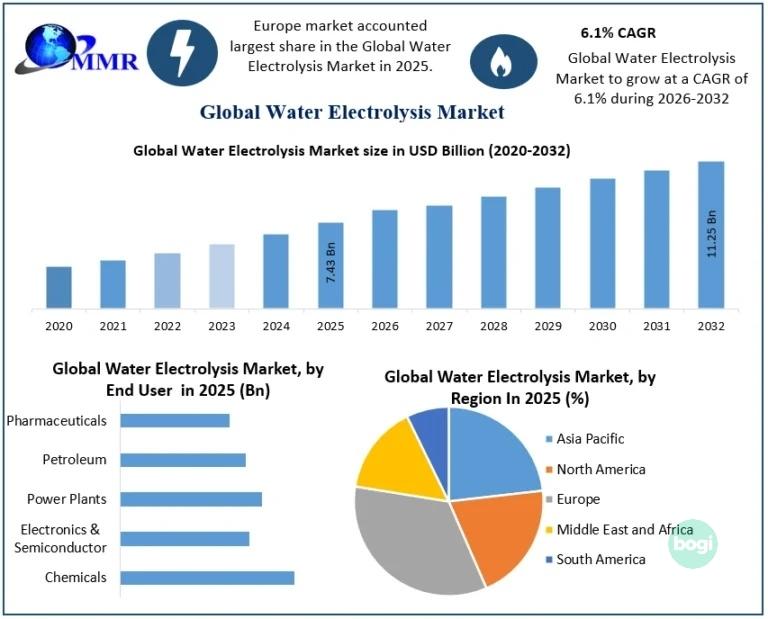
    Water Electrolysis Market reached USD 7.43 Billion in 2025.
    Market revenue is projected to reach nearly USD 11.25 Billion by 2032.
    Expected CAGR stands at 6.1% during 2026–2032.
    Rising green hydrogen demand is accelerating commercial investments.
    Renewable energy integration continues to support market expansion.
    Industrial decarbonization is creating long-term business opportunities.

    Market Overview

    The Water Electrolysis Market is gaining momentum as industries seek cleaner alternatives to conventional hydrogen production. Water electrolysis uses electricity to split water into hydrogen and oxygen, enabling low-emission hydrogen generation when powered by renewable energy. As governments and businesses pursue ambitious carbon reduction goals, the technology is becoming increasingly important across manufacturing, transportation, chemicals, and energy sectors.

    The market's projected growth reflects rising confidence in commercial deployment. This creates favorable conditions for technology developers, equipment suppliers, and infrastructure investors looking to expand their presence in the growing hydrogen economy. As production capacity increases, organizations can strengthen supply chains while improving energy security and sustainability.

    Why This Market Matters Now

    Global industries are facing increasing pressure to reduce emissions without compromising operational efficiency. The Water Electrolysis Market addresses this challenge by providing a practical pathway for producing clean hydrogen that supports industrial operations and future energy systems.

    Growing investments in renewable electricity are making electrolysis more commercially attractive. At the same time, businesses are exploring cleaner production methods to meet environmental commitments and evolving customer expectations. These developments are encouraging both public and private sectors to prioritize hydrogen infrastructure, creating significant opportunities for long-term market participants.

    Key Trends Driving Growth

    Several trends are influencing the expansion of the Water Electrolysis Market. One of the most significant is the growing deployment of renewable energy projects, which provide cleaner electricity for hydrogen production. This strengthens the business case for electrolysis while supporting broader decarbonization initiatives.

    Technology innovation is also improving operational efficiency and system performance. Manufacturers are focusing on advanced electrolyzer designs that enhance productivity, reduce operating costs, and improve scalability for industrial applications.

    Access a Free Sample Report Copy : https://www.maximizemarketresearch.com/request-sample/221915/

    Water Electrolysis Market Future Growth, Industry Overview and Revenue Forecast Key Highlights Water Electrolysis Market reached USD 7.43 Billion in 2025. Market revenue is projected to reach nearly USD 11.25 Billion by 2032. Expected CAGR stands at 6.1% during 2026–2032. Rising green hydrogen demand is accelerating commercial investments. Renewable energy integration continues to support market expansion. Industrial decarbonization is creating long-term business opportunities. Market Overview The Water Electrolysis Market is gaining momentum as industries seek cleaner alternatives to conventional hydrogen production. Water electrolysis uses electricity to split water into hydrogen and oxygen, enabling low-emission hydrogen generation when powered by renewable energy. As governments and businesses pursue ambitious carbon reduction goals, the technology is becoming increasingly important across manufacturing, transportation, chemicals, and energy sectors. The market's projected growth reflects rising confidence in commercial deployment. This creates favorable conditions for technology developers, equipment suppliers, and infrastructure investors looking to expand their presence in the growing hydrogen economy. As production capacity increases, organizations can strengthen supply chains while improving energy security and sustainability. Why This Market Matters Now Global industries are facing increasing pressure to reduce emissions without compromising operational efficiency. The Water Electrolysis Market addresses this challenge by providing a practical pathway for producing clean hydrogen that supports industrial operations and future energy systems. Growing investments in renewable electricity are making electrolysis more commercially attractive. At the same time, businesses are exploring cleaner production methods to meet environmental commitments and evolving customer expectations. These developments are encouraging both public and private sectors to prioritize hydrogen infrastructure, creating significant opportunities for long-term market participants. Key Trends Driving Growth Several trends are influencing the expansion of the Water Electrolysis Market. One of the most significant is the growing deployment of renewable energy projects, which provide cleaner electricity for hydrogen production. This strengthens the business case for electrolysis while supporting broader decarbonization initiatives. Technology innovation is also improving operational efficiency and system performance. Manufacturers are focusing on advanced electrolyzer designs that enhance productivity, reduce operating costs, and improve scalability for industrial applications. Access a Free Sample Report Copy : https://www.maximizemarketresearch.com/request-sample/221915/
    0 Commentarii 0 Distribuiri 741 Views
  • Prepreg Market Recent Developments and Business Opportunities

    Key Highlights

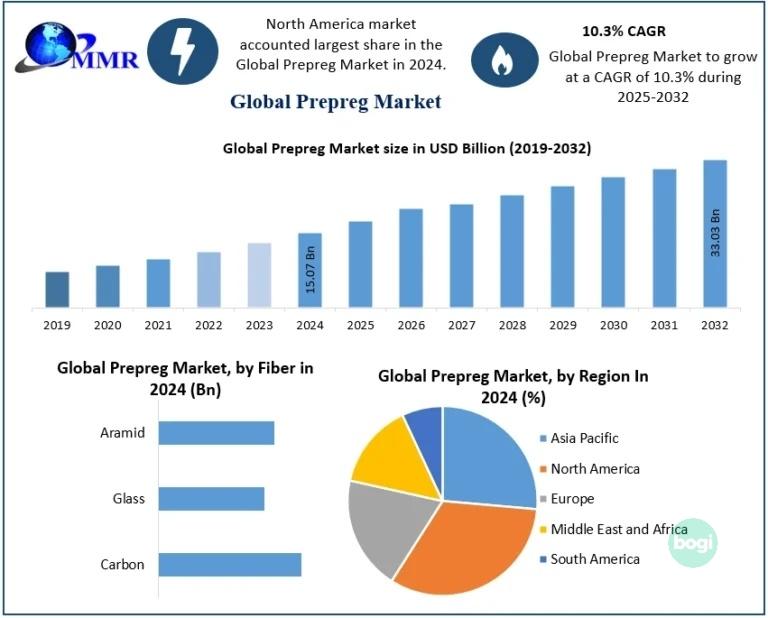
    Prepreg Market size was valued at USD 15.07 Billion in 2024.
    The market is projected to reach nearly USD 33.03 Billion by 2032.
    The market is expected to grow at a CAGR of 10.3% from 2025 to 2032.
    Aerospace, automotive, and wind energy industries continue to strengthen demand.
    Manufacturers are focusing on lightweight, durable, and high-performance composite materials.

    Why This Market Matters Now

    The demand for lightweight yet durable materials has become a strategic priority across several industries. Companies are under continuous pressure to improve fuel efficiency, reduce emissions, and enhance structural performance without compromising safety or reliability.

    The Prepreg Market has become increasingly important because prepreg materials offer consistent resin distribution, superior mechanical properties, and streamlined manufacturing processes. These advantages help manufacturers reduce production defects while improving product quality. As sustainability goals become more demanding, businesses adopting advanced composite technologies gain a stronger competitive position in global markets.

    Request Your Sample Report Now : https://www.maximizemarketresearch.com/request-sample/163999/ 

    Prepreg Market Recent Developments and Business Opportunities Key Highlights Prepreg Market size was valued at USD 15.07 Billion in 2024. The market is projected to reach nearly USD 33.03 Billion by 2032. The market is expected to grow at a CAGR of 10.3% from 2025 to 2032. Aerospace, automotive, and wind energy industries continue to strengthen demand. Manufacturers are focusing on lightweight, durable, and high-performance composite materials. Why This Market Matters Now The demand for lightweight yet durable materials has become a strategic priority across several industries. Companies are under continuous pressure to improve fuel efficiency, reduce emissions, and enhance structural performance without compromising safety or reliability. The Prepreg Market has become increasingly important because prepreg materials offer consistent resin distribution, superior mechanical properties, and streamlined manufacturing processes. These advantages help manufacturers reduce production defects while improving product quality. As sustainability goals become more demanding, businesses adopting advanced composite technologies gain a stronger competitive position in global markets. Request Your Sample Report Now : https://www.maximizemarketresearch.com/request-sample/163999/ 
    0 Commentarii 0 Distribuiri 388 Views
  • Aerosol Paints Market Size, Development Key Insights and Competitive Landscape

    Aerosol Paints Market Gains Momentum as Industrial Demand and Product Innovation Reshape Global Growth

    Key Highlights

    Aerosol Paints Market is witnessing stronger demand from industrial and consumer applications.
    Product innovation and convenient spray solutions are expanding commercial opportunities.
    Automotive refinishing and construction activities continue to support market expansion.
    Manufacturers are focusing on efficiency, product quality, and application performance.
    Regional industrial growth is creating new opportunities for suppliers and investors.
    Market Overview

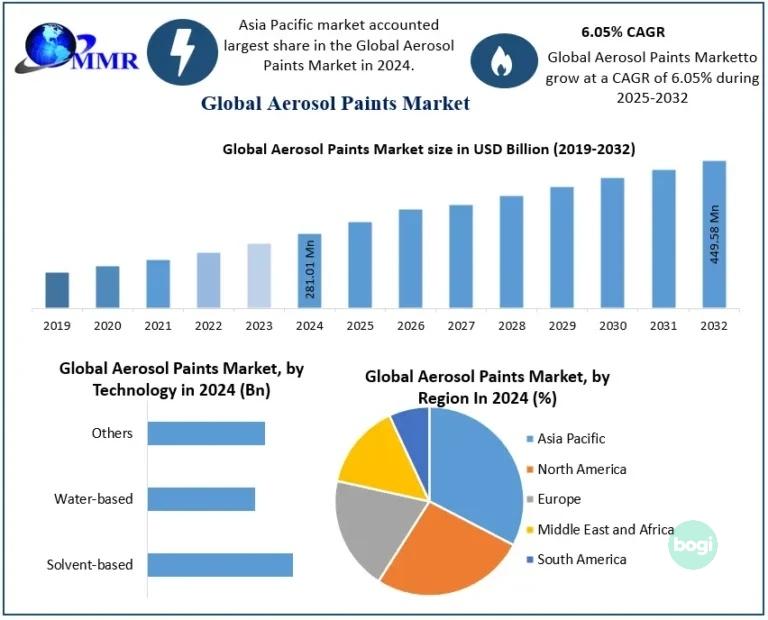
    The Aerosol Paints Market size was valued at USD 281.01 Million in 2024 and the total Aerosol Paints revenue is expected to grow at a CAGR of 6.05% from 2025 to 2032, reaching nearly USD 449.58 Million. The Aerosol Paints Market is entering a phase where purchasing decisions are increasingly influenced by efficiency, application speed, and product performance. For manufacturers, distributors, and procurement leaders, changing customer expectations are creating immediate opportunities to strengthen market position through innovative coating solutions.

    The Aerosol Paints Market is benefiting from rising demand across automotive, construction, industrial maintenance, and consumer applications. Spray-based paint products offer convenience, uniform coverage, and reduced application time, making them attractive for both professional users and DIY customers. As industries continue to prioritize productivity and finishing quality, aerosol paints are becoming an essential part of modern coating solutions.

    Why This Market Matters Now

    The Aerosol Paints Market is becoming increasingly important because businesses are seeking coating products that improve operational efficiency while maintaining high-quality finishes. Industrial users require solutions that minimize downtime, while consumers continue to prefer products that are easy to apply without specialized equipment.

    Growing investments in manufacturing facilities, infrastructure development, and vehicle maintenance are creating fresh demand for aerosol paint products. At the same time, companies are introducing improved formulations that enhance durability, appearance, and application consistency. These developments are helping manufacturers respond to changing customer requirements while strengthening their competitive positioning.

    Key Trends Driving Growth

    Several market trends are shaping the future direction of the Aerosol Paints Market. One significant trend is the growing demand for premium finishing solutions across automotive refinishing and industrial maintenance applications. Businesses are investing in coatings that deliver consistent performance while reducing labor requirements.

    Another important trend involves product innovation. Manufacturers are developing advanced spray technologies designed to improve coverage, precision, and user experience. These improvements help industrial buyers reduce material waste while achieving higher-quality surface finishes.

    Consumer demand is also influencing product development. DIY home improvement activities continue to encourage demand for easy-to-use aerosol paint products, encouraging companies to expand product portfolios with new colors, finishes, and specialized applications.

    Market Growth Outlook

    The long-term outlook for the Aerosol Paints Market remains positive as industrial expansion, construction projects, and automotive maintenance continue supporting demand. Businesses are increasingly investing in production capabilities and distribution networks to meet changing customer expectations across multiple end-use industries.

    Technological improvements are expected to remain an important growth catalyst. Companies that successfully combine product performance with operational efficiency are likely to strengthen customer relationships while expanding into emerging application areas. Market participants are also expected to prioritize innovation that supports evolving industrial requirements and broader commercial adoption.

    Request Your Sample Report Now : https://www.maximizemarketresearch.com/request-sample/114310/

    Aerosol Paints Market Size, Development Key Insights and Competitive Landscape Aerosol Paints Market Gains Momentum as Industrial Demand and Product Innovation Reshape Global Growth Key Highlights Aerosol Paints Market is witnessing stronger demand from industrial and consumer applications. Product innovation and convenient spray solutions are expanding commercial opportunities. Automotive refinishing and construction activities continue to support market expansion. Manufacturers are focusing on efficiency, product quality, and application performance. Regional industrial growth is creating new opportunities for suppliers and investors. Market Overview The Aerosol Paints Market size was valued at USD 281.01 Million in 2024 and the total Aerosol Paints revenue is expected to grow at a CAGR of 6.05% from 2025 to 2032, reaching nearly USD 449.58 Million. The Aerosol Paints Market is entering a phase where purchasing decisions are increasingly influenced by efficiency, application speed, and product performance. For manufacturers, distributors, and procurement leaders, changing customer expectations are creating immediate opportunities to strengthen market position through innovative coating solutions. The Aerosol Paints Market is benefiting from rising demand across automotive, construction, industrial maintenance, and consumer applications. Spray-based paint products offer convenience, uniform coverage, and reduced application time, making them attractive for both professional users and DIY customers. As industries continue to prioritize productivity and finishing quality, aerosol paints are becoming an essential part of modern coating solutions. Why This Market Matters Now The Aerosol Paints Market is becoming increasingly important because businesses are seeking coating products that improve operational efficiency while maintaining high-quality finishes. Industrial users require solutions that minimize downtime, while consumers continue to prefer products that are easy to apply without specialized equipment. Growing investments in manufacturing facilities, infrastructure development, and vehicle maintenance are creating fresh demand for aerosol paint products. At the same time, companies are introducing improved formulations that enhance durability, appearance, and application consistency. These developments are helping manufacturers respond to changing customer requirements while strengthening their competitive positioning. Key Trends Driving Growth Several market trends are shaping the future direction of the Aerosol Paints Market. One significant trend is the growing demand for premium finishing solutions across automotive refinishing and industrial maintenance applications. Businesses are investing in coatings that deliver consistent performance while reducing labor requirements. Another important trend involves product innovation. Manufacturers are developing advanced spray technologies designed to improve coverage, precision, and user experience. These improvements help industrial buyers reduce material waste while achieving higher-quality surface finishes. Consumer demand is also influencing product development. DIY home improvement activities continue to encourage demand for easy-to-use aerosol paint products, encouraging companies to expand product portfolios with new colors, finishes, and specialized applications. Market Growth Outlook The long-term outlook for the Aerosol Paints Market remains positive as industrial expansion, construction projects, and automotive maintenance continue supporting demand. Businesses are increasingly investing in production capabilities and distribution networks to meet changing customer expectations across multiple end-use industries. Technological improvements are expected to remain an important growth catalyst. Companies that successfully combine product performance with operational efficiency are likely to strengthen customer relationships while expanding into emerging application areas. Market participants are also expected to prioritize innovation that supports evolving industrial requirements and broader commercial adoption. Request Your Sample Report Now : https://www.maximizemarketresearch.com/request-sample/114310/
    0 Commentarii 0 Distribuiri 629 Views
  • Electronic Nose Market Trends, Future Growth Potential, and Strategic Industry Outlook

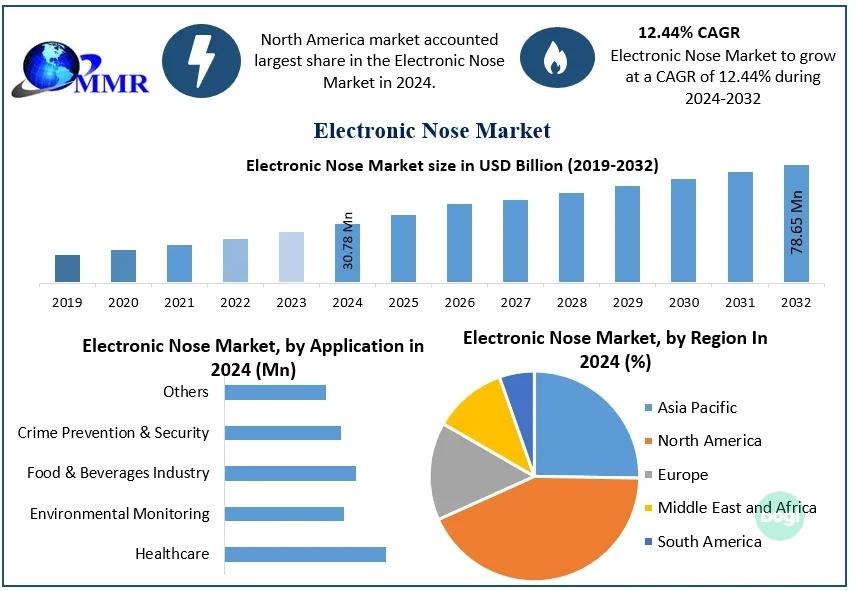
    The Electronic Nose Market size was valued at USD 30.78 Billion in 2024 and the total Electronic Nose revenue is expected to grow at a CAGR of 12.44% from 2025 to 2032, reaching nearly USD 78.65 Billion. AI-Driven Next-Generation Sensing Technologies Create Billion-Dollar Opportunity

    The global Electronic Nose Market is entering a new phase of rapid technological evolution as artificial intelligence, advanced sensor technologies, and digital transformation reshape industrial quality control, healthcare diagnostics, environmental monitoring, and security applications worldwide. According to Maximize Market Research, the Electronic Nose Market was valued at USD 30.78 Billion in 2024 and is projected to reach nearly USD 78.65 Billion by 2032, expanding at a CAGR of 12.44% during the forecast period from 2025 to 2032.

    Growing investments in smart sensing technologies, predictive analytics, machine learning-enabled odor recognition systems, and Industry 4.0 initiatives are creating substantial growth opportunities for electronic nose manufacturers and technology providers. Organizations across healthcare, food safety, environmental compliance, and industrial automation are increasingly adopting electronic nose solutions to improve operational efficiency, reduce testing time, and enhance decision-making accuracy.

    Get Instant Access to a Free Market Research Sample : https://www.maximizemarketresearch.com/request-sample/62756/

    AI-Driven Innovation Reshaping the Future of Electronic Nose Technology

    Electronic nose systems are rapidly evolving beyond traditional odor detection capabilities. Modern platforms increasingly integrate artificial intelligence, cloud connectivity, machine learning algorithms, and advanced pattern-recognition software to deliver real-time analysis and predictive insights.

    As enterprises pursue digital transformation initiatives, electronic nose technologies are becoming valuable tools for:

    Automated quality assurance
    Predictive maintenance programs
    Food freshness monitoring
    Medical diagnostics support
    Environmental pollution detection
    Security and threat identification
    Industrial process optimization
    The convergence of AI-powered analytics with sensor technologies is enabling organizations to transform large volumes of sensory data into actionable business intelligence, strengthening the market's long-term growth outlook.

    Investment Momentum Strengthens Across Multiple Industries

    Increasing demand for rapid, non-invasive, and highly accurate detection systems is encouraging investments across public and private sectors. Companies are focusing on product innovation, sensor miniaturization, software integration, and advanced data analytics capabilities.

    Industry participants are actively pursuing:

    Strategic technology partnerships
    AI-driven product development
    Sensor performance enhancements
    Research and development investments
    Manufacturing expansion initiatives
    Healthcare application commercialization
    Smart environmental monitoring programs
    The growing adoption of automation technologies and smart manufacturing practices is expected to further strengthen investment activity throughout the forecast period.
    Electronic Nose Market Trends, Future Growth Potential, and Strategic Industry Outlook The Electronic Nose Market size was valued at USD 30.78 Billion in 2024 and the total Electronic Nose revenue is expected to grow at a CAGR of 12.44% from 2025 to 2032, reaching nearly USD 78.65 Billion. AI-Driven Next-Generation Sensing Technologies Create Billion-Dollar Opportunity The global Electronic Nose Market is entering a new phase of rapid technological evolution as artificial intelligence, advanced sensor technologies, and digital transformation reshape industrial quality control, healthcare diagnostics, environmental monitoring, and security applications worldwide. According to Maximize Market Research, the Electronic Nose Market was valued at USD 30.78 Billion in 2024 and is projected to reach nearly USD 78.65 Billion by 2032, expanding at a CAGR of 12.44% during the forecast period from 2025 to 2032. Growing investments in smart sensing technologies, predictive analytics, machine learning-enabled odor recognition systems, and Industry 4.0 initiatives are creating substantial growth opportunities for electronic nose manufacturers and technology providers. Organizations across healthcare, food safety, environmental compliance, and industrial automation are increasingly adopting electronic nose solutions to improve operational efficiency, reduce testing time, and enhance decision-making accuracy. Get Instant Access to a Free Market Research Sample : https://www.maximizemarketresearch.com/request-sample/62756/ AI-Driven Innovation Reshaping the Future of Electronic Nose Technology Electronic nose systems are rapidly evolving beyond traditional odor detection capabilities. Modern platforms increasingly integrate artificial intelligence, cloud connectivity, machine learning algorithms, and advanced pattern-recognition software to deliver real-time analysis and predictive insights. As enterprises pursue digital transformation initiatives, electronic nose technologies are becoming valuable tools for: Automated quality assurance Predictive maintenance programs Food freshness monitoring Medical diagnostics support Environmental pollution detection Security and threat identification Industrial process optimization The convergence of AI-powered analytics with sensor technologies is enabling organizations to transform large volumes of sensory data into actionable business intelligence, strengthening the market's long-term growth outlook. Investment Momentum Strengthens Across Multiple Industries Increasing demand for rapid, non-invasive, and highly accurate detection systems is encouraging investments across public and private sectors. Companies are focusing on product innovation, sensor miniaturization, software integration, and advanced data analytics capabilities. Industry participants are actively pursuing: Strategic technology partnerships AI-driven product development Sensor performance enhancements Research and development investments Manufacturing expansion initiatives Healthcare application commercialization Smart environmental monitoring programs The growing adoption of automation technologies and smart manufacturing practices is expected to further strengthen investment activity throughout the forecast period.
    0 Commentarii 0 Distribuiri 784 Views
Sponsorizeaza Paginile