


Contract Lifecycle Management Market Analysis, Industry Outlook and Future Scope
Key Highlights
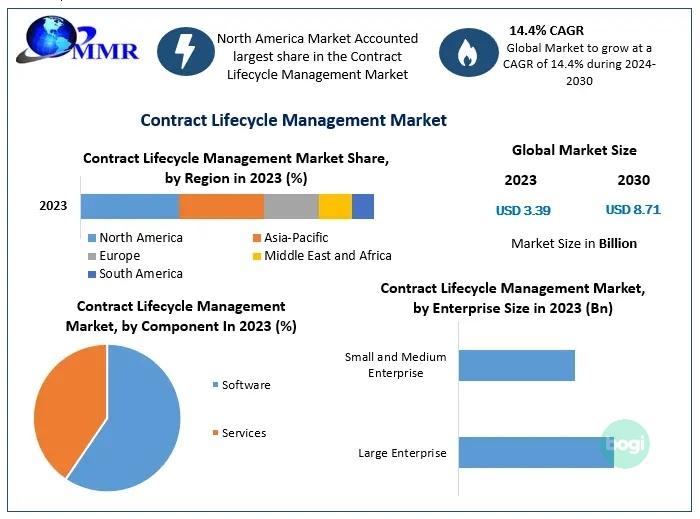
Contract Lifecycle Management Market is projected to reach US$ 8.71 billion by 2030.
The market is expected to expand at a CAGR of 14.4% during the forecast period.
Digital transformation is accelerating enterprise adoption of contract automation platforms.
Cloud-based deployment continues to improve scalability and operational flexibility.
AI-powered contract analytics are strengthening compliance and decision-making.
Organizations are investing in integrated contract management to improve productivity.
Market Overview
The Contract Lifecycle Management Market has become a critical part of enterprise digital transformation as businesses seek greater visibility across the entire contract lifecycle. From drafting and approval to execution, monitoring, renewal, and compliance, modern platforms help organizations reduce manual work while improving transparency.
Businesses across industries are replacing fragmented document management systems with integrated contract lifecycle solutions. This transition enables faster contract approvals, minimizes administrative delays, and provides centralized access to critical business agreements. As regulatory expectations continue to evolve, organizations increasingly view contract management technology as a strategic investment rather than an operational necessity.
Why This Market Matters Now
Business operations have become increasingly dependent on efficient supplier relationships, regulatory compliance, and accurate contract execution. Manual contract processes often create bottlenecks, increase operational costs, and expose companies to financial and legal risks.
The Contract Lifecycle Management Market addresses these challenges by enabling automated workflows, standardized approvals, and real-time contract tracking. Organizations benefit from improved collaboration between procurement, legal, finance, and sales departments, allowing contracts to move through approval stages more efficiently. This operational improvement supports faster business decisions while reducing compliance risks.
Get a Free Sample Market Report Link : https://www.maximizemarketresearch.com/request-sample/74488/
Key Trends Driving Growth
Artificial intelligence is becoming an essential component of contract lifecycle management platforms. AI-powered tools can review contract clauses, identify risks, extract important terms, and support legal teams with faster document analysis. These capabilities help organizations improve accuracy while reducing manual review efforts.
Cloud deployment continues to gain popularity because it provides scalability, remote accessibility, and simplified system maintenance. Businesses adopting hybrid work models increasingly prefer cloud-based contract solutions that enable secure collaboration across multiple locations.
Key Highlights
Contract Lifecycle Management Market is projected to reach US$ 8.71 billion by 2030.
The market is expected to expand at a CAGR of 14.4% during the forecast period.
Digital transformation is accelerating enterprise adoption of contract automation platforms.
Cloud-based deployment continues to improve scalability and operational flexibility.
AI-powered contract analytics are strengthening compliance and decision-making.
Organizations are investing in integrated contract management to improve productivity.
Market Overview
The Contract Lifecycle Management Market has become a critical part of enterprise digital transformation as businesses seek greater visibility across the entire contract lifecycle. From drafting and approval to execution, monitoring, renewal, and compliance, modern platforms help organizations reduce manual work while improving transparency.
Businesses across industries are replacing fragmented document management systems with integrated contract lifecycle solutions. This transition enables faster contract approvals, minimizes administrative delays, and provides centralized access to critical business agreements. As regulatory expectations continue to evolve, organizations increasingly view contract management technology as a strategic investment rather than an operational necessity.
Why This Market Matters Now
Business operations have become increasingly dependent on efficient supplier relationships, regulatory compliance, and accurate contract execution. Manual contract processes often create bottlenecks, increase operational costs, and expose companies to financial and legal risks.
The Contract Lifecycle Management Market addresses these challenges by enabling automated workflows, standardized approvals, and real-time contract tracking. Organizations benefit from improved collaboration between procurement, legal, finance, and sales departments, allowing contracts to move through approval stages more efficiently. This operational improvement supports faster business decisions while reducing compliance risks.
Get a Free Sample Market Report Link : https://www.maximizemarketresearch.com/request-sample/74488/
Key Trends Driving Growth
Artificial intelligence is becoming an essential component of contract lifecycle management platforms. AI-powered tools can review contract clauses, identify risks, extract important terms, and support legal teams with faster document analysis. These capabilities help organizations improve accuracy while reducing manual review efforts.
Cloud deployment continues to gain popularity because it provides scalability, remote accessibility, and simplified system maintenance. Businesses adopting hybrid work models increasingly prefer cloud-based contract solutions that enable secure collaboration across multiple locations.
Contract Lifecycle Management Market Analysis, Industry Outlook and Future Scope
Key Highlights
Contract Lifecycle Management Market is projected to reach US$ 8.71 billion by 2030.
The market is expected to expand at a CAGR of 14.4% during the forecast period.
Digital transformation is accelerating enterprise adoption of contract automation platforms.
Cloud-based deployment continues to improve scalability and operational flexibility.
AI-powered contract analytics are strengthening compliance and decision-making.
Organizations are investing in integrated contract management to improve productivity.
Market Overview
The Contract Lifecycle Management Market has become a critical part of enterprise digital transformation as businesses seek greater visibility across the entire contract lifecycle. From drafting and approval to execution, monitoring, renewal, and compliance, modern platforms help organizations reduce manual work while improving transparency.
Businesses across industries are replacing fragmented document management systems with integrated contract lifecycle solutions. This transition enables faster contract approvals, minimizes administrative delays, and provides centralized access to critical business agreements. As regulatory expectations continue to evolve, organizations increasingly view contract management technology as a strategic investment rather than an operational necessity.
Why This Market Matters Now
Business operations have become increasingly dependent on efficient supplier relationships, regulatory compliance, and accurate contract execution. Manual contract processes often create bottlenecks, increase operational costs, and expose companies to financial and legal risks.
The Contract Lifecycle Management Market addresses these challenges by enabling automated workflows, standardized approvals, and real-time contract tracking. Organizations benefit from improved collaboration between procurement, legal, finance, and sales departments, allowing contracts to move through approval stages more efficiently. This operational improvement supports faster business decisions while reducing compliance risks.
Get a Free Sample Market Report Link : https://www.maximizemarketresearch.com/request-sample/74488/
Key Trends Driving Growth
Artificial intelligence is becoming an essential component of contract lifecycle management platforms. AI-powered tools can review contract clauses, identify risks, extract important terms, and support legal teams with faster document analysis. These capabilities help organizations improve accuracy while reducing manual review efforts.
Cloud deployment continues to gain popularity because it provides scalability, remote accessibility, and simplified system maintenance. Businesses adopting hybrid work models increasingly prefer cloud-based contract solutions that enable secure collaboration across multiple locations.
0 Comments
0 Shares
1044 Views

 Arabic
 French
 Spanish
 Portuguese
 Deutsch
 Turkish
 Dutch
Dutch
 Italiano
 Russian
 Romaian
 Portuguese (Brazil)
 Greek
Greek