


Apiculture Market Industry Analysis and Growth Forecast
Key Highlights
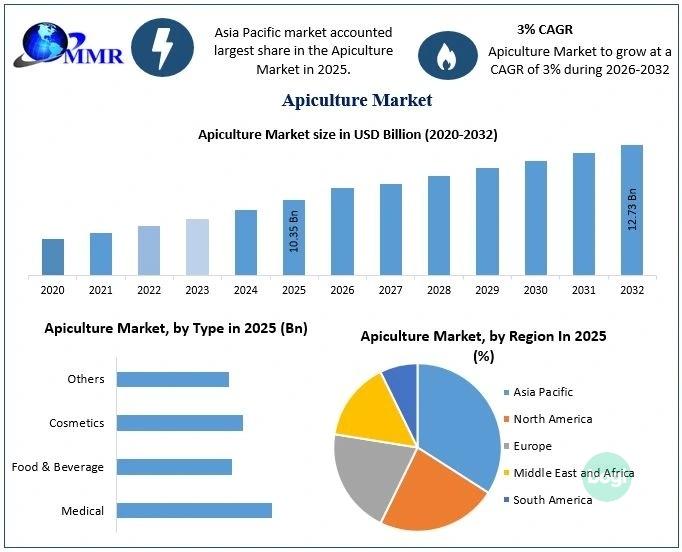
The Apiculture Market was valued at USD 10.35 Billion in 2025.
The market is projected to reach nearly USD 12.73 Billion by 2032.
The market is expected to expand at a CAGR of 3% during 2026–2032.
Growing demand for honey, beeswax, and pollination services is supporting industry expansion.
Sustainable farming practices continue to increase the importance of commercial beekeeping.
Innovation in value-added bee products is creating new revenue opportunities for producers.
Market Overview
The Apiculture Market is entering a period of stable and sustainable growth as industries recognize the economic and environmental value of bee-related products. Beyond honey production, apiculture has become an essential contributor to agriculture through pollination services, which improve crop productivity and quality. As consumer demand shifts toward natural and minimally processed products, commercial beekeeping operations are expanding their product portfolios to include beeswax, royal jelly, propolis, and pollen.
The Apiculture Market size was valued at USD 10.35 Billion in 2025 and is expected to reach nearly USD 12.73 Billion by 2032, growing at a CAGR of 3% from 2026 to 2032. This steady growth reflects increasing commercial investment and provides businesses with greater confidence to expand production capacity, strengthen supply networks, and introduce premium bee-derived products.
Why This Market Matters Now
Agricultural sustainability has become a global priority, placing greater emphasis on pollinator health and biodiversity. As governments, farmers, and food manufacturers seek environmentally responsible production methods, the Apiculture Market is becoming increasingly significant.
Beekeeping not only supports honey production but also contributes to higher agricultural yields through pollination. This dual economic value makes the industry attractive to agricultural enterprises, food producers, and rural development programs. Rising awareness about natural nutrition and clean-label food products is also encouraging consumers to choose honey and other bee-derived ingredients over synthetic alternatives.
The market is also benefiting from growing investments in sustainable farming initiatives that recognize bees as a critical component of healthy agricultural ecosystems.
Request Your Sample Report Now : https://www.maximizemarketresearch.com/request-sample/113654/
Key Highlights
The Apiculture Market was valued at USD 10.35 Billion in 2025.
The market is projected to reach nearly USD 12.73 Billion by 2032.
The market is expected to expand at a CAGR of 3% during 2026–2032.
Growing demand for honey, beeswax, and pollination services is supporting industry expansion.
Sustainable farming practices continue to increase the importance of commercial beekeeping.
Innovation in value-added bee products is creating new revenue opportunities for producers.
Market Overview
The Apiculture Market is entering a period of stable and sustainable growth as industries recognize the economic and environmental value of bee-related products. Beyond honey production, apiculture has become an essential contributor to agriculture through pollination services, which improve crop productivity and quality. As consumer demand shifts toward natural and minimally processed products, commercial beekeeping operations are expanding their product portfolios to include beeswax, royal jelly, propolis, and pollen.
The Apiculture Market size was valued at USD 10.35 Billion in 2025 and is expected to reach nearly USD 12.73 Billion by 2032, growing at a CAGR of 3% from 2026 to 2032. This steady growth reflects increasing commercial investment and provides businesses with greater confidence to expand production capacity, strengthen supply networks, and introduce premium bee-derived products.
Why This Market Matters Now
Agricultural sustainability has become a global priority, placing greater emphasis on pollinator health and biodiversity. As governments, farmers, and food manufacturers seek environmentally responsible production methods, the Apiculture Market is becoming increasingly significant.
Beekeeping not only supports honey production but also contributes to higher agricultural yields through pollination. This dual economic value makes the industry attractive to agricultural enterprises, food producers, and rural development programs. Rising awareness about natural nutrition and clean-label food products is also encouraging consumers to choose honey and other bee-derived ingredients over synthetic alternatives.
The market is also benefiting from growing investments in sustainable farming initiatives that recognize bees as a critical component of healthy agricultural ecosystems.
Request Your Sample Report Now : https://www.maximizemarketresearch.com/request-sample/113654/
Apiculture Market Industry Analysis and Growth Forecast
Key Highlights
The Apiculture Market was valued at USD 10.35 Billion in 2025.
The market is projected to reach nearly USD 12.73 Billion by 2032.
The market is expected to expand at a CAGR of 3% during 2026–2032.
Growing demand for honey, beeswax, and pollination services is supporting industry expansion.
Sustainable farming practices continue to increase the importance of commercial beekeeping.
Innovation in value-added bee products is creating new revenue opportunities for producers.
Market Overview
The Apiculture Market is entering a period of stable and sustainable growth as industries recognize the economic and environmental value of bee-related products. Beyond honey production, apiculture has become an essential contributor to agriculture through pollination services, which improve crop productivity and quality. As consumer demand shifts toward natural and minimally processed products, commercial beekeeping operations are expanding their product portfolios to include beeswax, royal jelly, propolis, and pollen.
The Apiculture Market size was valued at USD 10.35 Billion in 2025 and is expected to reach nearly USD 12.73 Billion by 2032, growing at a CAGR of 3% from 2026 to 2032. This steady growth reflects increasing commercial investment and provides businesses with greater confidence to expand production capacity, strengthen supply networks, and introduce premium bee-derived products.
Why This Market Matters Now
Agricultural sustainability has become a global priority, placing greater emphasis on pollinator health and biodiversity. As governments, farmers, and food manufacturers seek environmentally responsible production methods, the Apiculture Market is becoming increasingly significant.
Beekeeping not only supports honey production but also contributes to higher agricultural yields through pollination. This dual economic value makes the industry attractive to agricultural enterprises, food producers, and rural development programs. Rising awareness about natural nutrition and clean-label food products is also encouraging consumers to choose honey and other bee-derived ingredients over synthetic alternatives.
The market is also benefiting from growing investments in sustainable farming initiatives that recognize bees as a critical component of healthy agricultural ecosystems.
Request Your Sample Report Now : https://www.maximizemarketresearch.com/request-sample/113654/
0 Comments
0 Shares
619 Views

 Arabic
 French
 Spanish
 Portuguese
 Deutsch
 Turkish
 Dutch
Dutch
 Italiano
 Russian
 Romaian
 Portuguese (Brazil)
 Greek
Greek